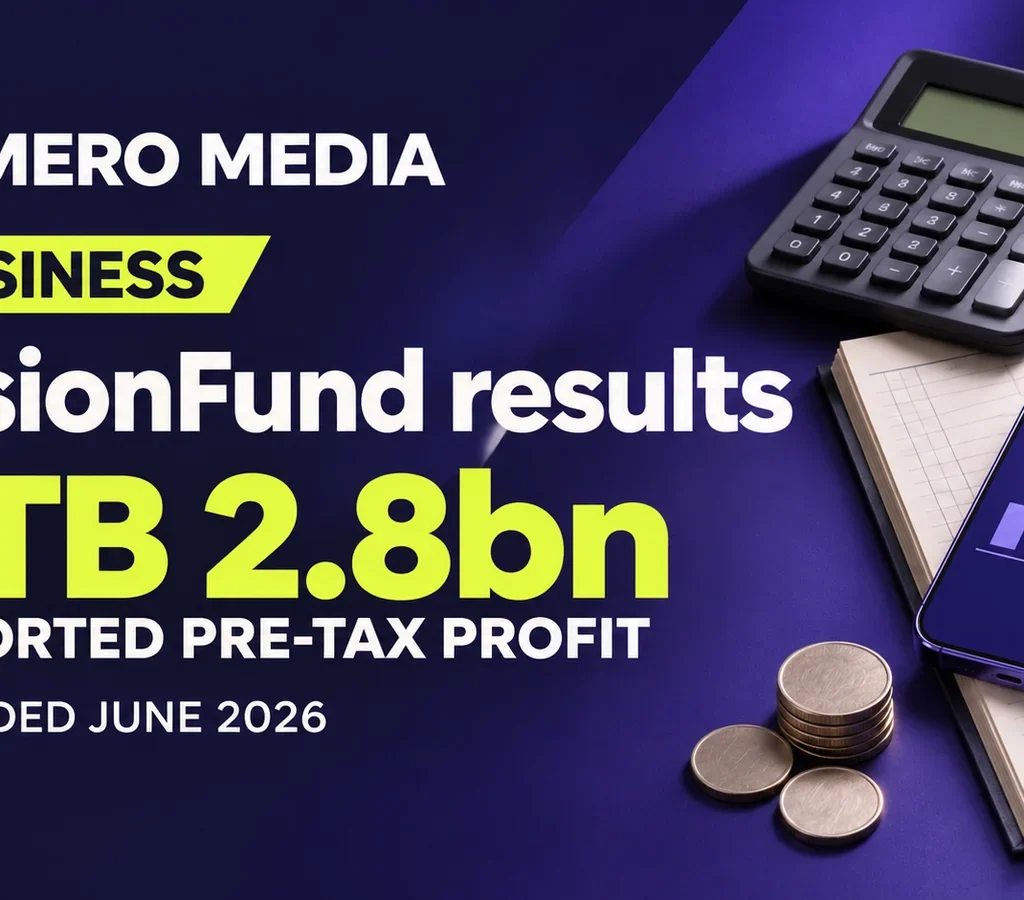
VisionFund Microfinance Institution says its pre-tax profit reached ETB 2.8 billion for the financial year ended 30 June 2026, a 43% increase from the previous year. In its official performance announcement, the Ethiopian lender also reported total assets of ETB 30 billion.
The figures are the institution’s reported results. Profit before tax is different from the final after-tax result, and asset growth alone does not show whether loans are being repaid on schedule.
Lending and capital
According to VisionFund, it disbursed ETB 21.1 billion to 145,000 borrowers during the year. Its outstanding loan portfolio rose 65.9% to ETB 23.05 billion. Paid-up capital reached ETB 5.28 billion, while total capital was ETB 7.38 billion.
Annual disbursements measure loans issued over the period; an outstanding portfolio measures loans still on the books at a particular point. They should not be added together as a single amount of new lending. Similarly, paid-up capital and total capital describe different measures of the institution’s financial base.
Savings, customers and digital services
In the second part of its announcement, VisionFund reported savings growth of 41%, more than two million customers and 121 branches. It said 57% of borrowers worked in micro and small enterprises or agriculture, and women represented half of its borrowers.
The institution also reported 882,988 mobile-banking transactions worth ETB 5.81 billion during the year. It named VisionMeri digital lending, telebirr access, ETH QR and Digital Equb among its digital services. Transaction value measures activity through those channels; it is not the same as banking income or profit.
Why the results matter to Ethiopian borrowers
Growth in lending is relevant to small firms and farming households that need working capital. The practical questions for a prospective borrower remain the price of credit, repayment dates, security requirements and whether the loan suits the business’s cash flow. These results do not announce a general reduction in loan rates or a new entitlement to borrowing.
There is a longer financing context. In September 2025, IFC announced a local-currency loan to VisionFund: an initial US$10 million equivalent tranche within a planned US$30 million equivalent commitment, with at least half of the financing proceeds dedicated to women-owned businesses. That earlier announcement is background, not an additional financing deal announced this week.
What to read alongside the headline figures
The latest announcements provide no detailed loan-arrears breakdown or full explanation of impairment charges. Without that information, the reported growth should not be read as proof that credit risk fell or that all borrowers are better off. A full assessment would also compare asset quality, funding costs and the final audited statements.
For Ethiopia’s policy context, read Aemero’s explanation of the NBE’s proposed microfinance-to-bank conversion rules. Those remain proposals; this results announcement does not say VisionFund has applied to become a bank. More coverage is in Business.
Featured image: Aemero Media; AI-created conceptual artwork. It does not depict the actual project, workplace or event.