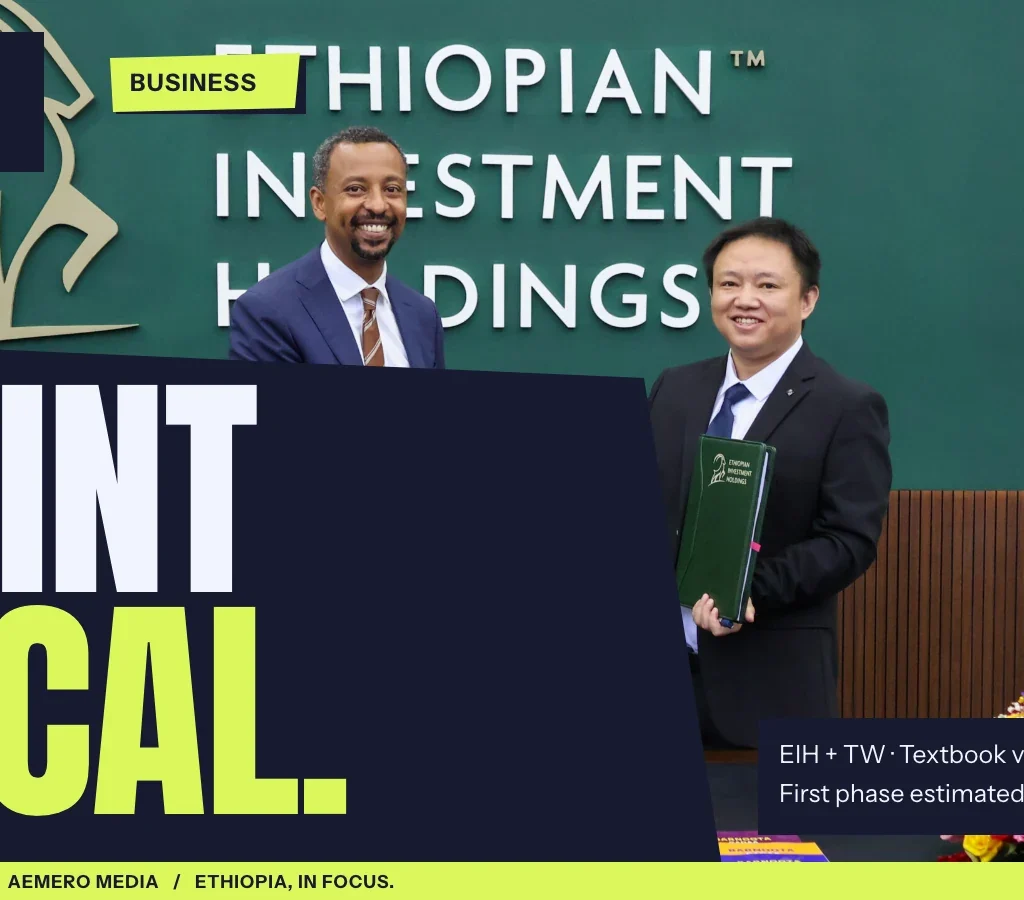
Ethiopian Investment Holdings has announced a shareholders’ agreement with China-based TW Holding Limited for a textbook-printing and publishing operation in Ethiopia. EIH’s 25 November announcement puts the first-phase investment estimate at US$30 million.
Who would own and operate the venture
TW Holding would own 51% and EIH 49%. EIH says its partner will contribute production technology, machinery and technical expertise, and lead the facility’s development and operation.
The ownership percentages describe the proposed company. They do not establish that US$30 million has already been paid in. The announcement does not provide a financing drawdown schedule, so the estimate should be read as a project requirement rather than completed expenditure.
What would be produced in Ethiopia
The planned work spans printing, binding, finishing, packaging and distributing school textbooks and teachers’ guides. EIH presents domestic production as a way to reduce dependence on imported finished books and improve access to learning materials. Those are the partners’ objectives, rather than measured results.
For readers following manufacturing, the distinction between printing and the complete delivery chain matters. A printed sheet still has to become a bound, checked and packaged book, then reach its buyer. Including these stages in the stated scope makes this a broader proposal than purchasing printing machines alone.
What the announcement does—and does not—establish
The release identifies an ownership framework and intended production activities. It does not give a commissioning date, annual output, factory site or textbook sale price. It also mentions possible African-market expansion, subject to commercial considerations.
A useful next milestone would be evidence of implementation: a confirmed location and construction or equipment timetable, followed by tested production and actual orders. These are milestones for assessing the project, not additional promises made by either partner.
There is also a practical difference between import substitution and eliminating imports. Producing a finished book locally can change where manufacturing work happens; it does not by itself establish where paper, ink, spare parts or machinery originate. The agreement announcement does not settle those supply-chain questions.
The relevant question for schools is what reaches classrooms, when it arrives and at what price. Those outcomes will need evidence beyond a signing announcement. For now, the verified development is the agreement and the partners’ published plan.
Follow related company developments in Aemero’s Business section. For another current financial-sector development, read the National Bank’s latest foreign-exchange auction results.
Featured photograph: Ethiopian Investment Holdings, published with its 25 November announcement. Crop and graphic: Aemero Media.