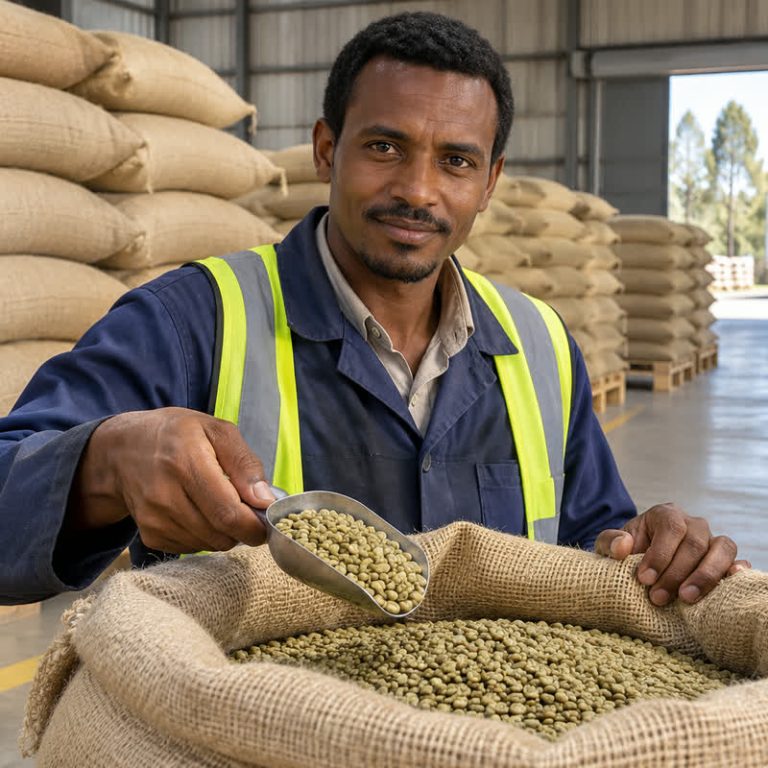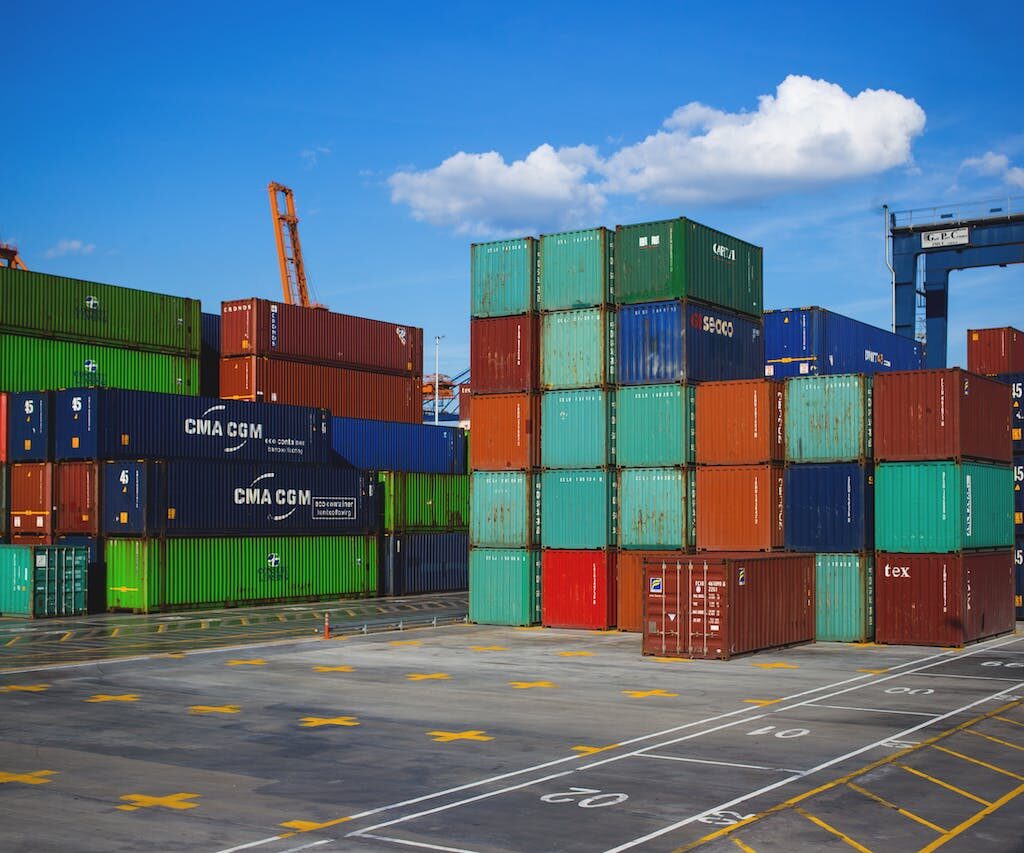
Gold and coffee dominated Ethiopia’s recorded merchandise export earnings in fiscal year 2024/25. According to the National Bank of Ethiopia’s annual report, goods exports earned about US$8.35 billion that year. Gold accounted for about US$3.48 billion and coffee about US$2.67 billion. These are values for that fiscal year. The figures move with prices, shipment volumes and reporting, and they measure goods rather than services such as aviation.
Read value and volume together
Gold: the largest recorded goods export in 2024/25

Reported gold earnings rose sharply from about US$409 million in 2023/24. That change affected the whole export mix: gold accounted for about 42% of the value of recorded merchandise exports in 2024/25. Gold figures show recorded export value, which is different from the amount mined. The National Bank’s annual reports let you compare the same measure across years.
Coffee: Ethiopia’s largest agricultural export
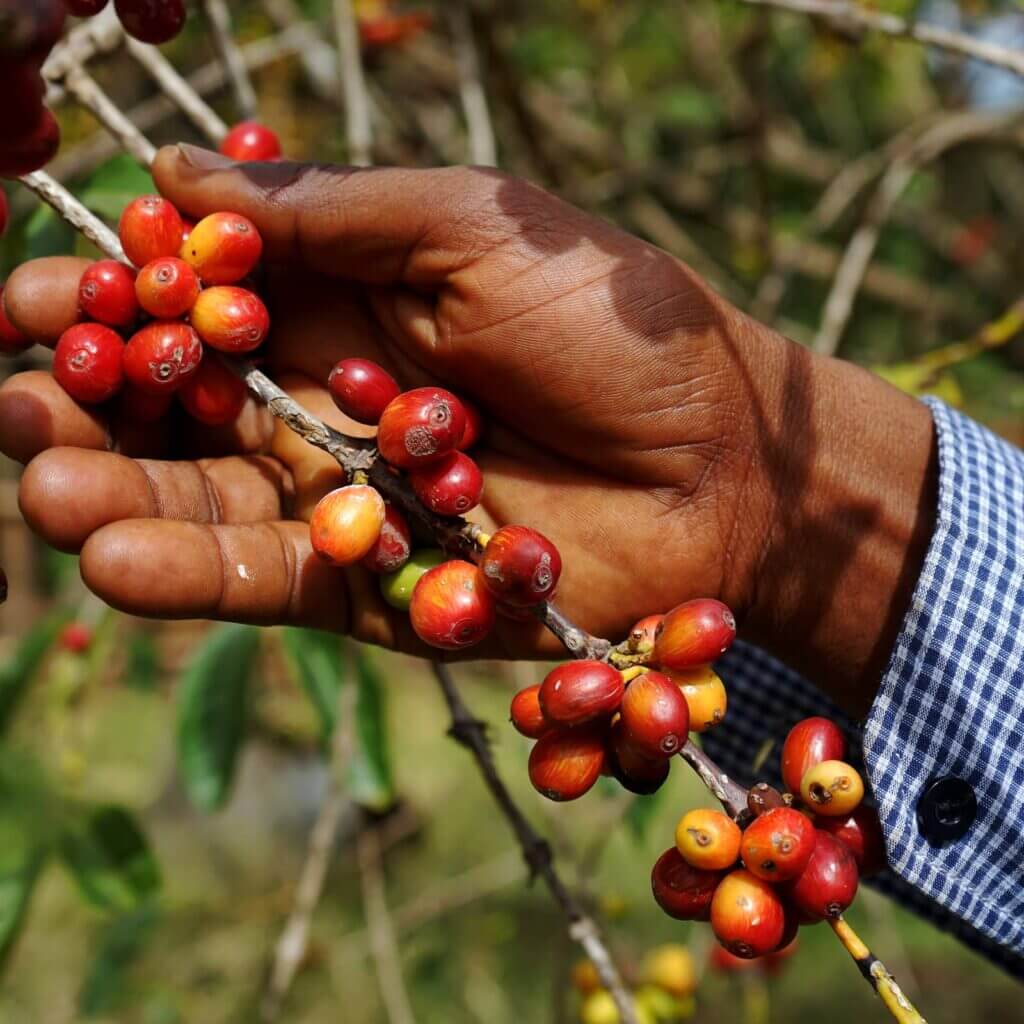
Coffee’s US$2.67 billion in 2024/25 was up from about US$1.43 billion a year earlier. The National Bank attributes that increase to both higher volumes and higher international prices. A country can ship more coffee, receive more per tonne, or see both happen in the same year. A value figure alone cannot tell you which changed.
Ethiopian coffee is sold under region and origin names that can mean different things to exporters and consumers. See our guides to coffee growing regions and reading an Ethiopian coffee label for how those names reach the bag.
Flowers, oilseeds and pulses

Cut flowers rely on a different supply chain from coffee. They need fast handling, refrigerated storage and reliable air freight to reach overseas buyers in good condition. The National Bank’s quarterly bulletin tracks flower earnings separately from coffee and gold.

Oilseeds, including sesame, are used for edible oils and food products. Pulses such as beans and chickpeas are another category. They can be stored and shipped differently from cut flowers or fresh produce. When comparing export figures, check whether the source gives tonnes or dollar values and whether it groups the two categories together.
Livestock, meat, produce and khat

Live animals and meat products are separate lines in export accounts. For animal products, the destination’s veterinary and documentation rules matter. Fruit and vegetables form another category. Khat also appears as a separate entry, commonly spelled “chat” in National Bank tables, and market access depends on the importing country’s rules.


Manufacturing and other products

Textiles, garments, hides and leather products feature in Ethiopia’s export mix alongside farm and mining products. They answer different commercial questions: a garment buyer may need factory capacity and delivery schedules, while a buyer of a raw commodity may focus on grade and weight. For a practical example of the export process, see our guide to exporting Ethiopian coffee.

Read value and volume together
The annual report’s export figures describe the recorded value of goods. To explain a change in one line, look for both quantity and the average price per unit. A rise in the price of gold or coffee can lift the value even if shipments rise more slowly. In a report with a gold line and a coffee line, compare each with its own previous year before comparing the shares of the total.
The merchandise series covers goods. Passenger transport and other service earnings are reported separately. A freight route can matter for trade without appearing as a product in this list. See the Ethio–Djibouti railway report for the transport side. National Bank of Ethiopia annual reports.
How to read a new export figure
Check the dates and units first. Quarterly totals should be compared with the same quarter or the equivalent period. A coffee marketing year and the National Bank’s fiscal-year series can describe different periods. For commercial context, see our reporting on Ethiopia’s WTO accession talks and the Ethio–Djibouti railway.