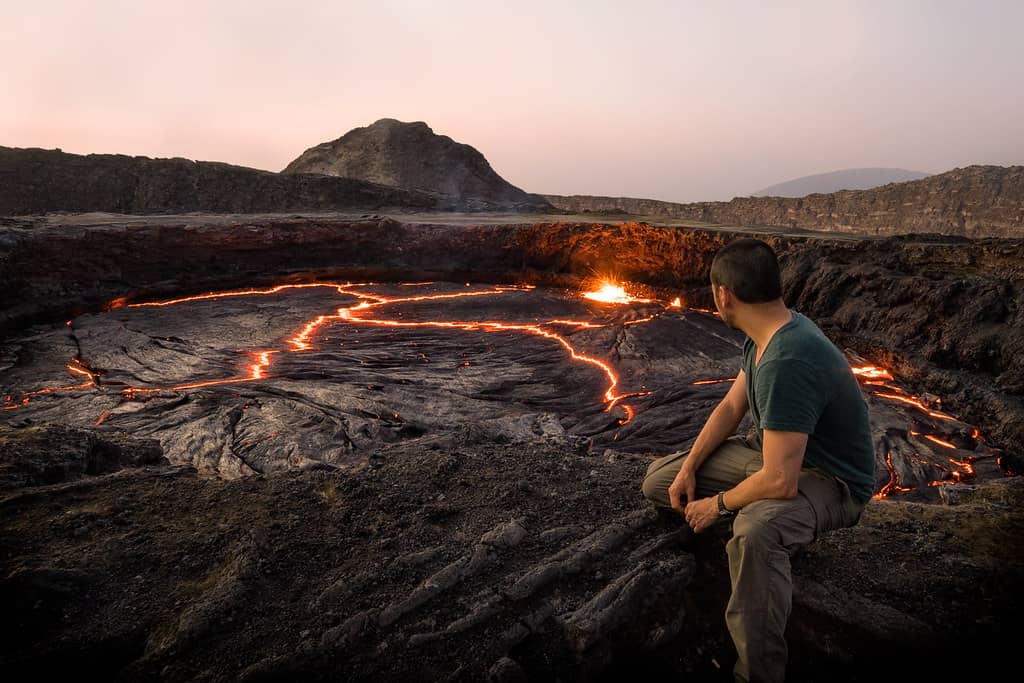
Erta Ale is a basaltic shield volcano in the Danakil Depression of northeastern Ethiopia. Its broad slopes were built by flows of relatively fluid lava. The summit contains pit craters where lava has sometimes been visible for long periods. The condition of those craters changes, so older photos and videos cannot tell you what is visible today.
What changed between the crater and the flank · Read the observation date and the evidence
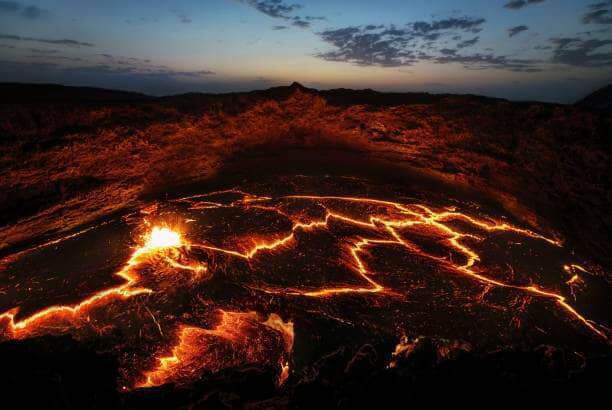
Why Erta Ale has a broad profile
Erta Ale is part of the Afar Rift, where the crust is pulling apart. Basaltic lava can spread across the surface before it cools, building a wide shield rather than a steep cone. The Afar salt flats are another landscape within the wider Danakil Depression, formed through different processes. Smithsonian Global Volcanism Program profile
Why the lava lake changes
Heat detected by satellites can indicate activity even when no direct view of the crater is available. Observers have documented changes in where lava appears and how much of it is exposed. The Smithsonian record separates observations by date and method, which makes it a better reference for recent activity than a single travel photo. Erta Ale monitoring reports
What changed between the crater and the flank
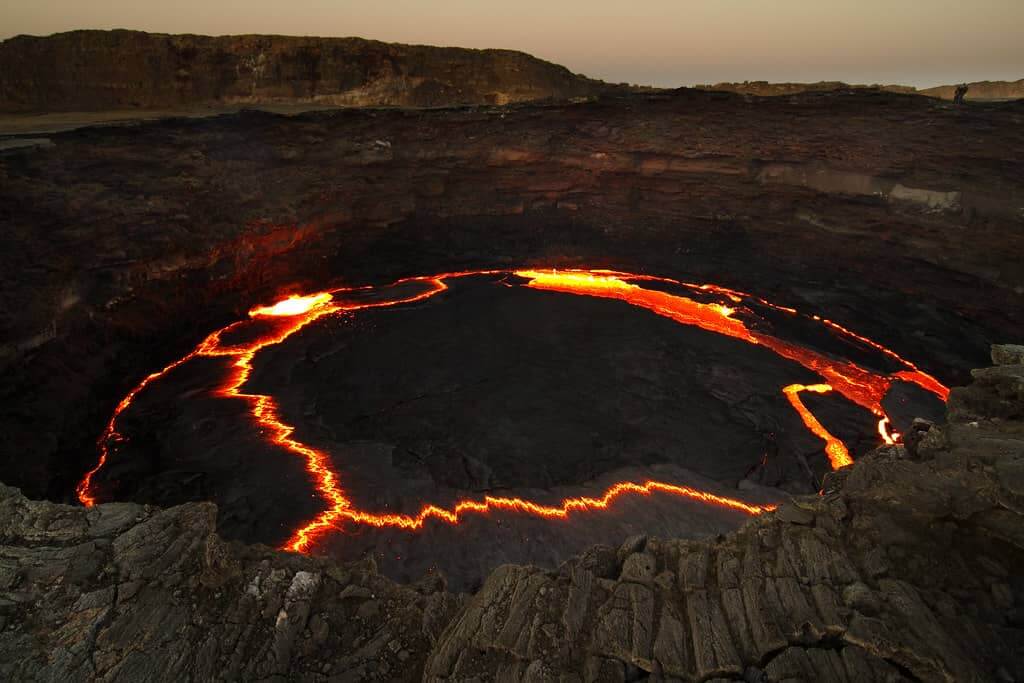
The summit includes pit craters inside a larger depression. When reports refer to a lava lake, check which crater or vent they name. In January 2017 the Smithsonian recorded a new lava lake at an eruption site roughly three kilometres southeast of the South Pit Crater. A report about that flank site cannot tell you what could be seen inside the summit crater at the same time. Smithsonian weekly reports for Erta Ale.
Read the observation date and the evidence
Look at the date before interpreting a photograph or report. A satellite thermal anomaly records unusual heat in a location. An observer at the crater can describe visible lava if conditions allow. Cloud, viewing angle and changes in the vent make those observations different. Neither kind of report gives a visitor access information. The Fentale section of the Awash guide explains another Afar Rift volcano. Check travel advice separately for the exact Afar route. Current regional advice for Ethiopia.
Travel and current access
Check current travel advice before making plans for Afar. The UK Foreign, Commonwealth & Development Office currently advises against all but essential travel in much of the region and against all travel in certain areas. Access can also change with local conditions. Read the detailed map and advice for the specific route. For a broader introduction, see where Afar sits in Ethiopia. Current UK travel advice for Ethiopia