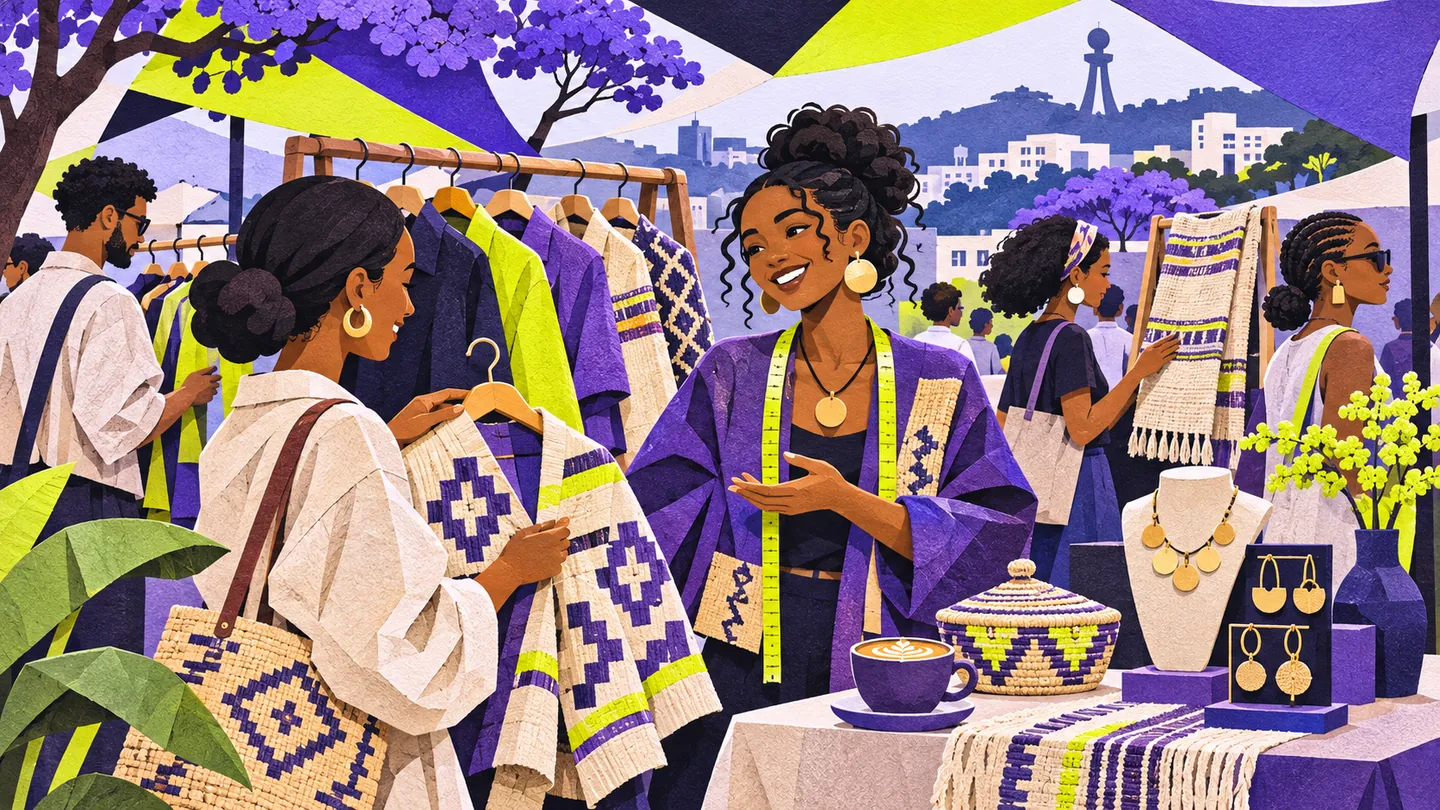
Inside Harar Jugol, the streets turn between walls that often hide the houses behind them. A doorway may open onto a compound where a stepped room, a shelf of bowls and baskets arranged on a wall tell you as much about the city as its famous gates. Harari culture is rooted in this walled part of eastern Ethiopia and carried by people who live both within and beyond it.
How Harar Jugol became a walled city

Harar grew as an Islamic center and a meeting place for trade between the Ethiopian interior and ports in the Horn of Africa. Its precise beginnings are debated. Oral traditions connect the town’s origins with earlier centuries, while surviving records give a clearer view of the city as a political center in the fifteenth and sixteenth centuries. Research in Annales d’Éthiopie traces its rise as the capital of the Barr Saʿd ad-Dīn in the first half of the sixteenth century and relates how tradition credits Emir Nur with the fortification.
The wall helped defend the town and gave traders a set of entrances through which goods and people passed. By the nineteenth century, Harar was the seat of an emirate. Menelik’s forces took the city in 1887 after the battle of Chelenqo, bringing it into the expanding Ethiopian state. Harar’s links with its Oromo, Somali, Argobba and other neighbors continued to shape trade and everyday life. For this period, see Ras Makonnen and the making of modern Ethiopia and the Jimma University study of Harari cultural history.
The five historic gates of Harar

The old wall had five principal gates. Each connected the town with a road and was associated with one of its historic quarters. The five names in common transliteration are Assum Bari in the north, Argob Bari or Argobba Bari in the east, Suqutat Bari in the southeast, Badro Bari in the south and Asmadin Bari in the west. Spellings vary with the writer and language.
The routes mattered commercially. A Nordic Africa Institute historical compilation connects Assum Bari with the road toward Zeila and Argob Bari with routes toward Berbera. When you come into Jugol through the broad entrance commonly called Harar Gate, you are using a more recent opening. UNESCO’s description of the World Heritage site distinguishes it from the five historic gates and explains how the old entrances related to the town’s layout.
Harari language and the life of the quarters

Harari is known to its speakers as ge sinan, the language of the city. It is an Ethiopian Semitic language with its own vocabulary and literary traditions. The people using it have long lived in a multilingual setting, so a household, market and religious gathering may each bring different languages into conversation. Calling the whole population of Harar Harari can hide that distinction. The World Heritage nomination documents both the community’s name for its language and its place in the town.
The historic quarters were also networks of households, places of worship and mutual help. Their relationship to the gates survives in local memory and descriptions even though the older administrative division has changed. Study the city through more than its monuments: the way a language is taught at home, a craft passed on and a festival prepared each tells you something about how Harari identity has persisted.
Inside a traditional Harari house
The ge gar, or Harari city house, is easiest to understand from the inside. An enclosed compound creates a transition from the public lane to family space. The main room typically has raised platforms or stepped seating. Their levels help organize where people sit and what the room is used for. Painted surfaces, wall recesses and rows of dishes or baskets can mark the room even when the outside gives little hint of its layout.
The patterns on a Harari basket tell part of that story. Coils and colored bands build the design as the maker works, and baskets can serve as utensils, gifts or objects for display. Examples collected in the nineteenth century are recorded in research catalogued by the Smithsonian. UNESCO also identifies weaving and bookbinding as part of Harar’s craft heritage. Ask a maker how a piece is used and how long it takes to complete. The answers are as revealing as the finished pattern.
Islam, Shuwalid and other observances
Harar’s mosques and shrines reflect different parts of its religious history. A mosque can be a neighborhood place of prayer and learning. A shrine may preserve the memory of a person connected with the town, drawing visitors whose reasons for coming extend beyond the immediate quarter.
Shuwalid, also known as Shewal Eid, is a Harari festival that follows six days of fasting after Ramadan. The three-day celebration brings together prayer, songs and visits. UNESCO inscribed it in 2023 and identifies the shrines of Aw Shulum Ahmed and Aw Akebara among its central sites. The timing follows the Islamic calendar, so its Gregorian dates move. See our Shewal Eid guide and UNESCO’s inscription for the observance in more detail.
Ashura is a separate date in the Islamic calendar. Harar’s stories about living alongside hyenas and the practice of feeding them also have their own history. Our Harar hyena guide explains the difference between accounts linked to the observance and feeding that visitors may encounter on other evenings.
Food, coffee and hospitality
A visit can start over a plate of ful, seasoned fava beans usually eaten with bread, or at a table where injera accompanies several dishes. These foods are shared across communities in eastern Ethiopia and beyond. Ask a host which foods are for ordinary mornings and which they prepare for religious occasions or guests. That often tells you more about Harari cooking than a list of national dishes.
Coffee is another thread that links households to the wider region. The name Harar also appears on coffee traded from eastern growing areas, so it can refer to an origin beyond the city itself. At home, the time spent serving and talking is part of the visit. Read about Ethiopian growing regions and the coffee ceremony.
What to look for in the old town

The museum commonly called Rimbaud’s House is a way into Harar’s trading history and its links with the French writer. The name is sometimes taken to mean the building was his actual residence. Treat the museum as an interpretation of his years in the city and check what is documented about the building itself.

The Abdallah Sherif collection is a different stop, especially if you are interested in manuscripts and objects connected with everyday life. Confirm museum access locally. In living residential areas, ask before photographing people, interiors or religious activity. A walk with someone who knows the quarters can connect the gates, houses and shrines to the families who still use the streets.