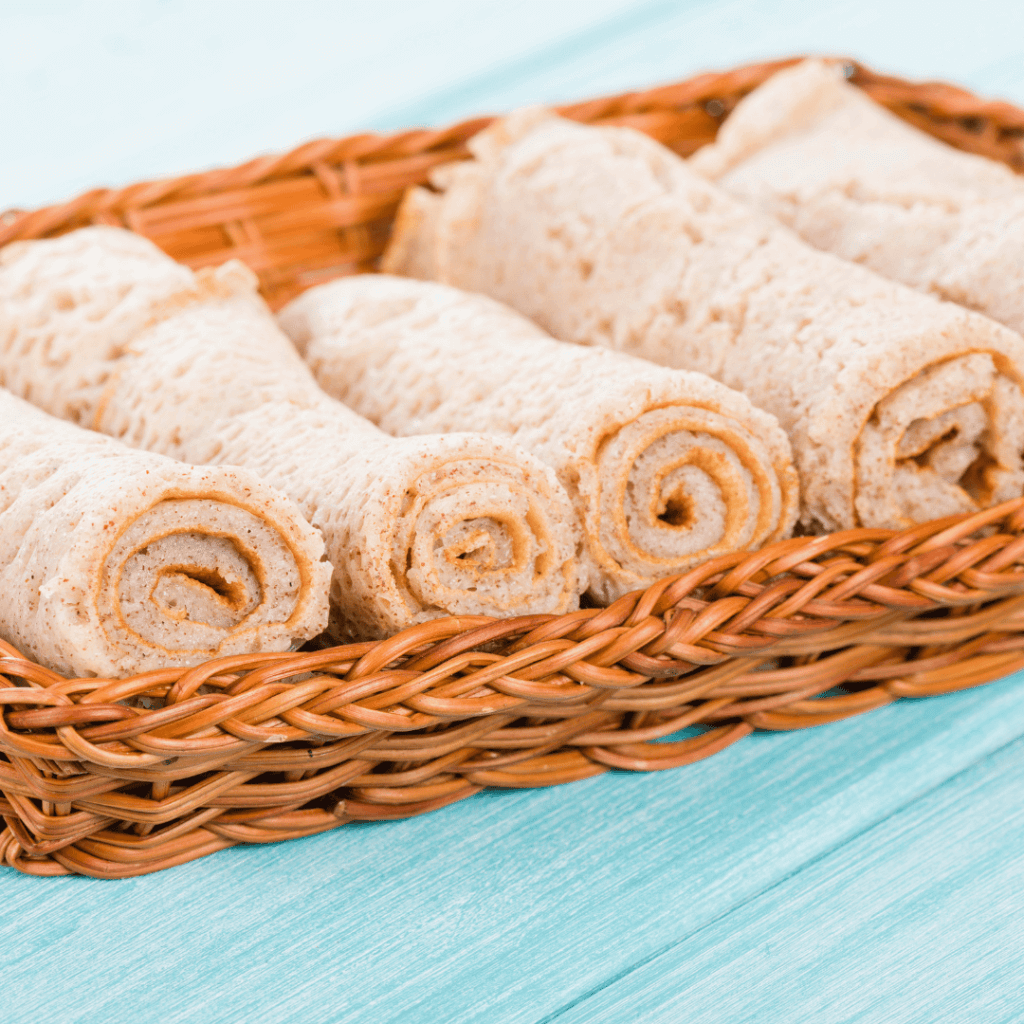
Injera is a fermented flatbread cooked on one side. As the batter sets on a hot griddle, small holes open across the surface. A soft round should bend without cracking, with a cooked underside and a top that lifts cleanly when it is ready.
On this page: Starter and fermentation · What absit does · Griddle troubleshooting · Cooling and storing injera

Ingredients and equipment
For a small batch, start with 300 g teff flour, about 48 g active teff starter (ersho) and 600 ml water, added gradually. Keep more water on hand for the cooked batter portion and any final adjustment. These starting amounts scale down a formula recorded by the Ethiopian Nutrition Institute. Have a clean mixing bowl, ladle, covered flat griddle or nonstick skillet, and a wide tray ready. FAO’s teff preparation guide


How to judge the first fermentation
Ersho is starter saved from an earlier fermentation. This recipe assumes you already have active teff starter. The Ethiopian Nutrition Institute method published by FAO calls for three days of primary fermentation. Other Ethiopian studies record shorter or longer times under different conditions. Use the time as a guide and look for gas bubbles and a sour aroma. Keep the batter covered in a clean container. Avoid tasting raw batter because flour is a raw ingredient. FAO’s recipe and fermentation notes. FDA guidance on raw flour.
Ferment the batter and prepare absit
Mix the flour and starter with part of the water. Stir in the rest gradually until the batter is smooth, then cover it. Fermentation time depends on the warmth of the kitchen and the activity of the starter. An active batch develops bubbles and a pleasantly sour smell. If a layer of liquid separates after fermentation, pour it off before preparing the cooked portion.
For the absit, whisk about 50 ml of fermented batter into 100 ml water and cook it while stirring until it thickens. Let it cool until warm, then stir it back into the main batter. Let the mixture rest before cooking. Add water in small amounts if the batter is too thick to spread in a thin round. Review of teff injera fermentation methods
Why cook part of the batter before griddling?
Cooking the small portion with water thickens it as the starch takes up water. This cooked mixture is the absit. Once stirred back into the batter, it changes how the batter flows and how the finished injera holds together. The starter starts fermentation. The absit is made after that first fermentation and is added before the final rest. Addis Ababa University research on the absit step.
After adding the absit, look for renewed bubbling before you cook a test round. Household observations recorded by Addis Ababa University describe this as a second stage, distinct from the first fermentation. Add any extra water a little at a time. Read the household observations.
Cook on one side and cool
Heat the griddle over medium heat. Pour a small test round, cover it as holes start opening, and cook until the surface looks set and the edges lift. Leave the bread on the same side throughout cooking. If the underside browns before the surface sets, reduce the heat. If the batter sits in ridges, thin it a little.

Lift each round onto a wide tray and let it cool before stacking. Serve with wat or use it as the base for a shared Ethiopian meal. Our fasting food guide includes shiro and lentil stew to serve with it.
What the first round tells you
The batter forms ridges. Thin it a little and try another small round. Aim for an even layer that spreads as you pour without having to flatten it.
The underside browns while the top stays wet. Lower the heat a little, let the pan settle at the new temperature, then cover the next round after the holes begin to open.
Very few holes appear. Check that the batter bubbled after the absit went in and that the pan was hot when you poured. Change one variable at a time so you can tell what improved the next round.
Cool the rounds before you stack them
Lift each cooked round with a wide spatula and lay it flat. Let the steam escape before stacking so the surfaces are less likely to stick. Keep cooled rounds covered so the edges stay soft. Discard bread with visible mold. When you are ready to serve, spoon shiro or red lentil wat onto a whole round and put extra pieces beside the shared platter.