Ethiopian Orthodox fasting traditions have long included meals made without meat, eggs or dairy. A fasting combination platter may contain chickpea stew, lentils, greens and vegetables over injera. Menus may use the word tsom to mark fasting dishes. Ask about cooking fat and ingredients if you need the meal to be fully plant-based.
On this page: What tsom means · Build a fasting platter · Shiro · Misir wat · Gomen · Atakilt

What tsom means on an Ethiopian menu
Tsom refers to religious fasting. Ethiopian Orthodox observance includes recurring fast days and longer fasting seasons. Menus reflect that pattern because there is an established demand for dishes made without meat, eggs or dairy. Some fasting practices allow fish on certain occasions, so if you avoid all animal ingredients, name the ingredients you want to avoid. Ethiopian research has tracked how recurring fasts change what households buy and what dairy producers sell. Read the Ethiopian fasting and food supply study.
What to order
Look for shiro, misir wat, gomen and atakilt. Ask for a fasting beyaynetu if you want a combination of dishes. Clarify whether the kitchen used vegetable oil or niter kibbeh, a clarified butter. Injera made entirely from teff contains no wheat, but some kitchens blend flours. If you have celiac disease, ask about the flour and cross-contact in preparation. NIDDK guidance on eating with celiac disease
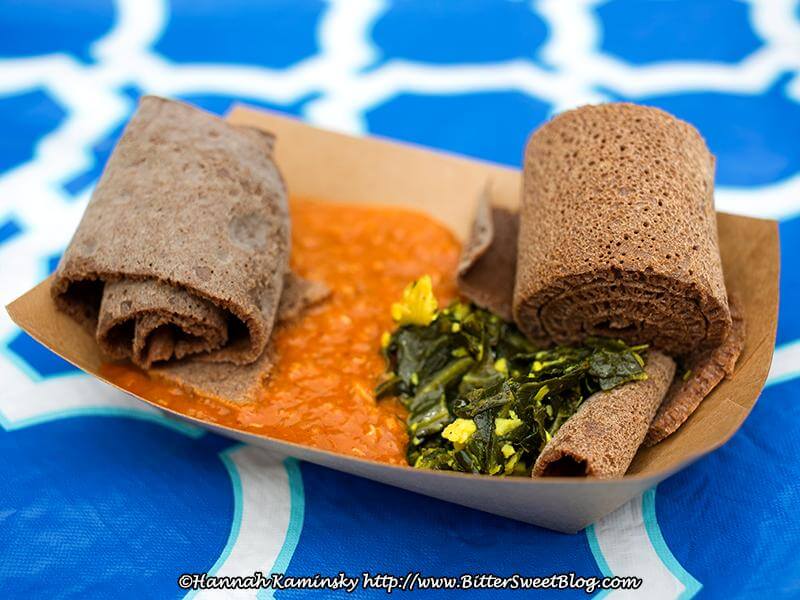

How to build a fasting platter
Pick one thick stew, one green vegetable and one mild dish. For example, put a spoonful of red lentils beside gomen and cabbage with carrots and potatoes. Add shiro if you want a second stew. Serve on a large round of injera and keep extra pieces alongside the platter for scooping.
Look for kik alicha if you want a mild split pea dish alongside berbere-seasoned lentils. At a restaurant, you can ask for fasting dishes on a separate platter if the group is also ordering meat or butter-rich dishes. For serving order and portion choices, see the guide to ordering for a group.
Shiro, a chickpea stew
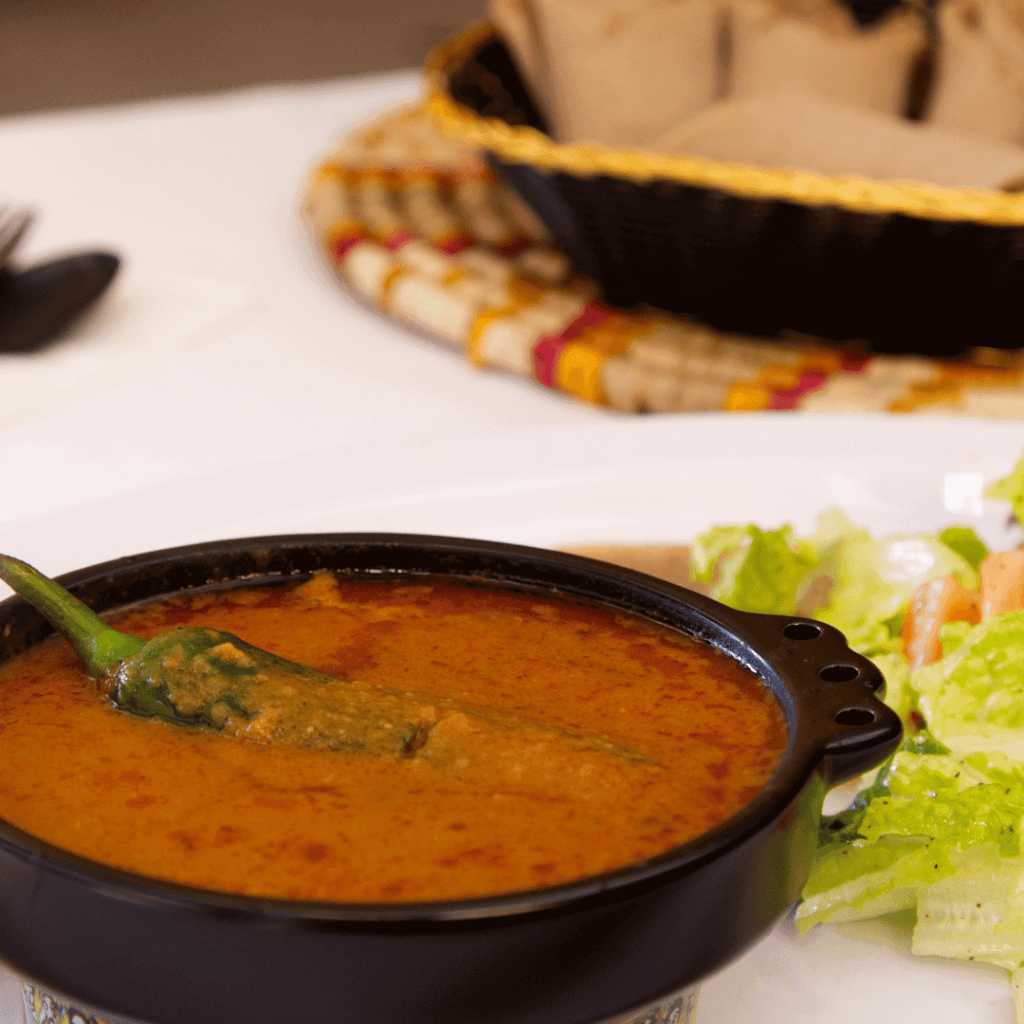
Soften 1 chopped onion and 2 minced garlic cloves in 2 tablespoons oil. Add berbere to taste if your shiro powder is unseasoned. Whisk 1 cup shiro powder into about 3 cups water, add it gradually to the pot, and simmer until the flour is cooked and the stew has thickened. Stir often and add water as needed. The consistency should be smooth and loose enough to scoop.
Some shiro powders are already seasoned. Check the ingredients and start with less berbere and salt when using a seasoned mix. Whisking the powder into cool water before it goes into the pot helps prevent lumps. A thicker shiro can be loosened with a splash of hot water just before serving.
Misir wat, a red lentil stew
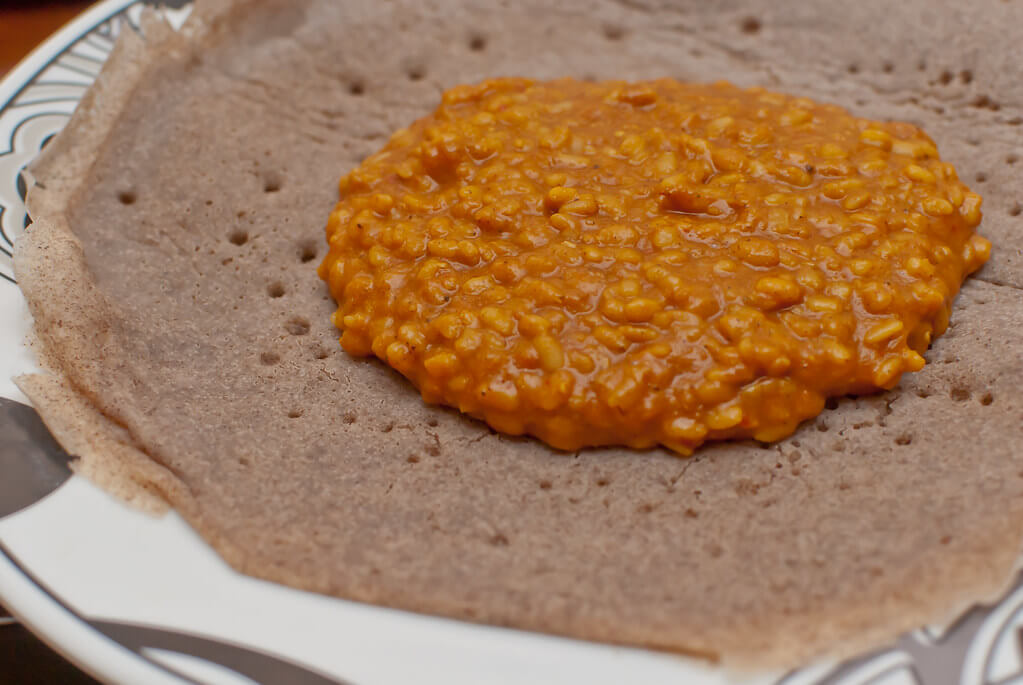
Soften 1 chopped onion, 2 minced garlic cloves and a little grated ginger in 2 tablespoons oil. Stir in 1 to 2 tablespoons berbere to taste, then add 1 cup rinsed red lentils and 3 cups water. Simmer until the lentils are tender, adding water if they thicken before cooking through. Salt to taste.
Split red lentils soften and break down as they simmer. Stir them across the bottom of the pot as they thicken. A spoon dragged through the stew should leave a trail that closes slowly. If the lentils are still firm, add water and keep cooking before deciding whether the stew needs more seasoning.
Gomen, cooked greens
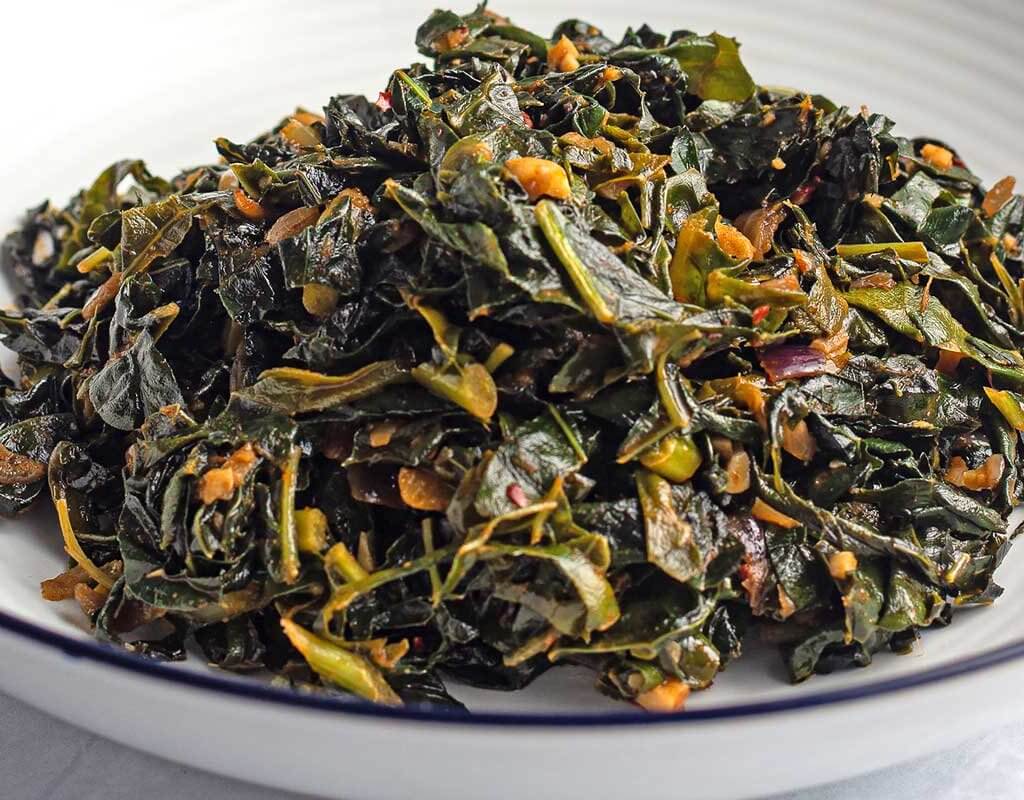
Soften chopped onion, garlic and ginger in 2 tablespoons oil. Add 1 bunch chopped collards and a splash of water, cover, and cook until the greens are tender. Salt to taste. Chop thick stems finely or remove them before cooking.
Give the chopped stems a head start if you keep them. Add the leaves once the stems begin to soften, then uncover near the end if you want less liquid on the platter. The same approach works with sturdy greens such as kale, though the time needed to soften them can vary.
Atakilt, cabbage, carrots and potatoes
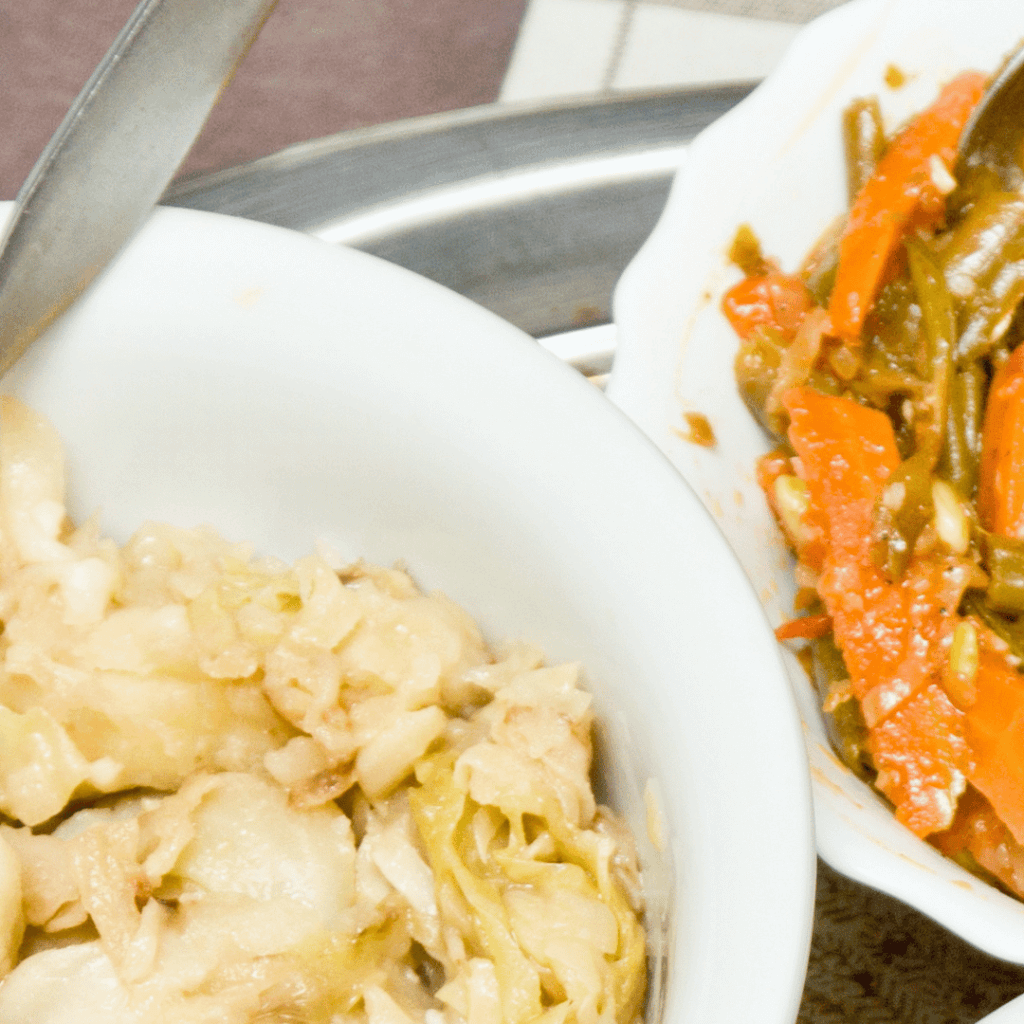
Soften a chopped onion and 2 minced garlic cloves in 2 tablespoons oil. Stir in 1 teaspoon turmeric. Add 1 small sliced cabbage, 3 sliced carrots and 2 cubed potatoes. Add enough water to keep the vegetables from catching, cover and simmer until the potatoes are tender. Season to taste.
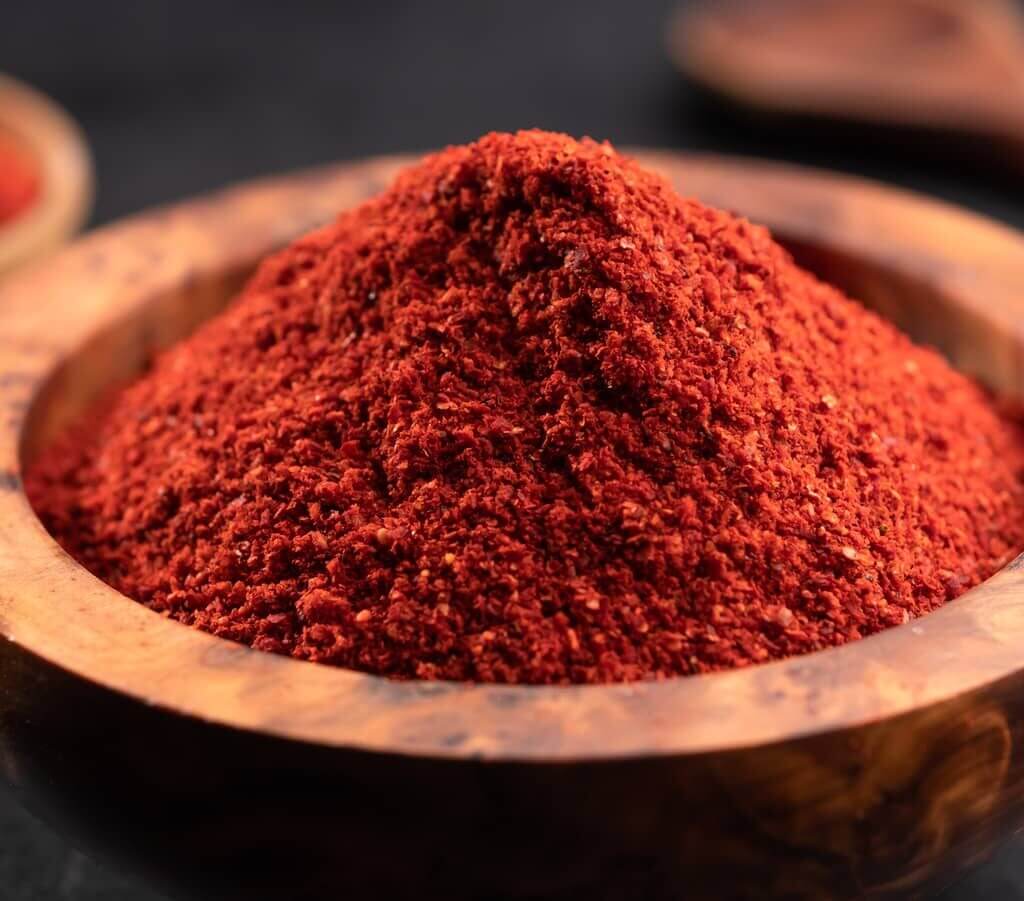
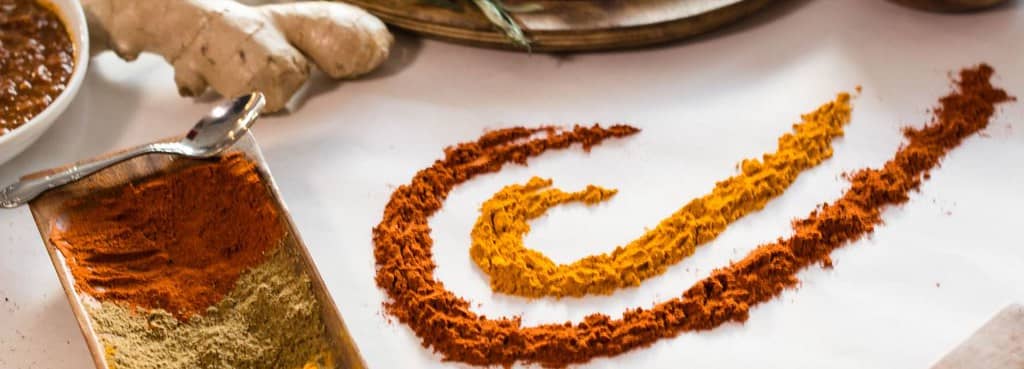
Serve the dishes with injera. If you’re making a platter, choose one mild dish to balance a berbere-seasoned stew. Our Ethiopian cuisine guide explains how to serve a shared meal. FAO’s account of injera and pulse-based wat
To serve all four dishes hot, start with the lentils and potatoes. Prepare the greens while they simmer and finish with the shiro. Add the stews and vegetables to the injera just before serving so the bread under them has time to soak up some sauce without getting too soft.