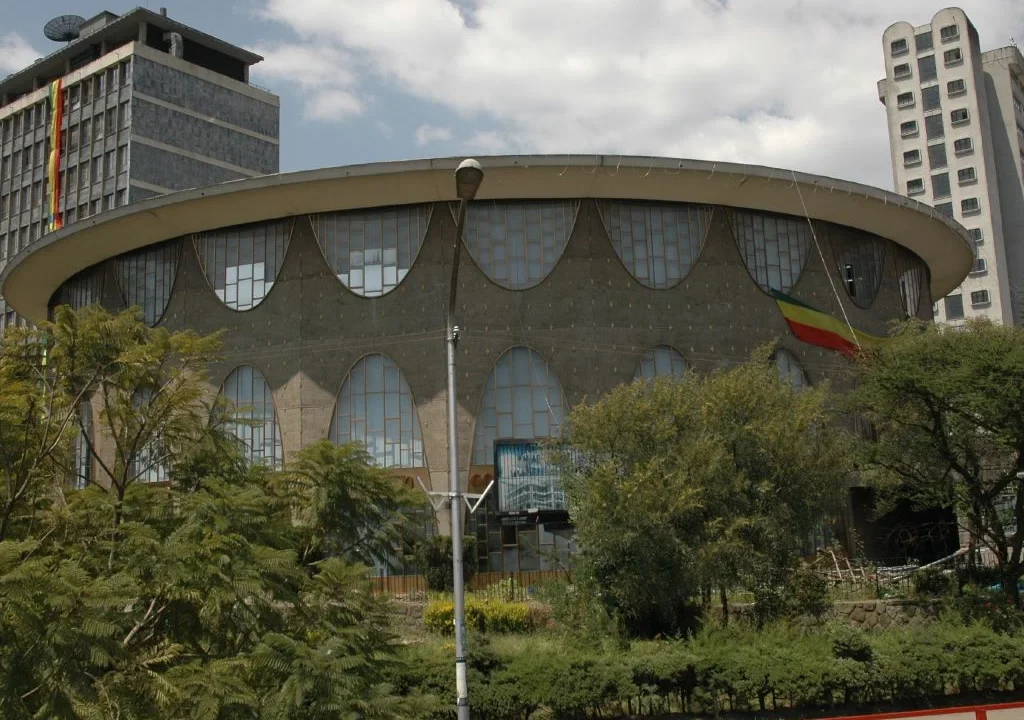
A Commercial Bank of Ethiopia building in Addis Ababa, photographed in 2007. File photo by VBzi via Wikimedia Commons, CC BY 2.0. Cropped for this article.
Ethiopia’s rules for an interest-free interbank money market took effect on 12 November 2026, according to the National Bank of Ethiopia. The directive gives eligible banks a way to place surplus funds or obtain short-term funding through investment agreements. National Bank of Ethiopia Directive EPD/02/2026, sections 3–5 and 20.
The central bank says it designed the market to help interest-free banks manage their funding needs and improve how cash moves between banks. It uses the trading and settlement infrastructure of Ethiopia’s existing interbank money market, which the National Bank says was launched in October 2024. National Bank directive · National Bank background on the interbank market.
Which banks can participate?
According to the National Bank, licensed interest-free banks and approved interest-free windows at conventional banks can apply in writing. An interest-free window is a unit within a bank that offers interest-free financial services. The directive gives the National Bank five working days to respond. Participants must also sign the master investment agency agreement before trading. Directive EPD/02/2026, sections 4–5.
How a transaction works
Under the National Bank’s rules, trades are denominated in Ethiopian birr and start at 25 million birr, with additional amounts in multiples of 1 million birr. The standard terms are overnight and seven days, subject to any changes the central bank specifies. Participants use an approved electronic trading platform, and funds settle through the National Bank’s real-time gross settlement system. Directive EPD/02/2026, sections 3, 6–8 and 10.
One bank provides the funds and another invests them as its agent. The National Bank says the expected profit rate quoted for the deal is an estimate. If the actual profit falls short, the model agreement says the bank that supplied the funds receives its principal plus the profit actually earned. Directive EPD/02/2026, sections 6 and 8 and Appendix 1.
Who bears the risk if an investment loses money?
Under the National Bank’s model agreement, the bank that provided the funds bears an investment loss when the agent is free of fault. If the loss results from the agent’s misconduct, negligence or breach of the agreement, the agent owes the full amount invested. Banks can agree to use collateral to cover obligations arising from those failures or a payment default. The directive bars the use of collateral to guarantee an investment return. Directive EPD/02/2026, section 11 and Appendix 1.
What to watch next
A bank with surplus cash can use the market to place it for a short period. A bank expecting a near-term cash shortfall can seek funding from another participant. The directive gives both banks common terms for arranging the trade. The next signs of uptake will be how many institutions participate, how often they trade and whether activity is concentrated in overnight or seven-day deals.
Follow other changes in Ethiopia’s economy in Aemero Media’s Business section.