A cooperative can receive thousands of kilos of ripe coffee cherries and deliver a much smaller weight of exportable green beans. What makes the sale work is the record that connects the two. It tells the buyer where the cherries came from, which process was used, what the lot weighed at each stage, and who accepted responsibility for it. That record also helps the cooperative explain its accounts to members.
Who does what before the coffee leaves Ethiopia
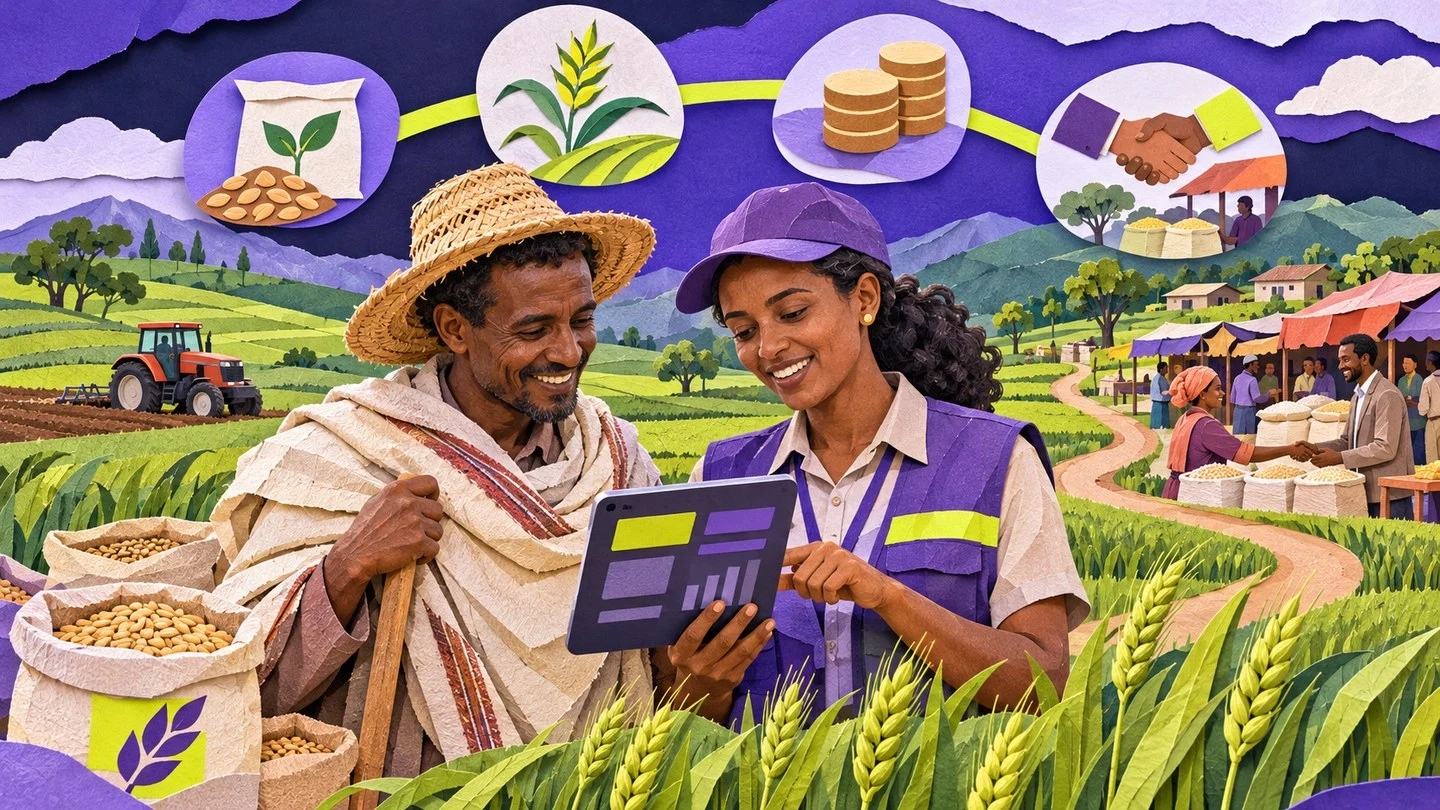
A member farmer grows and delivers coffee. A primary cooperative can collect coffee from members, arrange processing, and account for their deliveries. A cooperative union can provide services or sell on behalf of member cooperatives under the applicable arrangements. A processing station removes fruit or dries the cherries, and a dry mill prepares the resulting coffee for sale as green beans. A licensed exporter buys or handles eligible coffee for an overseas sale. A single organisation can perform more than one role if it has the applicable approvals. Ask which entity will sign, invoice, take delivery and pay before you move any coffee.
Three terms help when reading receipts. Cherry is the fruit delivered from the tree. Parchment is coffee still covered by a thin protective layer after wet processing and drying. Green coffee has been hulled and prepared for roasting. A quote for a kilo of cherry and a quote for a kilo of green coffee are prices for different things. Ethiopian Coffee and Tea Authority production guide · Ethiopian coffee origins and growing regions.
Choose the legal sales route before accepting a buyer’s offer
Check the cooperative or union’s authority to sell, its role in the transaction, and the buyer’s current licence and certificate for that role. The Ethiopian Commodity Exchange, or ECX, is one channel. Its coffee contracts describe delivery to an eligible warehouse, sampling, grading, and trading on the basis of warehouse records. A buyer using that route needs to know what origin detail and records the contract and lot can carry. Confirm the current procedure with the exchange before delivery. ECX coffee contracts and trading terms.
A permitted direct sourcing arrangement can connect an exporter with a producer or supplying organisation under the applicable rules. Exporters and their suppliers may refer to this as a vertical linkage. It can help keep the lot traceable to the station or farms, but keeping good records is still up to the parties. Ethiopia’s coffee rules have been amended since the 2017 proclamation. Ask the Ethiopian Coffee and Tea Authority which route and documentation apply to your parties, supply area, activity and contract before making a commitment. If a union plans to act as exporter itself, confirm its own authority for that activity. Coffee Marketing and Quality Control Proclamation · Coffee directives and amendments filed with the Ministry of Justice.
Give each delivery a record the farmer can check
At intake, use a consistent weighing method. Record the member or farm ID, delivery date, collection site, gross weight, container weight, and accepted net weight. Give the farmer a receipt and write down any quality decision that affects the accepted amount. Record the price or the applicable payment arrangement, who approved it, and how much has been paid. If the cooperative plans a later payment under its rules, track that obligation separately.
Link that intake record to a processing batch. If you combine deliveries, keep the list of the members and accepted kilos in the new lot. If you split a batch, give each resulting lot a distinct ID and record its parent batch. Keep harvest information and plot-level records where buyers or regulations require them. Share personal or location data only through the appropriate channel for the transaction. A mixed lot may still be traceable if you can identify every source that went into it.
Process, dry and store the lot with its identity intact
In a washed process, the station removes the skin and pulp and removes mucilage before drying the coffee in parchment. In a natural process, workers dry the whole cherry and hull away the dried fruit later. A station can use more than one method. Record the process actually used for each lot. Ethiopia’s agricultural researchers have tested several processing methods in Jimma and found differences in the resulting cup and physical qualities. The method changes what the buyer is evaluating. Ethiopian coffee processing research in Jimma.
Record the dates, sorting decisions, moisture readings, weights and storage locations. Use the buyer’s and official requirements for the route. Turn and protect drying coffee according to the station’s process. Keep dry coffee away from moisture, pests, fuels and strong odours. Record who authorises movement from the drying area to the store or mill. If a pallet or sack loses its label, hold it apart until you can reconcile its identity.
At the dry mill, weigh the incoming stock and record the cleaned output. Hulling, screening and sorting change the final weight. Keep separate figures for exportable coffee, other grades, rejects, samples and documented losses. Ask the mill for a written outturn report, which shows what came out compared with what went in. That is how you can explain a smaller delivery even when the initial cherry haul was large.
Sample, grade and agree what the exporter is buying
Draw representative samples from the identified lot using the protocol agreed with the buyer and required for the route. A hand-picked handful of the best beans gives the buyer a picture you cannot guarantee across a shipment. Label the sample with the lot ID, process, date and available quantity. The receiving exporter or buyer may evaluate physical defects and cup the coffee, which means preparing and tasting it under controlled conditions. Keep the official grade documentation and the buyer’s sample approval as separate records if both apply.
Agree in writing on the product form, grade or quality specification, lot ID, acceptable weight tolerance, price basis, delivery place, and payment date. State who pays for milling, transport, testing, storage and any regrading. Specify what happens if a representative delivery sample differs from the approved one. In a direct deal, ask which contracts, movements or warehouse receipts must go through the Authority’s systems. Ethiopian Coffee and Tea Authority stakeholder portal.
Work out the cost per kilogram you can actually sell
Suppose a cooperative accepts 12,000 kg of cherry at an illustrative 60 birr per kg. Farmer payments total 720,000 birr. Add 70,000 for processing and drying, 55,000 for milling and packing, and 55,000 for transport and administration. Total assigned cost is 900,000 birr. These are invented planning amounts. Actual cherry prices, conversion yields and costs depend on the harvest, process and contract.
If 2,040 kg meets the exporter’s specification, the example cost is about 441 birr per kg of accepted green coffee before any financing charges or income from other grades. If another 120 kg is rejected and only 1,920 kg is accepted, the same cost is about 469 birr per kg. If there is a separate sale for the rejected grade, record its actual proceeds separately. Do not count it as exportable output in this budget.
At an illustrative sale price of 500 birr per kg for all 2,040 kg, the invoice would be 1,020,000 birr. The difference of 120,000 birr is before any financing, extra charges, or distributions to members. If suppliers and farmers are due before the exporter pays, put those dates in a forecast. Working capital is the money that covers that gap. Weekly cash and payment forecast.
Hand over a lot file and reconcile payment
- Supply: the member delivery register, receipts, lot code and origin records required for the sale.
- Processing: batch records, stored weights, mill outturn, and the final bag count and net weight.
- Quality: grade documentation where required, the sample and any written approval or exception.
- Sale and dispatch: signed terms, the invoice, movement records, and the exporter’s signed receiving record.
- Payment: amount and due date, bank reference when paid, any adjustment, and the record of what is still owed to members.
Compare the weight and lot numbers at dispatch with what the exporter signs for. Investigate a discrepancy while both parties still have the weighing and sampling records. Close the sale only after you can match the invoice to the payment or explain an agreed deduction. Keep the sample and files for the agreed period in case the buyer raises a claim.
Continue with Part 2, how Ethiopian coffee exporters find buyers, ship coffee and get paid. It starts with the accepted lot and takes it through the overseas sale.
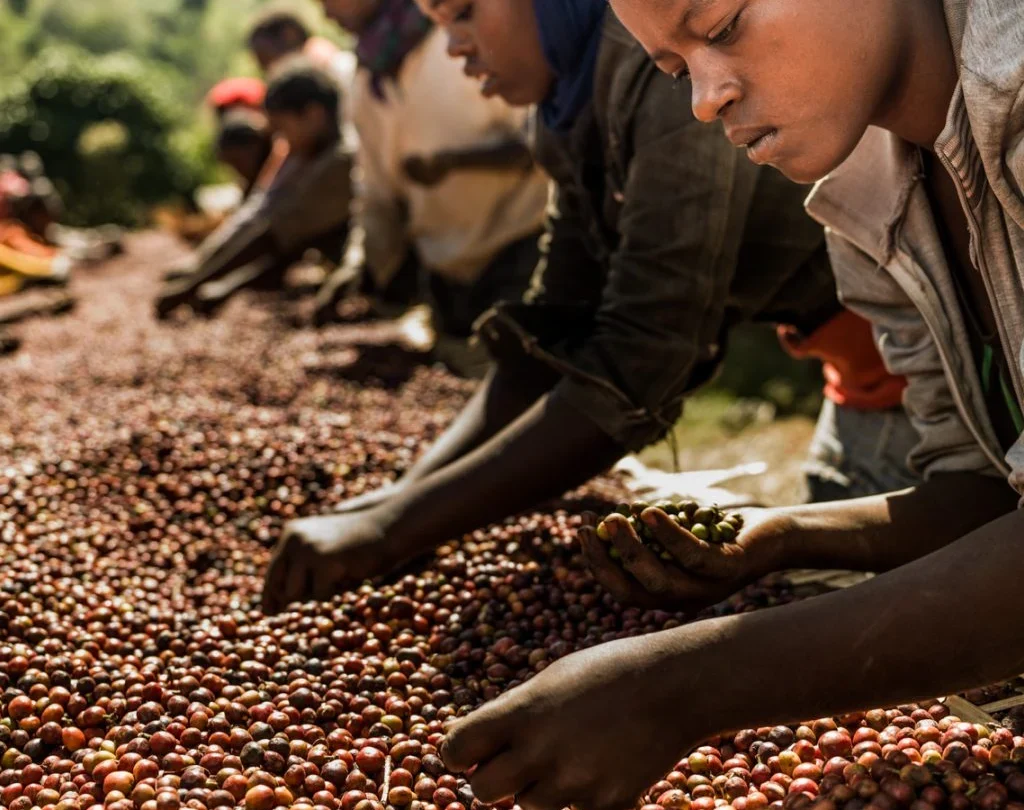
Featured photo of coffee sorting near Hawassa by Niels Van Iperen, CC BY-SA 4.0. Cropped and resized.