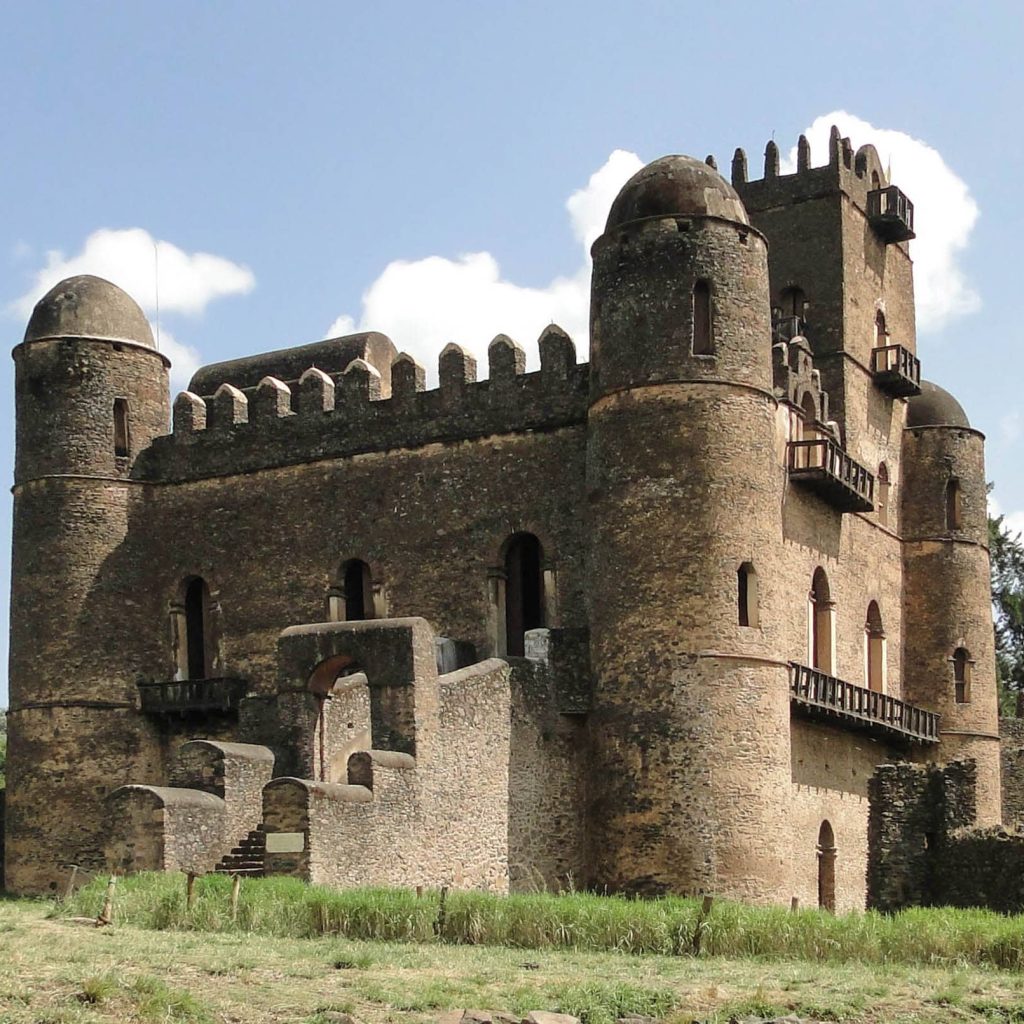
Gondar’s Royal Enclosure contains several palaces, each associated with a ruler or period of the imperial court. Emperor Fasilides established his capital at Gondar in the seventeenth century, and later rulers built within and beyond the compound. Fasil Ghebbi is the name of the walled enclosure. The wider UNESCO World Heritage property includes other monuments around the city.
On this page: Why the court settled in Gondar · Buildings to compare · Sites outside the enclosure · The bath and Timket

How a royal camp became a capital
Before the seventeenth century, the Ethiopian royal court often moved between camps. When Fasilides established a permanent capital at Gondar in the 1630s, the court began accumulating buildings that could serve successive rulers. UNESCO’s site history describes a compound with palaces, ancillary buildings and a wall roughly 900 metres long. The gates and wall help show the scale of the court, which was much larger than one emperor’s residence.
Gondar remained a royal center even as powerful regional lords gained influence. The history of the Zemene Mesafint explains why having an emperor and a royal capital did not always mean the crown controlled the provinces. See the wider history of Gondar and regional power for the transition.
Inside the Royal Enclosure

Fasilides’ castle is the building most often pictured in guides to Gondar. Look for its massive stone walls, projecting corner towers and tall entrance. Later rulers added residences and halls nearby, so a walk through the enclosure also shows how the court expanded over successive reigns.

Among the other buildings are the palace associated with Iyasu I, the library and chancellery of Tzadich Yohannes, and halls connected with Bekaffa and Mentewab. They served different purposes, from ceremony and residence to administration. UNESCO’s conservation overview gives a sense of the scale of the compound and the work needed to preserve its stone structures.

Four stops inside Fasil Ghebbi
Fasilides’ castle and Iyasu’s palace: Start with the corner towers and silhouette of Fasilides’ castle, then compare it with the remains of the palace associated with Iyasu I. Both belong to the same royal compound, but represent separate reigns and building campaigns. Compare what survives of their height and layout before drawing conclusions about how they originally looked.
Yohannes I’s library and chancellery: The two buildings help distinguish the work of a court from its ceremonial life. A library housed texts; a chancellery was associated with administration. Add Bekaffa’s banqueting hall and Mentewab’s palace to the same walk to see how much of the enclosure was devoted to functions other than defense. The Society of Architectural Historians’ field notes describe how several of these structures read on site.
What is outside the Royal Enclosure?
The World Heritage listing groups several places under one name. Qusquam, also spelled Kuskuam, lies on higher ground northwest of the city center and is associated with Mentewab’s patronage. It is separate from the palace named for her inside Fasil Ghebbi. UNESCO’s listing also includes monuments farther away, such as Gorgora and the Palace of Guzara. Treat the World Heritage map as a group of sites, not as a map of a single fenced compound.
Fasilides’ Bath and Debre Birhan Selassie
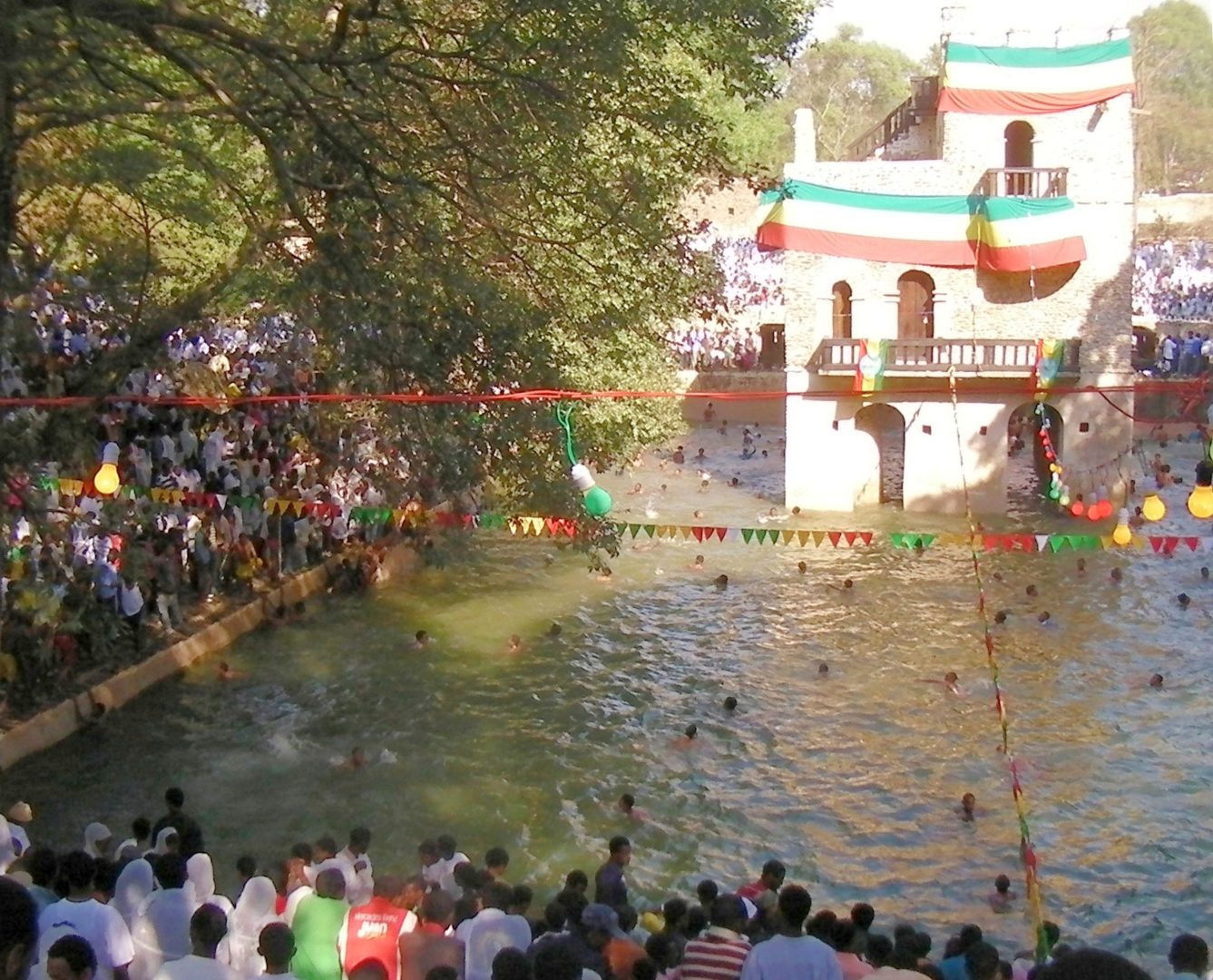
Fasilides’ Bath is outside the main enclosure. The small building stands in a large sunken pool, where Gondar holds one of its best-known public Timket celebrations. Debre Birhan Selassie is another separate stop. Its interior paintings include the winged faces across the ceiling that have become closely associated with the church.
At the bath, notice how the pavilion stands apart from the edge of the basin. During Timket, the water and surrounding grounds become part of a religious gathering; our Timket guide explains the blessing of water and the procession. At Debre Birhan Selassie, give the ceiling and the wall paintings separate attention. The UNESCO conservation account identifies both the bath and the church paintings as part of its restoration work.
Planning your time in Gondar

Give the enclosure its own visit and leave time for the bath and church elsewhere in the city. Check which structures and interiors are open locally. The bath is a working religious venue during Timket, when access and crowds differ from an ordinary day. For other examples of historic religious architecture, see the rock-hewn churches of Lalibela.