Menzuma is a name used in Ethiopia for sung or recited Islamic praise poetry. A performance can praise the Prophet Muhammad, honor a local religious figure or express devotion to God. It combines words, rhythm and melody in ways that vary across communities.
Listen for the words and the group response
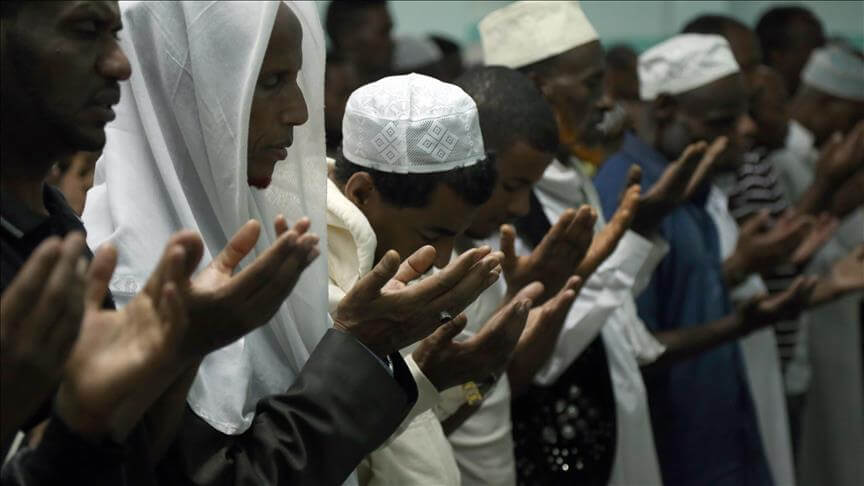
What listeners may hear
In some performances a lead voice carries a line and a group responds. Repeated phrases can help people join and remember the verse. Some traditions include percussion. The language can be Amharic, Afaan Oromo, Arabic or another language used in the community. Timkehet Teffera’s study of Ethiopian menzuma
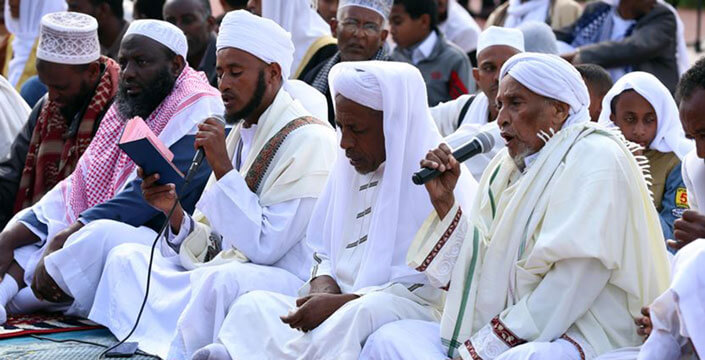
Listen for the words and the group response
A repeated response can make it possible to take part even when the lead singer changes the verse. Listen for which words stay the same, where a solo line ends and how the group comes back in. The text may teach, praise or recall a religious figure. An Addis Ababa University study examines these uses in the South Wollo repertoire of Sheikh Muhammad Yassin. Research on the South Wollo repertoire.
A Harari festival can also include devotional songs. The setting and repertoire belong to that community’s own traditions. Compare how the singing fits into the Shuwalid gathering at Harar’s shrines.
One tradition with local forms
A study of Muslim Oromo communities around Jimma analyzes a poem honoring Sayyid Ahmad Umar. The words preserve a local account of a respected religious figure. In eastern Ethiopia, terms and performance settings can differ between neighboring Oromo communities and Harar. Ethnographic study of praise poetry in the Jimma area

If you hear menzuma at a gathering, listen for how a repeated refrain helps the group take part. The tradition is one part of Ethiopia’s varied Islamic history, alongside the earlier connections remembered in the story of the First Hijra.