Islamic tradition traces one of the earliest encounters between Muslims and the Horn of Africa to the First Hijra. Around 615 CE, followers of the Prophet Muhammad crossed the Red Sea to seek refuge with a Christian ruler remembered as the Negus. The story became a lasting part of how Muslim communities recall the region’s early ties to Islam.
Two migrations that took place in different years · What a written account and a dated grave can establish
What the First Hijra was
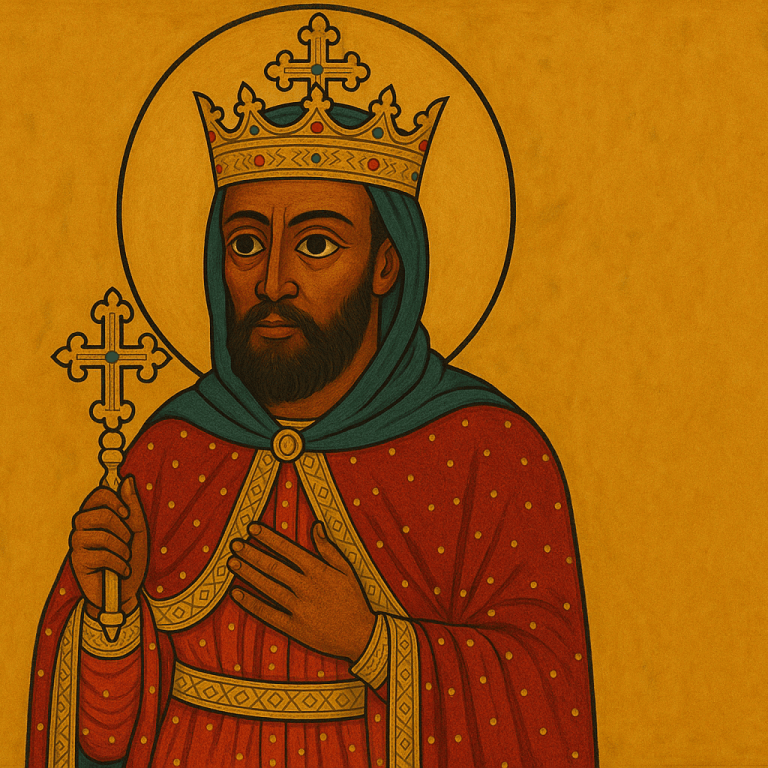
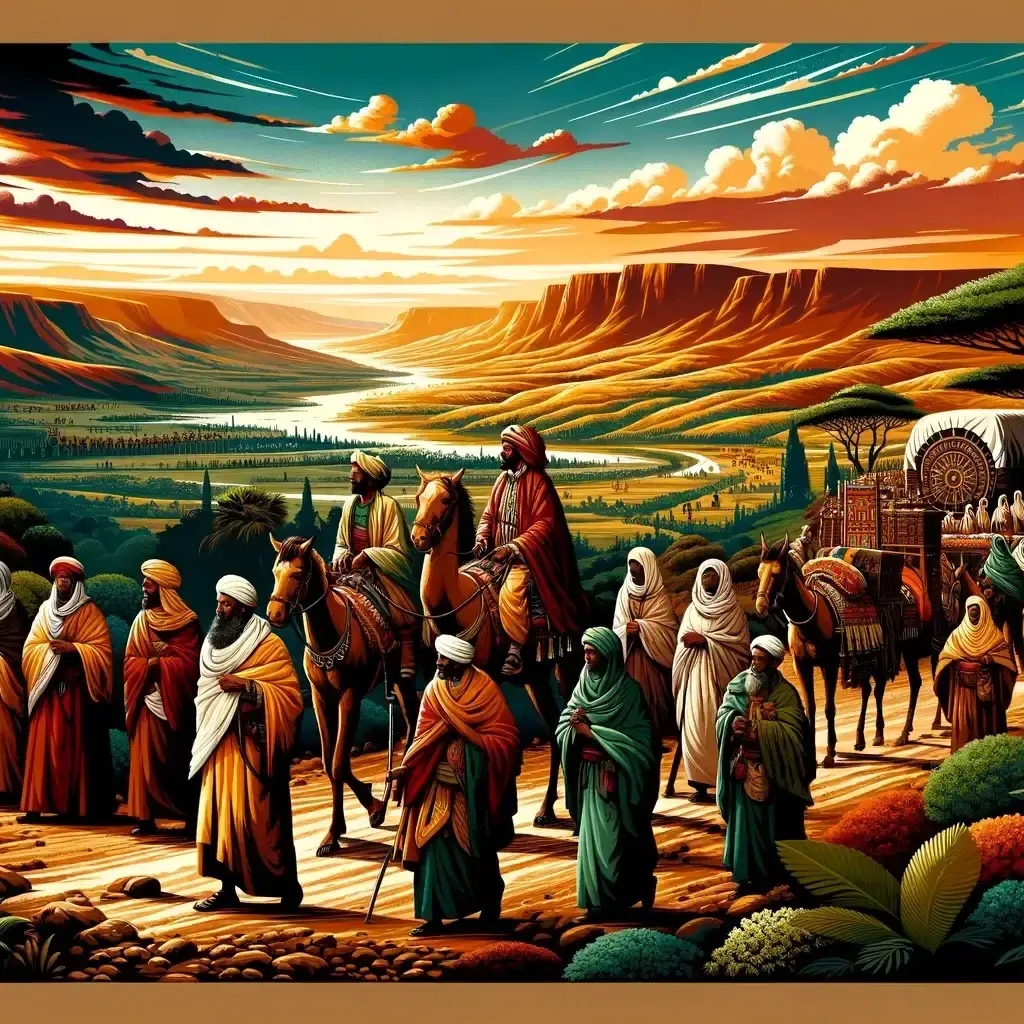
In the traditional account, Muslims left Mecca to escape persecution and found protection in the Kingdom of Aksum. The ruler, known in Arabic accounts as al-Najashi, is remembered for refusing to hand them over. This migration came before the better-known Hijra to Medina in 622, from which the Islamic calendar takes its starting point.
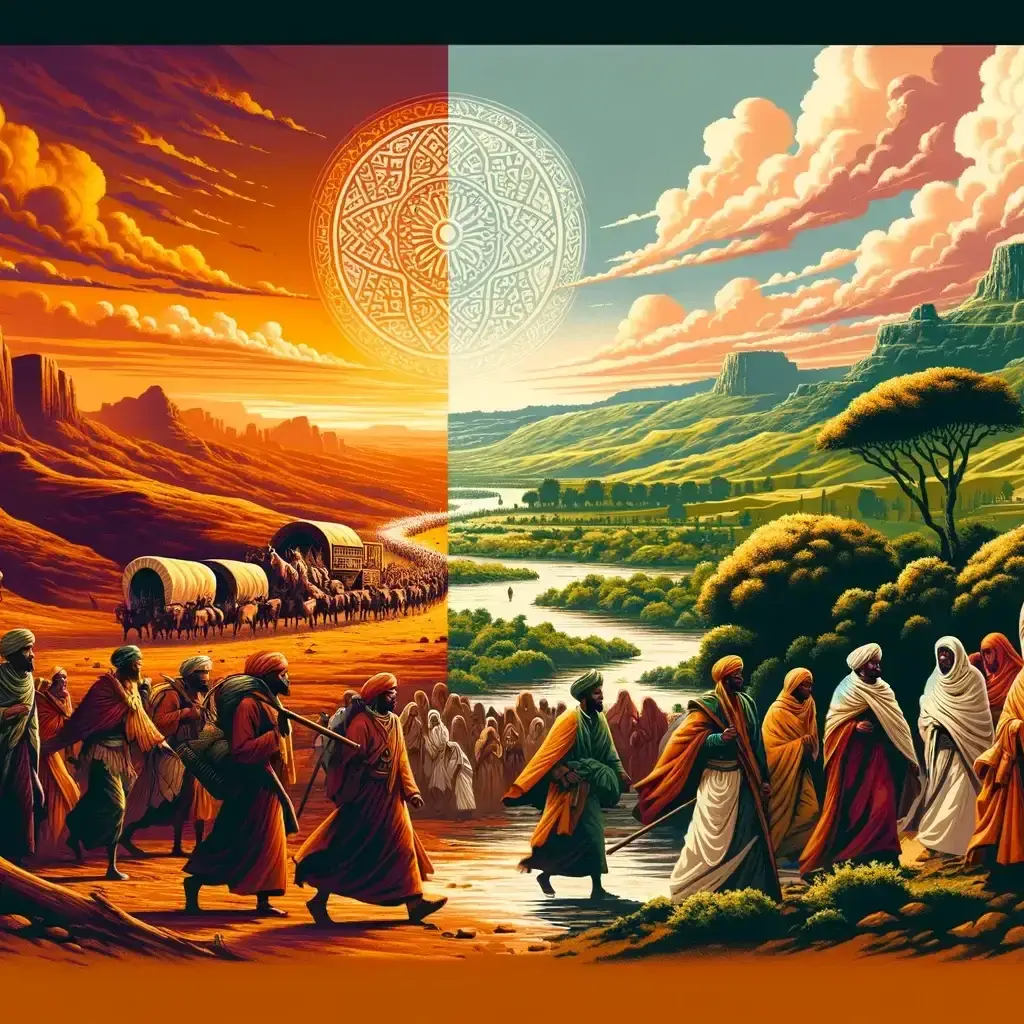
The image above is a modern illustration. The account itself survives in Islamic written tradition. An archaeological study of Islam in Tigray sets the story beside excavated evidence from later centuries.
What archaeology tells us
Researchers at Bilet, near Kwiha in Tigray, recorded Arabic-inscribed funerary stones and part of a cemetery. Those finds document a medieval Muslim community in the northern highlands. They give historians a material record for a later period, complementing the written tradition about the seventh-century migration.
Read the evidence in order. Islamic accounts place the migration around 615. Excavated cemeteries and Arabic inscriptions in Tigray document medieval communities. Written and archaeological evidence from later periods also records Muslim towns and sultanates such as Ifat and Adal.
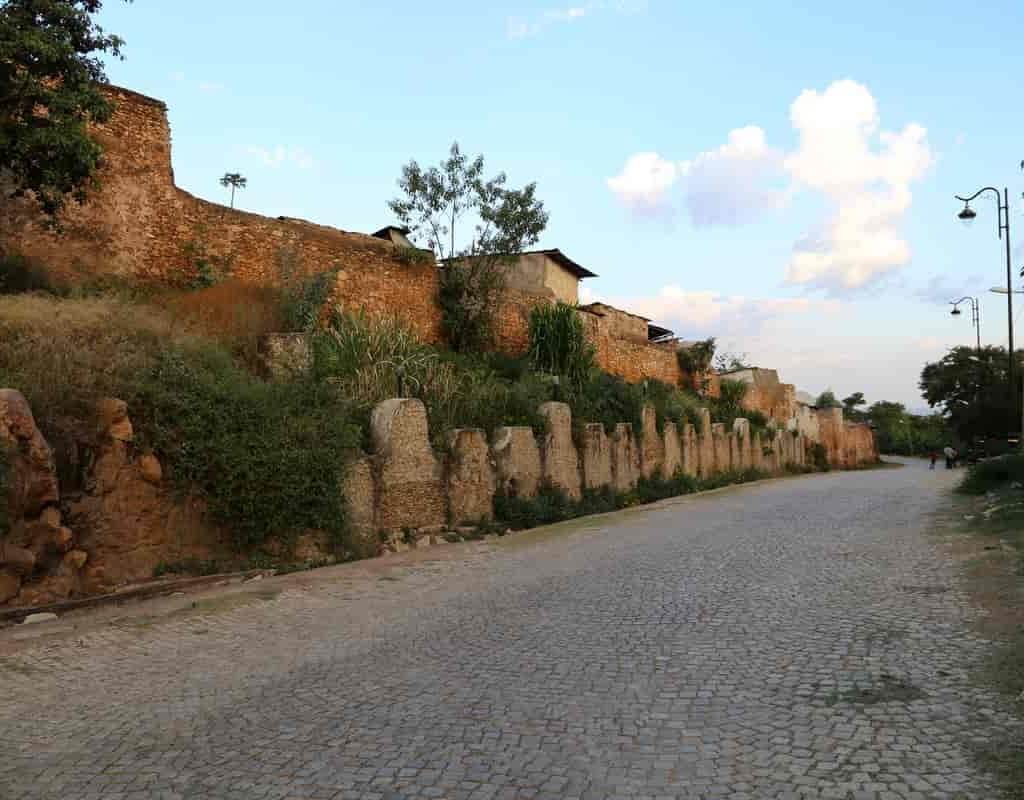
Two migrations that took place in different years
The First Hijra in the traditional account was a move from Mecca to the kingdom across the Red Sea, commonly dated around 615. Muhammad’s later migration to Medina in 622 supplies the starting point for the Islamic calendar. The two events share a word for migration. They have different destinations and a different place in the chronology. The study of Bilet discusses the two dates and the archaeological record.
What a written account and a dated grave can establish
A written tradition records the story of refugees and protection. An inscribed stone found in a burial context can help date a particular community and place. The cemetery at Bilet gives evidence for medieval Muslim life in Tigray. It cannot assign a date to the refugees or graves described in the First Hijra tradition. How Negash commemorates the earlier story.
Where the story is remembered today
Negash and the Al Nejashi Mosque in Tigray are associated with the First Hijra and appear on Ethiopia’s UNESCO World Heritage Tentative List. Farther east, Harar’s living Islamic heritage reflects a different period and setting in Ethiopia’s long Muslim history.