Start with what it costs to complete one order. Then check how many orders the business would need to sell every month at that price. A customer may be happy to pay 350 birr, but that tells you little until you know how much of the 350 birr stays with the business.
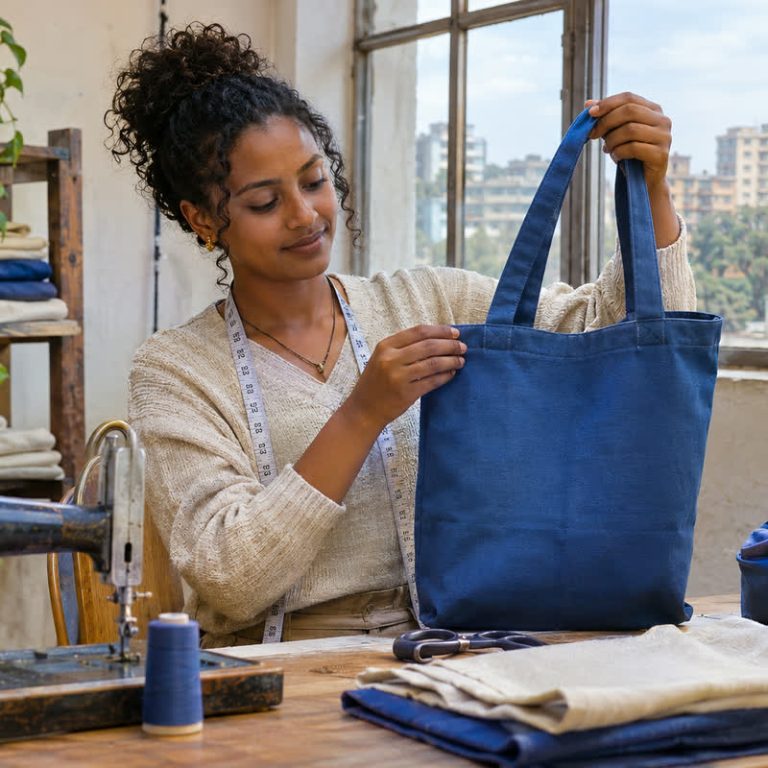
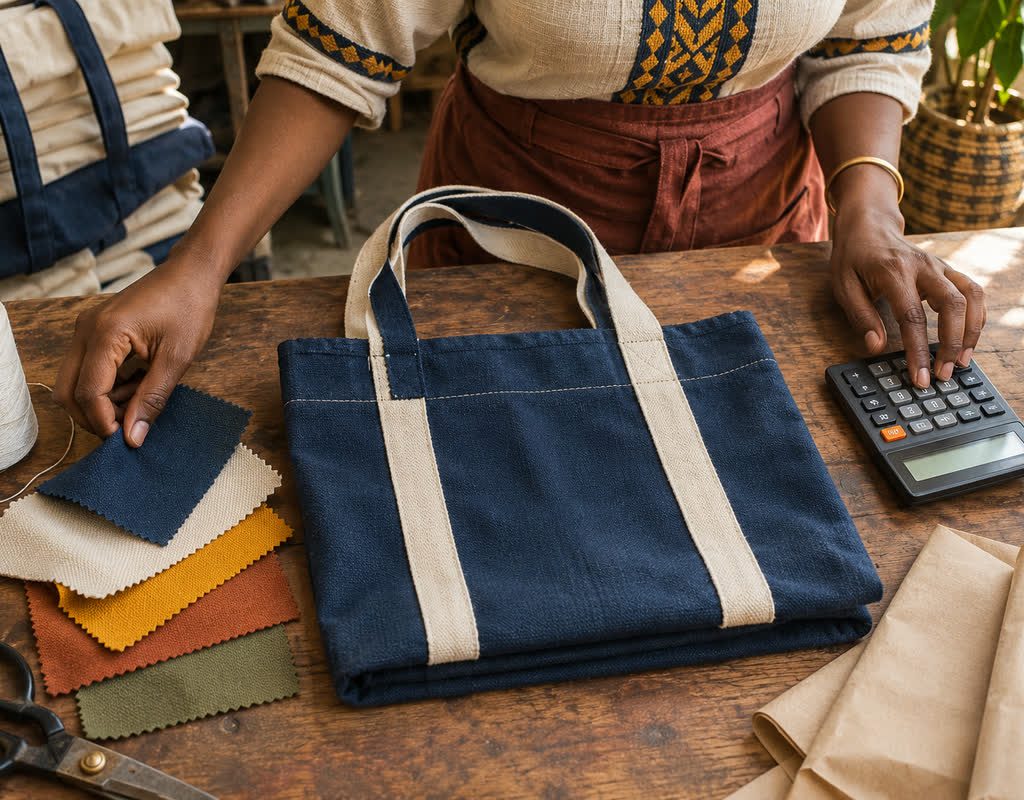
The example below follows a small canvas bag workshop in Addis Ababa. The amounts are illustrative. Use your own supplier quotes, delivery charges, payment fees, and costs. If you are still deciding what to sell, start with the small business launch checklist.
Start with the cost of one saleable item
Write down what you spend because you made and sold one item. Start with materials or the wholesale price. Add pickup from the supplier, packaging, production time, payment fees, and the part of delivery you pay. When a delivery covers several items, use a realistic cost per item or work the whole order out separately.
If you make products in batches, divide the cost by the number of units you can sell. For example, a batch costing 1,800 birr that produces ten bags costs 180 birr per bag only if all ten are saleable. If two fail inspection, the cost is 225 birr for each of the eight you can sell. Track returns and rework so you can see whether that loss was unusual or keeps happening.
Put monthly costs such as rent and a business phone plan in a separate list. These costs come due even if nobody buys a bag that month. Keep them out of the per-sale costs in the break-even calculation below. If you sew the bags yourself, set a value for your time. Decide whether to include it per bag or as a monthly amount, then count it in one place.
The bag workshop starts with a simple estimate for one sale. Its 20-birr delivery line represents the average amount the business pays. For your own shop, check that figure on actual orders.
- Materials and incoming transport: 180 birr.
- Packaging: 20 birr.
- Production labour: 30 birr.
- Delivery paid by the business: 20 birr.
With these costs the bag takes 250 birr to make and sell. If your payment provider charges you per transaction, include the actual fee in your estimate. The example assumes there is no separate payment fee.
Work out how many sales pay the monthly bills
At a selling price of 350 birr, subtract the 250 birr it takes to complete the sale. That leaves 100 birr per bag to put toward fixed costs. Accountants call this amount the contribution per sale. It becomes money left over for the business only after the fixed costs have been covered.
Break-even sales = monthly fixed costs ÷ amount left per sale. If the workshop pays 6,000 birr in fixed costs, it needs 6,000 ÷ 100, or 60 bags per month, to cover the listed operating costs. Round up if your calculation gives part of a bag. This example excludes tax and costs you have not entered. If a sale leaves zero or a negative amount, increasing the number of sales cannot cover the fixed bills. Break-even calculator.
Check the result against what you can make and sell. If the workshop can realistically sell 45 bags a month, it needs roughly 134 birr left per bag to cover its 6,000 birr in fixed costs. At 250 birr per sale in direct costs, that means a price of at least 384 birr after rounding up, under the same assumptions. If customers will pay 400 birr, the business would need 40 sales instead. Use actual orders to see whether the higher price is viable.
Test a discount with the same calculation
A discount from 350 to 320 birr leaves 70 birr per sale if the direct costs stay at 250 birr. To cover 6,000 birr, the business now needs 86 sales, 26 more than at the original price. Before offering the discount, ask how you will reach those extra buyers and whether you can fulfil that many orders.
Compare the final price of at least three offers available to the same customer. Include delivery, the minimum order, materials, turnaround time, and returns. When buyers want a lower entry price, try a simpler bag at its own price or offer pickup. Check what the change saves per sale before making it permanent.
Know what markup and margin are measuring
At 350 birr, the 100 birr left is 40% of the 250-birr cost. That is the markup on the cost in this example. The same 100 birr is about 29% of the 350-birr price. That is the share of the selling price left after the listed direct costs. If someone advises you to “add 30%,” ask which number it is 30% of before changing your price.
For an online order or a bulk sale to a retailer, calculate the price and cost for that channel. A shop might collect ten bags in one trip, while ten online orders may go to ten addresses. If the shop pays after delivery, the order may cover its costs on paper and still leave you waiting for cash. Put the agreed collection date into the four-week cash forecast.
Put your price in writing and review it after restocking
Tell the customer what the quoted price covers, when it expires, and whether delivery or applicable tax is included. Before publishing your price list or changing how you invoice, check which rules apply with your tax office. If you collect value added tax (VAT) for remittance, track it separately from the money the business earns. You can ask which invoice format and tax treatment apply to your own activity. Ethiopian Ministry of Finance tax directives.
Date your cost sheet and keep a copy of the quotes behind it. If direct costs rise by 20 birr to 270, the 350-birr price leaves only 80 birr per bag. Now you need 75 sales to cover the same monthly bills. Recheck your numbers when supplier prices, transport, or payment fees change. A business can set a review date after the next stock order and update new quotes before taking more orders. ILO training on costing and stock control.