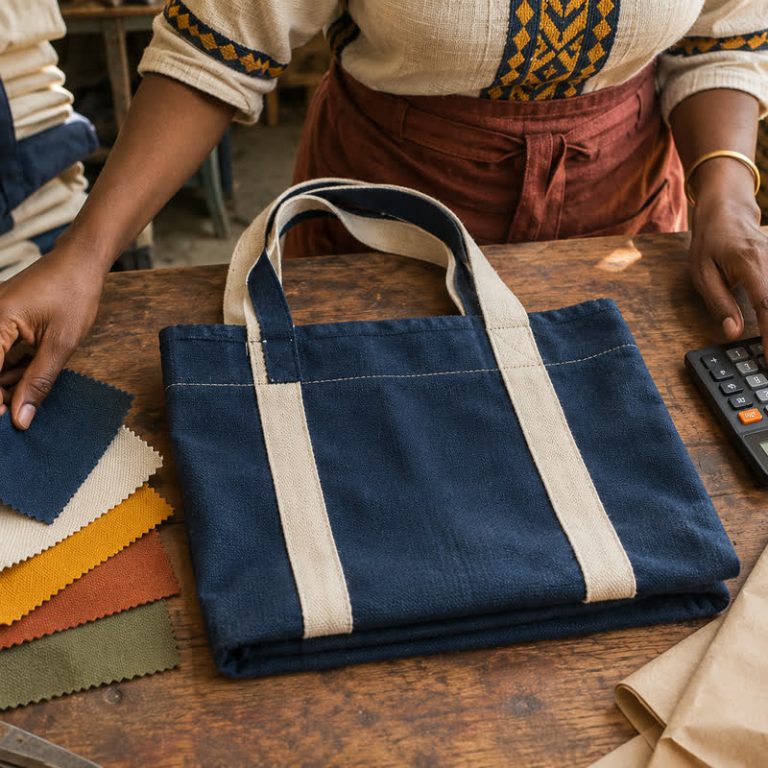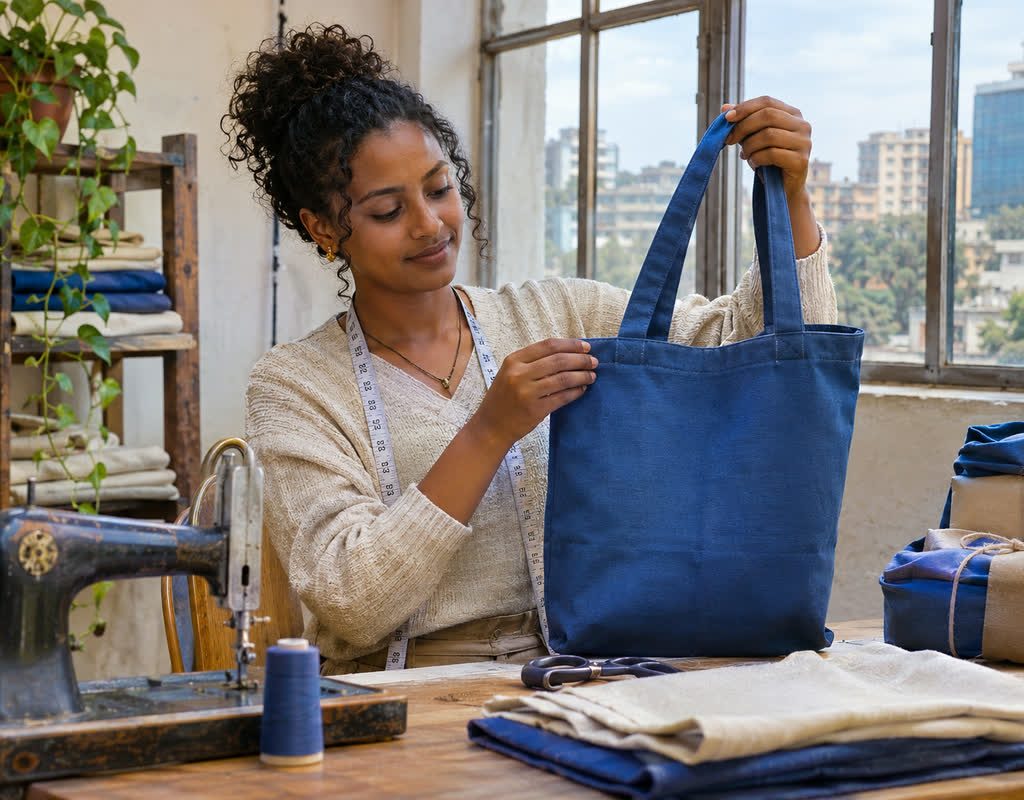
Before you sign a lease or order stock, find out who is likely to buy, what you need permission to sell, and how long your money will last. You can test the idea with conversations and samples before committing to a full launch. Check what approvals you need before you start selling or taking deposits.
This guide follows a fictional canvas bag business in Addis Ababa, from the first customer conversation to the end of the first month. The prices and costs are examples in Ethiopian birr (ETB). Replace them with quotes for your own town, trade, and suppliers.
1. Find out what customers already pay for
Choose one kind of customer first. A workshop selling directly to commuters has a different business from a workshop selling to shops that need stock every month. Talk to five people who fit the customer you have in mind. Ask what they bought the last time they needed something like your product, what it cost, and what they would change about it.
Make a sample or sketch and describe exactly what you could provide. Ask a shop owner how many bags they would carry, whether they buy upfront or pay later, and what happens to unsold stock. A commuter can tell you whether the bag needs room for a laptop or a stronger strap. Write down what would make each person choose your bag over one they already use. Those answers give you something concrete to test when you are ready to sell.
2. Decide what your first offer includes
Write an offer your customer can understand in one sentence. The workshop could offer a lined canvas bag in two colors, at 350 birr for a standard model, with a pickup point and separate charges for delivery outside a set area. Confirm how long an order takes, what you will do if a bag arrives damaged, and when you need the customer to pay. Use the same terms when you quote in person or take orders through a messaging app.
Get at least two written or dated quotes for the inputs you will use most. Ask about minimum orders, delivery, replacement of damaged materials, and price validity. Keep a reliable second supplier in mind, especially for a material that would stop production if it ran out. Our pricing guide shows how to turn those quotes into a price per order.
3. Check registration, tax and licensing
Describe exactly what you plan to do when you talk to the trade office that serves your proposed business address. “I will make and sell canvas bags from a rented workshop” is more useful than “I want a licence.” Ask which trade activity covers both making and selling the product and whether an approval for the premises or a sector competency certificate is needed. The latter is confirmation from the relevant sector authority that you meet its requirements.
The official business portal lists name registration where applicable, tax identification, commercial registration, and a trade licence among the steps. A Taxpayer Identification Number, often called a TIN, identifies you or your entity for tax purposes. Commercial registration records the business. The trade licence covers the activity you are authorised to carry out. Ask the office for the right sequence and documents for your legal form and location. Ethiopian Business Portal: Starting a Business.
If you plan to own the business yourself, ask about registering as a sole proprietor. If someone else will own part of it, agree how much each person contributes, who can sign, how money is shared, and how either person can leave. Then ask the trade office or a local legal adviser which legal form and documents fit the arrangement.
Take these questions to the office before paying a deposit. You can use the same list again if you move premises or add a new activity.
- Which office handles my business address and activity, and which identity, address, lease, or ownership papers should I bring?
- Which applications can I file online? Which certificates do I need before trading, and what are the current fees and renewal dates?
- Which tax office will handle my account? What registration, receipts, records, and filing dates apply to me?
- If I hire someone, which payroll, pension, and employee records will I need?
Save the certificates, official receipts, account references, and deadlines together. Ask the relevant revenue office to confirm your obligations, especially if you start selling through another channel or your sales grow. Ethiopian Ministry of Revenue · Ministry of Finance tax directives.
4. Build a starting budget in birr
Separate what you pay once from what you pay every month. Put supplier deposits and opening stock on the dates you will actually pay for them. Set aside a cash reserve so slow sales, rework, or a delayed delivery do not immediately stop the business.
- 18,000 birr once for equipment and setup in the example.
- 5,000 birr to make and fulfil the first 20 saleable bags at an estimated 250 birr each.
- 6,000 birr for the first month’s fixed operating costs.
- 4,000 birr held as a cash reserve.
That is 33,000 birr before adding any licence fees, premises deposit, or other costs that apply locally. If every bag sells at 350 birr, customers pay 7,000 birr in total. After the 5,000 birr batch costs, the batch leaves 2,000 birr toward fixed costs. It is a test of the offer. At that price and cost, it takes 60 sales to cover 6,000 birr in monthly fixed bills.
Before borrowing, work out which expenses can wait and what you could pay in a slow month. Put the lender’s written repayment dates and fees into your budget alongside the instalment estimate. Ethiopian Loan Calculator.
5. Set up orders, payments and records
Create a simple order log before your first sale. Record the order number, item, price, payment channel, deposit if any, delivery date, and status. Accept only the payment methods you can check reliably. If a buyer sends a screenshot, check the payment in your own wallet or bank account before marking it paid. Confirm which receipt or invoice your revenue office requires for a sale and keep a copy.
Keep the business money in a separate account or wallet where practical. If you use cash, give the business a separate cash box and count it at the end of the day. Record money you put in or draw out for yourself so you can distinguish it from customer payments. Weekly cash flow and bookkeeping guide.
6. Run a small launch and review the first month
Once the applicable approvals are in place, start with a batch you can afford to replace. Each week, record how many orders came in, how many went out on time, how much customers paid, how much they still owe, and what each order cost. Ask people who bought what they liked and what held up the purchase. You can learn as much from a cancelled order as from a good review.
At the end of the month, count the stock, check whether a normal sale still leaves money after its direct costs, and look at the next four weeks of bills. If customers want the bag and the numbers work, reorder the best-selling version in a batch your cash can cover. If sales are weak or costs have moved, change one thing first, such as the pickup point, the bag design, or the price. That makes it easier to see what helped. ILO Start and Improve Your Business programme.