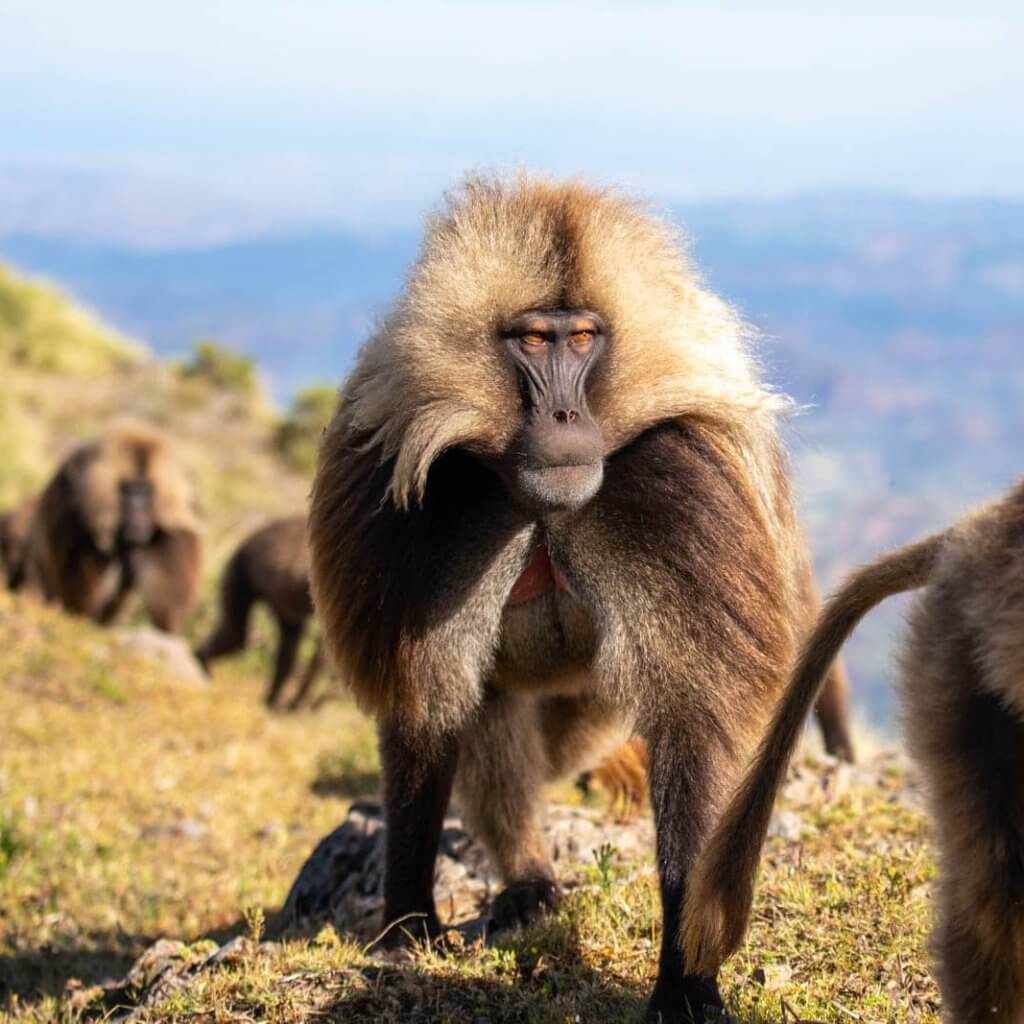
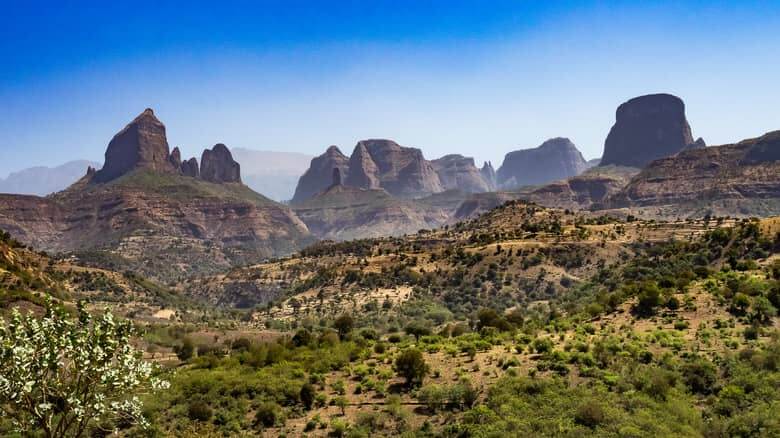
The Simien Mountains are best understood from the edge of the escarpment. High grasslands end in cliffs that drop toward steep valleys and isolated peaks. The national park protects this northern Ethiopian landscape and wildlife such as geladas, Walia ibex and Ethiopian wolves. UNESCO added the park to the World Heritage List in 1978.
What the escarpment shows about the landscape · Compare a short viewpoint stop with a longer trek
Where the main trekking routes begin
Debark is the usual starting point for arranging a visit. Sankaber and the escarpment around it suit a shorter outing when the route is open. Longer routes may link Sankaber, Gich and the viewpoint at Imet Gogo. The tourism authority’s Simien Mountains guide describes these trails. Ask the park about current access, guides, camp arrangements and transport before committing to an itinerary.

What the escarpment shows about the landscape
Look across a valley and compare the high grassy tops with the rock faces below them. Erosion over a long period cut deep valleys into the high massif. A walk that follows the edge gives repeated views of the same landforms from different angles. Beyond the viewpoints, exposed slopes and changing elevation matter for pace, visibility and temperature. UNESCO’s description of the escarpment and erosion.
Compare a short viewpoint stop with a longer trek
A shorter outing can focus on the edge of the plateau near Sankaber. A longer itinerary toward Gich and Imet Gogo needs time for walking between camps, weather and changes in trail access. On any route, scan the grassland for groups of geladas and the rocky faces for ibex, with sightings dependent on conditions. As of November 12, 2026, the UK advisory warns against all travel to Amhara. For another highland landscape, compare Bale’s grasslands, plateau and forest. Current regional travel advisory.
Geladas, Walia ibex and Ethiopian wolves
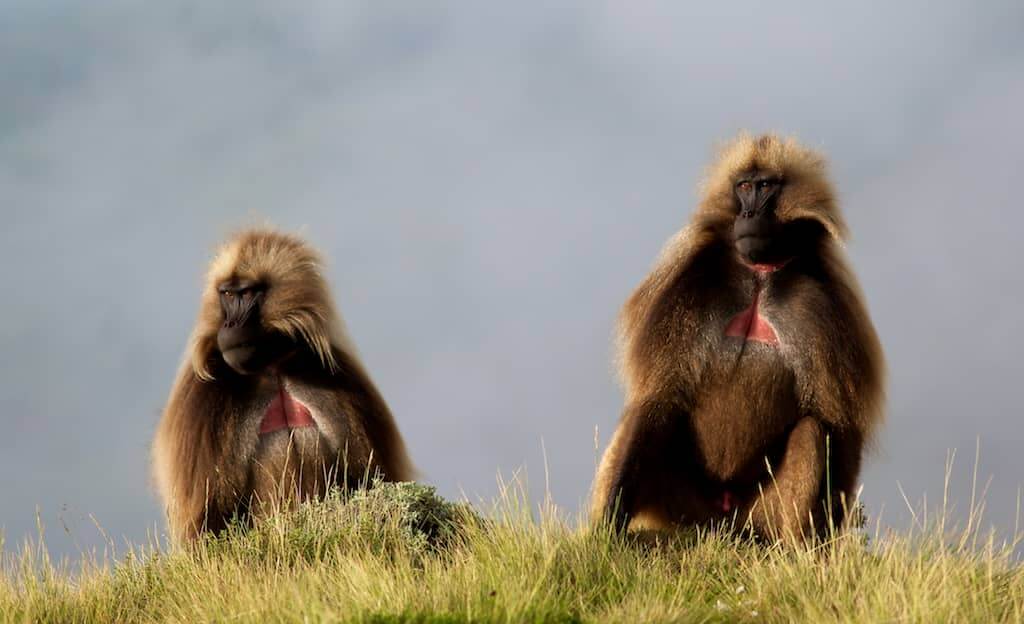
Geladas are grass-eating primates often seen feeding in groups on the high plateau. Walia ibex use the steep cliffs and rocky ledges, while Ethiopian wolves hunt rodents in open highland habitat. Sightings depend on the route and conditions. In 2025 the World Heritage Committee called for action after a reported decline in Walia ibex numbers.
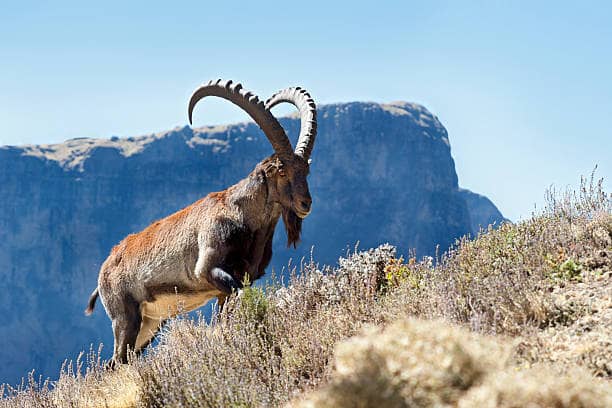
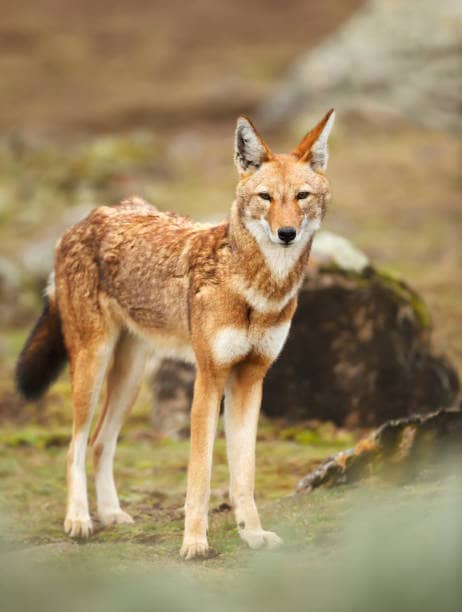
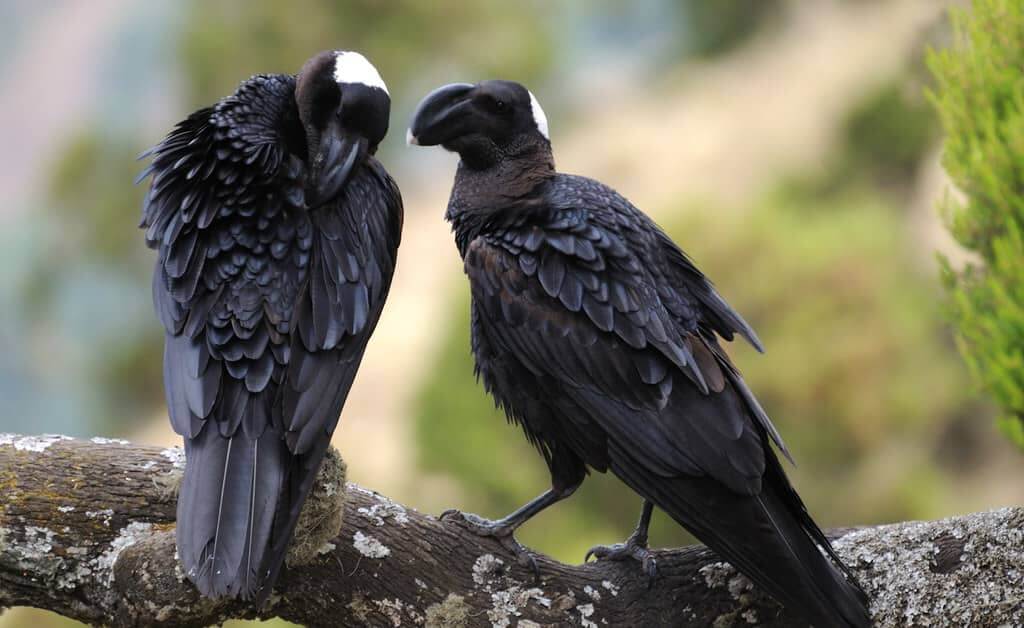
For birdwatchers, the cliffs and open slopes offer a chance to look for large highland birds, including the thick-billed raven. Bring binoculars so you can watch from a distance.
What to check before you leave
The high plateau can be cold, windy or foggy, even when conditions in town are mild. Plan a route that fits your group and ask about the latest road and trail conditions. If you are starting in Gondar, allow time for the transfer to Debark. For Ethiopia’s other natural World Heritage site, see Bale Mountains National Park.