Imam Ahmad ibn Ibrahim al-Ghazi led forces from the Adal Sultanate in a sixteenth-century war against the Ethiopian Christian kingdom. He is also known as Ahmad Gragn or Ahmad Gurey. His campaigns reached deep into the highlands and changed the balance of power in the Horn of Africa before his death in battle in 1543.
On this page: Adal and Ifat · Shimbra Kure and the expansion of the war · How to read the chronicles · 1540–1543 · After Wayna Daga

Adal and the campaign in the highlands
Adal was one of several Muslim states that developed along trade routes between the interior and the coast. Relations with the Christian kingdom included commerce and periods of warfare. Under Ahmad, the conflict grew into a sustained campaign. Archaeological research on medieval Ethiopia places Adal within a longer history of regional connections.

Adal and Ifat were related states
Ifat preceded Adal as an important Muslim sultanate in the region. Over the fifteenth century, Adal emerged as the successor power from which Ahmad later drew support. The chronology matters: Ahmad did not found Adal, and the states that preceded him had their own histories of trade, diplomacy and conflict with the Christian highland kingdom. Archaeological research in Antiquity uses excavated sites and written sources to recover those wider connections.
Harar’s religious and trading history extends far beyond the campaign. The Harar Jugol and Harari culture guide follows the city through later centuries, while our medieval history overview explains where Ifat and Adal fit among neighboring states.
From Shimbra Kure to a longer war
At Shimbra Kure in 1529, Ahmad fought the forces of Emperor Lebna Dengel. The battle and the wider push into the highlands were separate stages. The campaigns expanded in the early 1530s into areas such as Dawaro. This is why a history may give 1529 for the major early battle and around 1531 for the start of the sustained conquest. Amélie Chekroun and Bertrand Hirsch compare the sources and their chronology.
What the campaign chronicle tells us
A principal source is the Futuh al-Habasha, written in Arabic by Shihab al-Din Ahmad, also known as Arab Faqih. It describes the early campaigns from the Adal side. The chronicle’s English edition and source notes explain that the surviving account ends in 1535, before the war ended. That gap matters when comparing accounts of Ahmad’s later years.
The Arabic chronicle helps explain the early campaigning but cannot be used as an eyewitness narrative of Wayna Daga in 1543. For the final years, the edition of Miguel de Castanhoso’s account and contemporary letters offers evidence from a Portuguese participant and correspondence connected with the Ethiopian court. Castanhoso wrote from the side that sent the expedition. Read him alongside Arab Faqih’s account with each author’s dates, audience and allegiance in mind.
From Lebna Dengel to Gelawdewos, 1540–1543
Lebna Dengel died in 1540 and his son Gelawdewos succeeded him during the war. A Portuguese force led by Cristóvão da Gama arrived in 1541. Da Gama was captured and killed after a defeat in 1542. Survivors of his force later joined Gelawdewos. The Portuguese accounts in the Hakluyt Society edition cover the expedition; Gelawdewos’s correspondence in the same volume records how the Ethiopian ruler described Portuguese service.
Portuguese intervention and Ahmad’s death
Portuguese soldiers arrived to support the Ethiopian Christian kingdom. In 1543, forces under Emperor Gelawdewos, with Portuguese support, defeated Ahmad’s army at Wayna Daga. Ahmad died in the battle. The war damaged towns, churches and monasteries and reshaped the region’s politics. It is one episode in the wider history of medieval and early modern Ethiopia, alongside the trade and other ties that continued across religious boundaries.

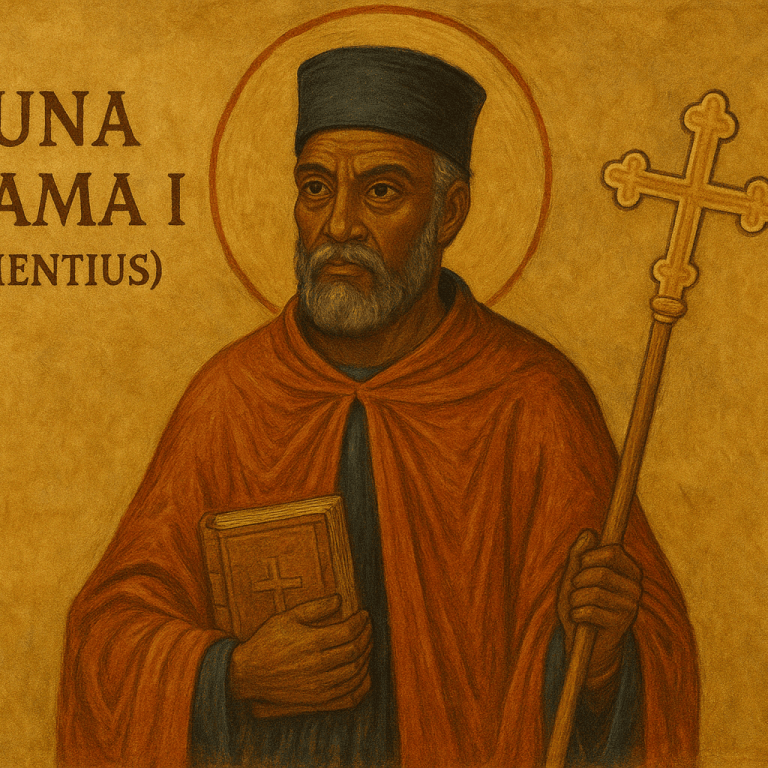
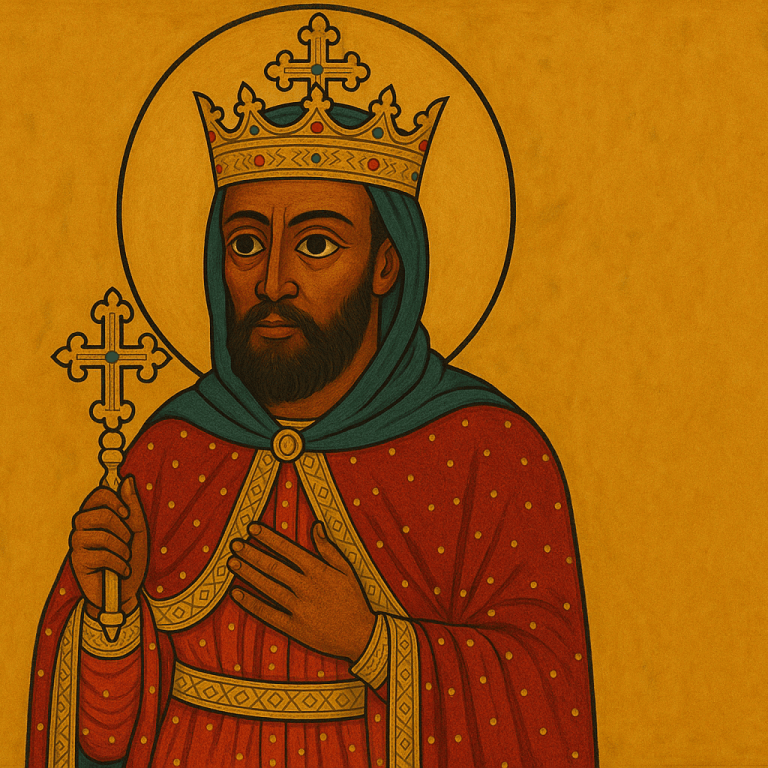
The images on this page are modern illustrations. For the living heritage of the city associated with Adal, see our guide to Harari culture and Harar Jugol.
What Ahmad’s death ended, and what it did not
Ahmad’s death ended his highland campaign. It did not erase Adal or settle the longer rivalry between the two states. Gelawdewos himself was killed in a later conflict in 1559. The wars had affected religious institutions, settlement and political authority over several decades, so the outcome of one battle explains only part of the transition. The history of the Solomonic dynasty follows the Ethiopian court beyond that period.