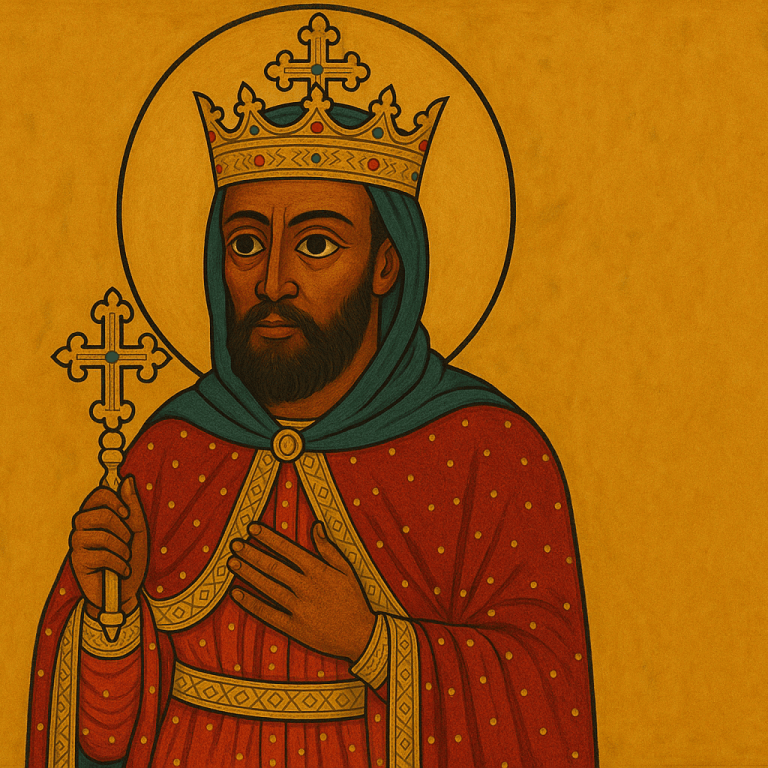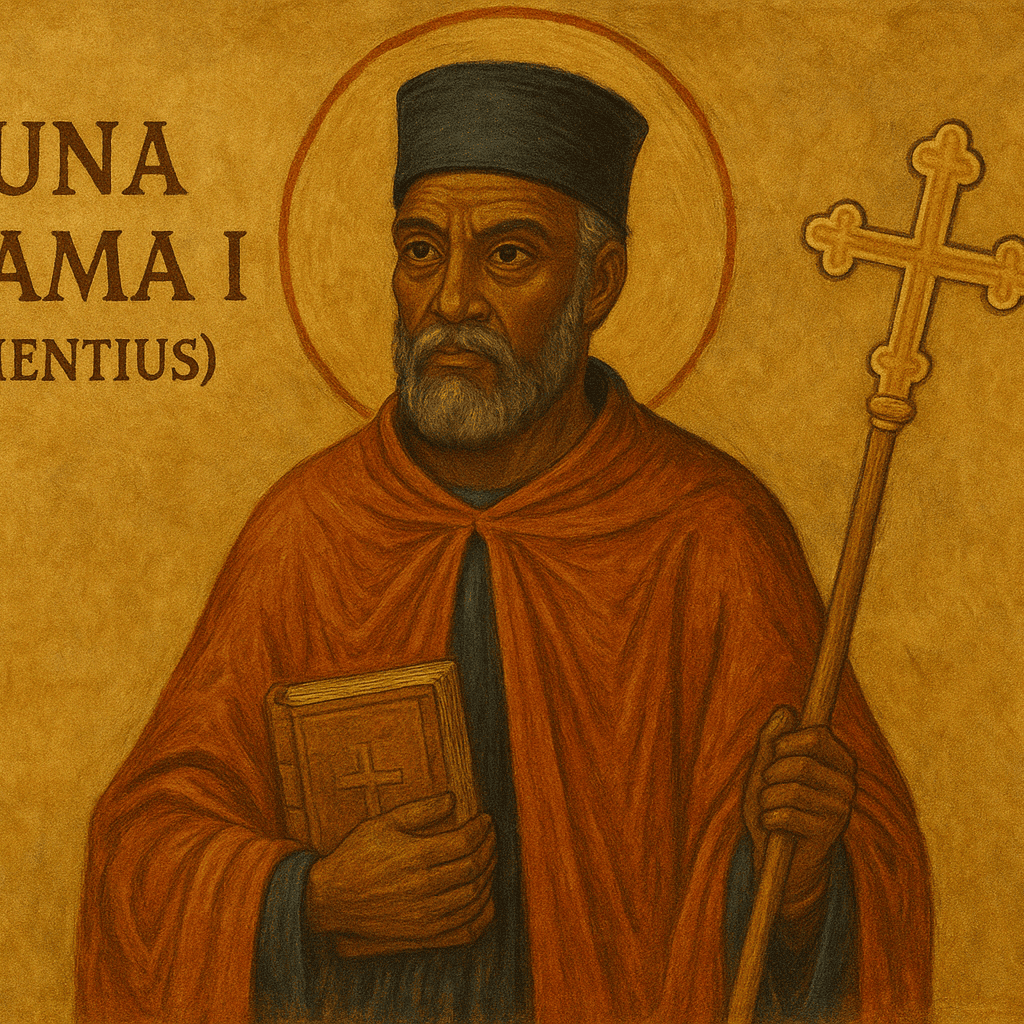
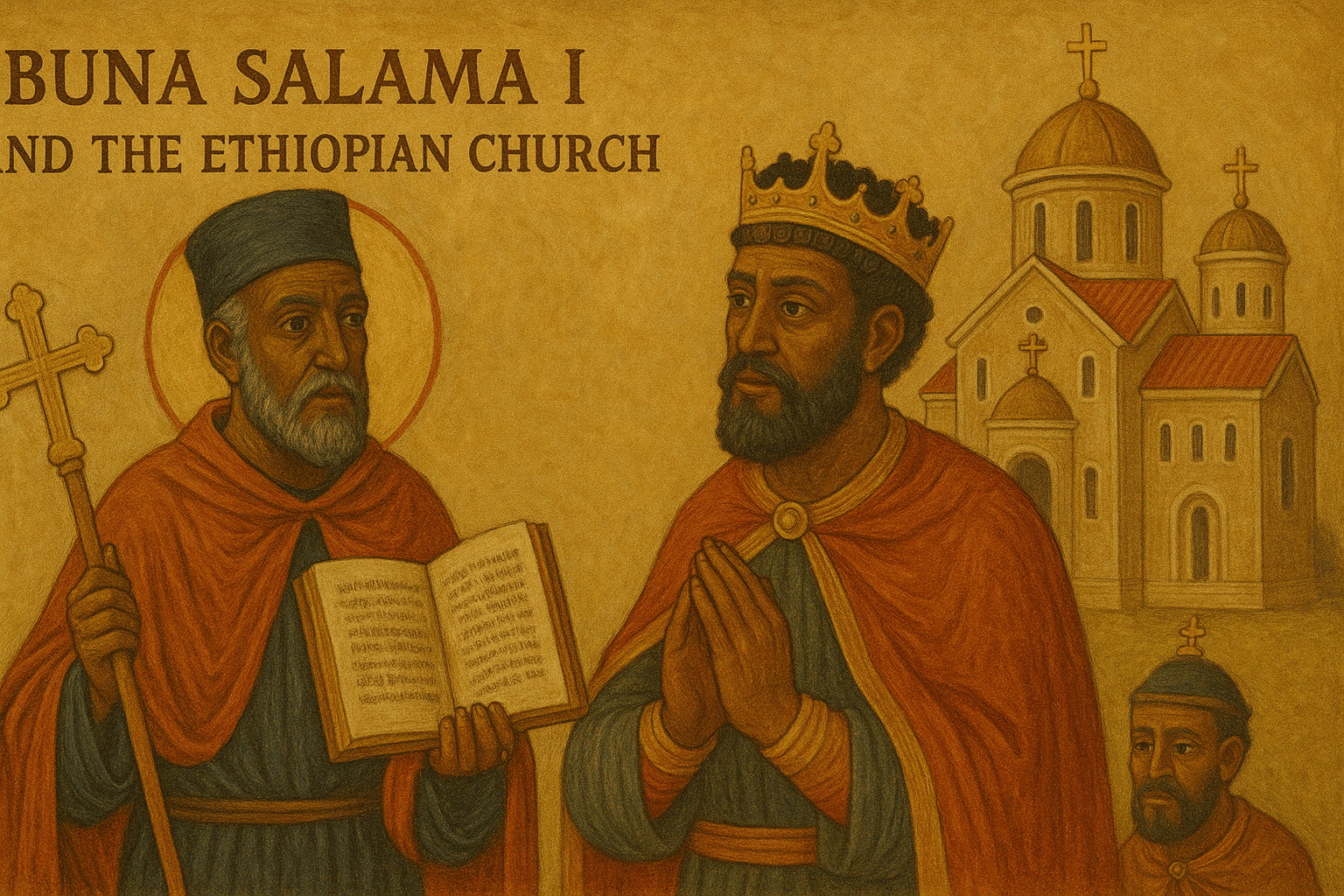
Abuna Salama I, also written Abune Selam or Abba Selama, is the name by which Ethiopian Orthodox tradition remembers Frumentius, the first bishop of Aksum. He lived in the fourth century, when the kingdom linked the highlands of present-day Ethiopia and Eritrea to the Red Sea. A Roman emperor’s letter confirms that Athanasius of Alexandria appointed him bishop. The story of how he arrived as a young man and came to serve at court was written down several decades later.
From Tyre to Aksum · The emperor’s letter · The basilica at Beta Samati · How the church remembers him
How Frumentius came to Aksum
In the early fifth century, Rufinus of Aquileia told the story of two young companions, Frumentius and Aedesius, who traveled with a man from Tyre named Meropius. In his account, the party stopped at a port and was attacked. Meropius was killed, but the two young travelers survived and were taken to the king. The king gave Aedesius a place in his household and entrusted Frumentius with responsibilities at court. After the king died, the queen asked them to stay and help while the heir was still young. Rufinus says he learned the story from Aedesius, who later became a priest in Tyre. Rufinus, Church History, Book 10, chapters 9–10.
Rufinus says Frumentius sought out Christian merchants and helped them find places to gather for prayer. That detail matters: in the account itself, Christians were already present before Aksum had a bishop. The kingdom’s port of Adulis, on the coast of present-day Eritrea, linked the inland capital with maritime trade. Rufinus gives no secure identification for the port where the attack occurred. Read how Aksum traded through Adulis. Eivind Heldaas Seland’s study of Christianity and Red Sea commerce.

Why he went to Alexandria
Once the heir came of age, Aedesius went back to Tyre and Frumentius traveled to Alexandria. In Rufinus’s account, he asked Athanasius to send a bishop to serve Aksum’s Christians. Athanasius chose Frumentius himself. The appointment put someone who already knew the court and its Christian community in charge of a local church linked to Alexandria.
The exact year of his consecration is debated. Athanasius became bishop of Alexandria in 328, and Rufinus describes Frumentius arriving when Athanasius was relatively new in office. The imperial letter, usually dated to about 356–357, already calls Frumentius a bishop. Historians differ on how to reconcile the two accounts. The letter gives us a date by which he held office. It gives no year for the ceremony itself. Aaron Michael Butts on the chronology.
What the letter from Constantius tells us
Roman emperor Constantius II addressed the letter to Ezana and Sazana, two Aksumite rulers. He wanted them to send Frumentius to Egypt to answer to George, the bishop he backed after Athanasius was driven from Alexandria. The dispute grew out of disagreements over Christian doctrine, including how the Son relates to the Father, and over who had the authority to appoint bishops. By asking Aksum’s rulers to send Frumentius back, Constantius was trying to extend his church policy beyond Roman territory. Read the letter in Athanasius’s Apology to the Emperor, section 31.
Athanasius preserved the letter in a defense of his own conduct. Even in that partisan setting, the request is valuable evidence: Constantius’s side acknowledged that Frumentius held office and that Athanasius had appointed him. The surviving record does not tell us how Ezana and Sazana responded or whether Frumentius went to Egypt as ordered.
What Rufinus and Constantius each tell us
Rufinus gives us the voyage, the young men’s roles at court and the appeal to Alexandria. The emperor’s letter gives us the bishop’s name, office and connection to Athanasius during his lifetime. Rufinus does not name the young heir. Later readers often identify him as Ezana, but the letter does not establish who taught Ezana as a child or who baptized him. Later Greek and Geʽez accounts carry versions of Rufinus’s story, so their agreement on some details can reflect a shared source. Butts compares the versions and the Aksumite evidence.
What Aksum’s evidence adds to the church histories
Ezana’s own coins and inscriptions show how the court presented itself. Some coins carry a disc and crescent, associated with earlier religious practice. Others bear a cross. In one Greek inscription, known to historians as RIÉ 271, Ezana invokes the Father, Son and Holy Spirit and credits Jesus Christ with helping him. That inscription is evidence of the king publicly identifying with Christianity. The coins cannot date a baptism or tell us how soon households outside the court adopted the faith. Read more about what Ezana’s inscriptions say.
An early church at Beta Samati
At Beta Samati, near Yeha in northern Ethiopia, excavators uncovered a basilica in a settlement on the route between Aksum and the Red Sea. The team’s radiocarbon evidence places its earliest use in the fourth century. Just outside the eastern wall, the team found a small stone pendant bearing a cross and letters they tentatively read as Geʽez. These finds give us a place outside the royal capital where early Christian worship took shape. No inscription at the site ties the building to Frumentius personally. Read the Beta Samati excavation report.
How the Ethiopian church remembers Abune Selam
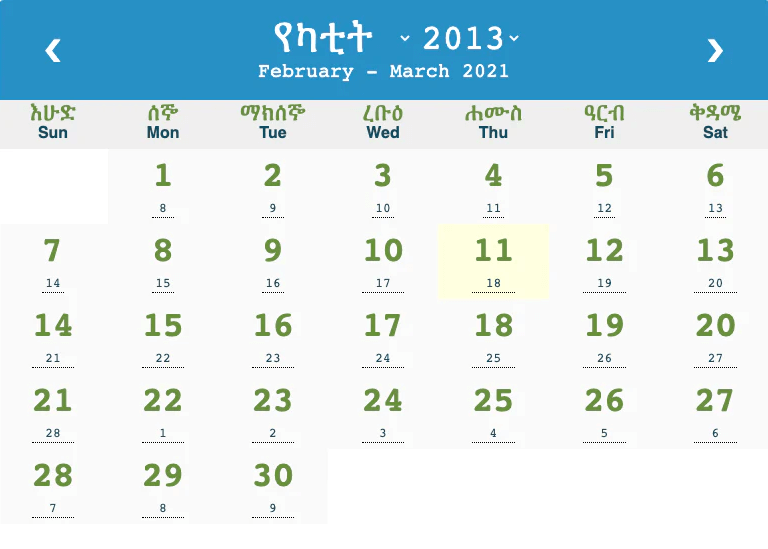
In Ethiopian Orthodox tradition he is also called ሰላማ ከሣቴ ብርሃን, Salama Kesate Birhan. The epithet Kesate Birhan means “Revealer of Light.” The Synaxarium, a collection of readings for saints’ feast days, commemorates his death on 26 Hamle. An Ethiopic homily for 18 Tahsas honors his appointment as bishop. These dates belong to the Ethiopian calendar. They tell us how the church remembers him even though his exact birth and death years are uncertain. Read the Synaxarium entry for 26 Hamle. Massimo Villa’s study of the homily.
The feast-day reading names Abreha and Atsbeha as rulers when Frumentius returned. They are the names readers will encounter in the Ethiopian saints’ tradition. Ezana and Sazana are the names in the imperial letter. The usual identification of the two pairs is an interpretation rather than a detail found in either source. In Tembien, Tigray, another tradition associates the monastery of Enda Abba Selama with his burial and the keeping of his relics. Read about the monastery and its traditions.
Ethiopian church tradition also traces an earlier connection to the baptism of a royal official in Acts 8:26–40. In that account, Philip baptizes a man who serves the queen called Candace. The ancient name “Ethiopia” covered a wider area than the modern country, and Candace was a title used by queens in Nubia. Acts does not place the official at Aksum or describe a bishopric there. The church’s association of the story with its roots is a separate tradition from the fourth-century record of Frumentius. Read the Ethiopian Orthodox account of Christianity’s early roots.
What his appointment meant for the Ethiopian Church
The bishopric tied the early church of Aksum to Alexandria. For centuries, bishops who headed the Ethiopian Church were generally sent or appointed from Egypt. That arrangement changed over time as the Ethiopian Church gained the ability to govern itself. In 1959, Abuna Basilios became its first patriarch. Frumentius’s fourth-century title was bishop. The office Basilios took on in 1959 belongs to a later chapter of the same relationship. The Ethiopian Orthodox Tewahedo Church’s account of its hierarchy.
Abuna Salama I, II and III were different people
Abuna Salama I is Frumentius, the fourth-century bishop. Salama II was a fourteenth-century metropolitan remembered as “the Translator.” Manuscript research links him to the commissioning of a Geʽez book of Holy Week readings. Salama III was consecrated metropolitan in 1841, near the end of the Era of the Princes. He also served during the reign of Emperor Tewodros II. The century and the work each man is remembered for are the quickest ways to tell the three apart. Research on Salama II’s manuscript commission. Beta maṣāḥǝft’s record of Salama III.