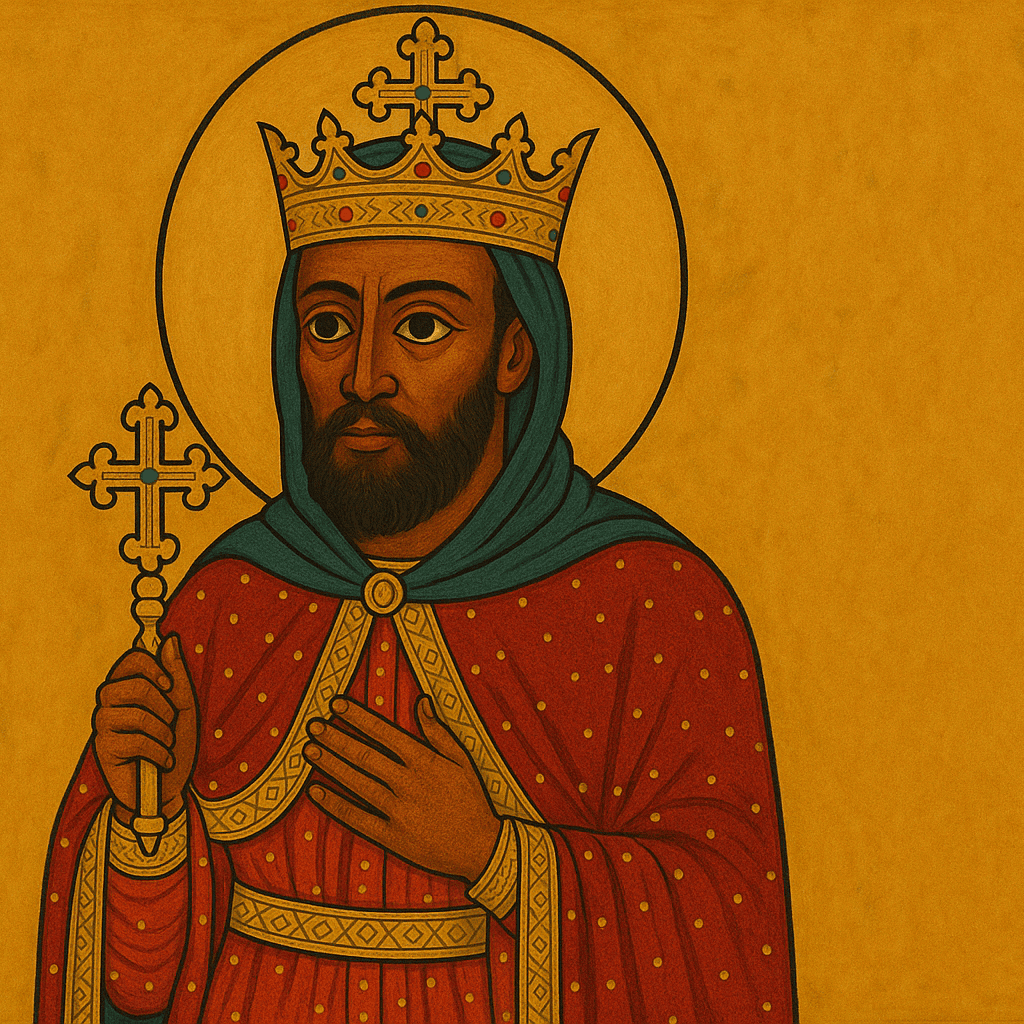
Zara Yaqob, also spelled Zera Yakob, ruled Ethiopia from 1434 to 1468. He settled a long dispute over the Sabbath, defeated the ruler of Adal at Gomit, and established a royal seat at Debre Birhan. His reign also left an unusually rich record of what a medieval Ethiopian emperor wanted people to believe and do. Books, sermons, letters, and images carried his instructions well beyond the royal court.
These records also show the limits of his authority. Monks disagreed with one another, bishops had their own ties to Egypt, and some Christians resisted the religious practices that the emperor wanted to make compulsory. To understand Zara Yaqob, it helps to look at both sides of his reign: the institutions he strengthened and the people who paid a price when they challenged him.
From Solomonic prince to emperor
Zara Yaqob was born in 1399 in Fatagar, a region in the southeastern part of the medieval Christian kingdom. His father was Emperor Dawit, and his mother is named as Egzi Kebra in accounts of his life. Zara was a younger son. His path to the throne ran through the reign of his older brother Yeshaq and several short reigns in the early 1430s. He became emperor in 1434, roughly thirty-five years old, and took the throne name Qwastantinos, the Ethiopian form of Constantine.
He inherited the political tradition of the Solomonic dynasty, whose rulers traced their royal line to Solomon and the Queen of Sheba. He also drew on the prestige of a much older capital. He went to Aksum in 1437, and historians Steven Kaplan and Marie-Laure Derat place his formal coronation there probably in 1439. That distinction matters: he was already ruling before the coronation. Holding the ceremony at Aksum tied his kingship to one of the best-known centers of Ethiopia’s Christian past.
The new emperor faced a practical problem. He needed provincial officials, military commanders, and monasteries to carry out his decisions across a kingdom whose court did not yet have a fixed seat. One of his responses was to place trusted relatives in positions of authority. Another was to circulate royal instructions through the church. Both are easier to understand once we see how the court governed. Kaplan and Derat’s biographical entry traces these appointments and the chronology of his early reign.
How the court governed, and the women who held office
The royal chronicle names several daughters who held office. Berhan Zemada and Medhin Zemada held the title of bitwedded, an office close to the emperor. The chronicle places Berhan Zemada in a succession of officeholders that also included men such as Isayeyyas and Amda Mesqel. Another daughter, Sebele Maryam, is named as a governor of Begemder. These women were part of the machinery of government. The record does not tell us how much room each had to act independently, but it tells us who was entrusted with the offices.
The chronicle also describes rules for royal travel and contributions of food for a celebration in Meskerem, the opening month of the Ethiopian calendar. When the court moved or convened for a feast, someone had to feed it and organize who stood where. Such details show how an emperor made his power visible. Provinces and officeholders had specific duties, and their participation could be seen by others at court.
These records need to be read with their purpose in mind. The court tells us who was appointed, what the emperor ordered, and how rulers wanted royal ceremonies remembered. It rarely tells us what villagers thought of those obligations or how evenly rules were enforced. That gap between a royal instruction and its reception becomes especially clear in the dispute over the Sabbath.
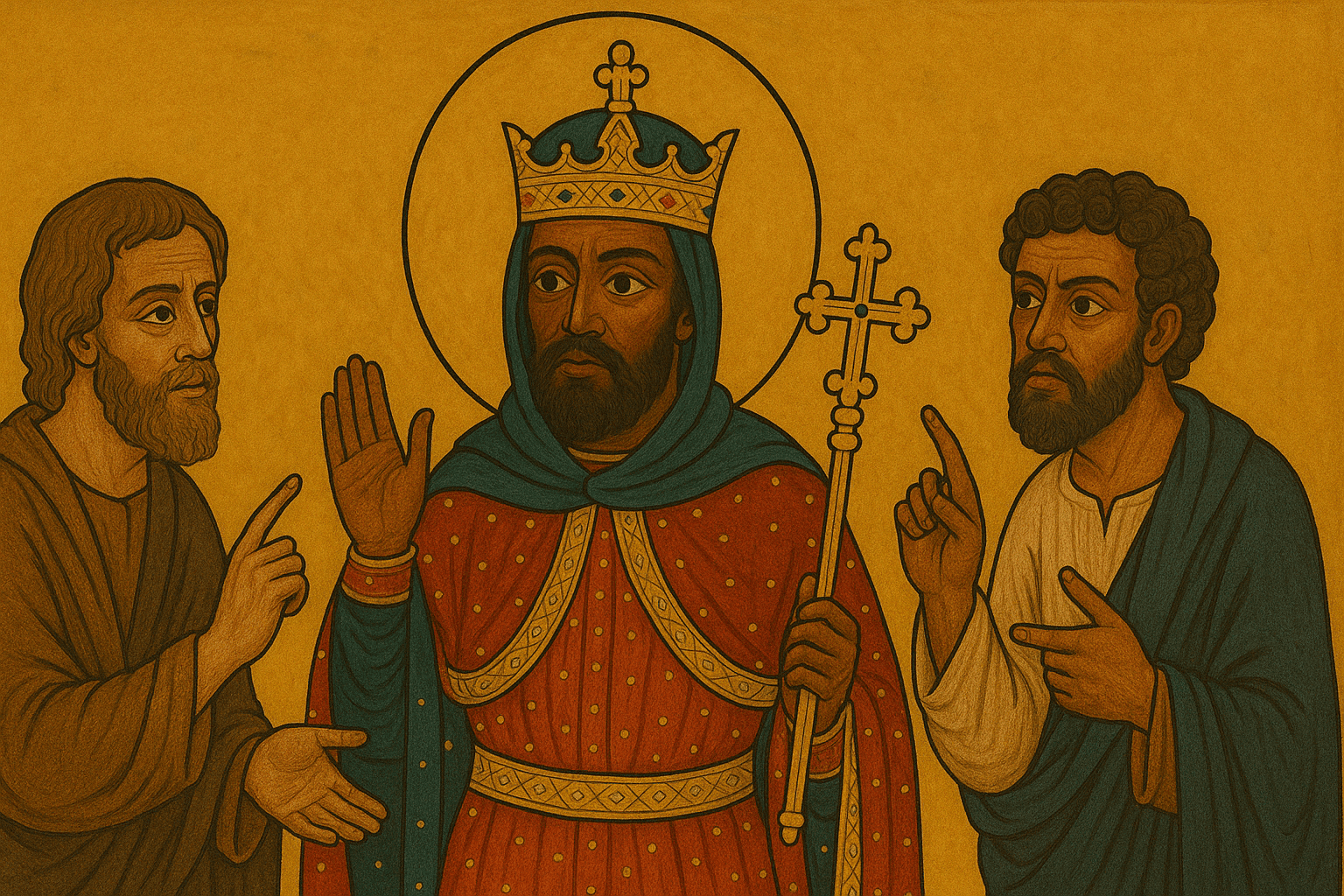
The Sabbath dispute and the Council of Debre Mitmaq
The argument was about how Christians should observe the seventh day, Saturday, alongside Sunday, the day associated with the Resurrection. Ewostatewos, a fourteenth-century Ethiopian monk, had taught that both days should be honored. His followers, known as the Ewostateans, built a network of monasteries. Their position met resistance from other church leaders, and the quarrel raised a question that outlasted its founder: who could decide what counted as proper observance?
Zara Yaqob took a position before he called a council. In 1442, he sent a copy of the Synodos, a collection of church canons, to the Ethiopian monastic community in Jerusalem. In an accompanying letter, he defended the observance of both days. Historian Samantha Kelly uses the manuscript and its letter to show that the emperor was already actively promoting this practice years before it was formally affirmed in Ethiopia. Kelly’s study of the Sabbath controversy and Jerusalem follows the argument across all three settings: Ethiopia, Jerusalem, and Cairo.
The council met at Debre Mitmaq, a royal church in Tegulet, Shewa. Zara Yaqob’s Book of Light places it in Yekatit in the sixteenth year of his reign. Kelly’s conversion of that date puts the meeting in February 1450. The two Egyptian metropolitans serving in Ethiopia, Mikael and Gabriel, affirmed the observance of Saturday and Sunday. The agreement gave Ewostatean monks recognition while preserving the church’s relationship with the bishops sent from Egypt. That relationship reached back to Abuna Salama and the early ties between Alexandria and Aksum.
The place name is easy to misread. This Debre Mitmaq was in Ethiopia, although its name honored an Egyptian monastery. It was also a different place from Debre Birhan, where the emperor would establish his royal seat. Derat’s entry on Debre Mitmaq explains the church’s dedication and records the bishops’ letter affirming the two observances.
Marian feasts, the calendar and royal writing
Zara Yaqob gave the Virgin Mary a prominent place in the worship he promoted. The court prescribed feasts in her honor and encouraged the reading of accounts of her miracles. This changed the rhythm of religious life. A feast tied a story to a particular day, and its readings could be heard by people who would never see a royal manuscript. Repetition gave royal teaching a reach that a single decree could not.
Images were part of that devotional life, too. Surviving fifteenth-century Ethiopian paintings show the Virgin and Child as subjects of prayer. One example in the Metropolitan Museum of Art’s study of Ethiopian Christianity is the work of Fere Seyon, a monk and painter associated with the Lake Tana region. His work gives a concrete example of what this tradition produced. A surviving icon does not, on its own, tell us that the emperor ordered it or how a particular church used it.
Several works are associated with the emperor and his circle, including the Book of Light (Mäṣḥafä Bǝrhan), the Book of the Nativity, the Book of the Trinity, and the Epistle of Humanity. It is better to think of these as a body of writing produced under royal authority than to assume Zara Yaqob wrote every line himself. The Beta maṣāḥǝft catalogue entry for manuscript EMML 1480 shows what survives in one collection at Debre Maryam, including a homily honoring Saturday.
The books address questions a priest or worshipper could encounter directly. One homily in the Book of Light deals with baptism and religious instruction; scholar Getatchew Haile published an edition and translation of the homily. In a separate story from the royal tradition, Zara Yaqob describes two baptismal fonts and attributes a problem with the old one to sorcery. That claim shows how the court explained the incident. It does not tell us what physically happened to the font. Princeton’s index of the baptismal font story identifies the text, and our guide to Timket explains why the blessing of water is so visible in the celebration today.
Why the Stephanites resisted the emperor
The settlement at Debre Mitmaq shows how the emperor could reach agreement with a monastic movement. His conflict with Estifanos and the movement named after him, the Stephanites, shows what happened when agreement failed. They resisted being made to bow before the emperor. In a court where gestures expressed rank and obedience, that refusal became a public challenge to what the ruler could demand from monks.
Royal and Stephanite writings describe the dispute from different positions. Zara Yaqob’s side treated resistance to the prescribed gestures as a challenge to the order the emperor was trying to establish. Writings about the Stephanites emphasize the convictions of the monks and the punishments they endured. Estifanos and his followers faced persecution. Augustine Dickinson’s study of the royal and monastic writings gives the two sides of the controversy and examines the court’s campaign against practices it called magic.
The parallel matters. The emperor gave monks who kept Saturday a recognized place in the church, while forcing other monks to defend how they understood obedience. Both disputes bring the same question into view: when the emperor claimed authority over public worship, how much room remained for communities to follow their own traditions?
War with Ahmad Badlay and the Battle of Gomit
Ahmad Badlay, a ruler of the Walasma dynasty based in Adal, was one of Zara Yaqob’s principal military opponents. The fighting extended across the eastern frontier of the Christian kingdom. An incursion into Shewa is recorded in 1443, and a campaign in Dawaro followed in 1445. The decisive encounter came at Gomit in late December 1445, when Badlay was killed and Zara Yaqob’s forces won the battle. Deresse Ayenachew’s study of the royal regiments uses the battle to trace the forces serving the emperor.
The victory became part of the court’s religious calendar. Royal writings gave thanks for Gomit and associated the victory with the commemoration of Christ’s birth. This is one of the clearest examples of how a military event could be remembered long after the army dispersed. A service could tell worshippers what had happened and how the court wanted them to interpret it. Derat’s study of monastic correspondence from the reign examines texts that circulated these accounts of deliverance and victory.
Badlay should not be confused with Imam Ahmad ibn Ibrahim al-Ghazi, often called Ahmad Gragn. The two lived in different centuries. Badlay fought Zara Yaqob in the 1440s; Imam Ahmad led campaigns against the Christian kingdom in the sixteenth century. Gomit was a decisive victory in Zara Yaqob’s reign, but it was one episode in a much longer history of armies and rulers contesting the region.
Why Zara Yaqob founded Debre Birhan
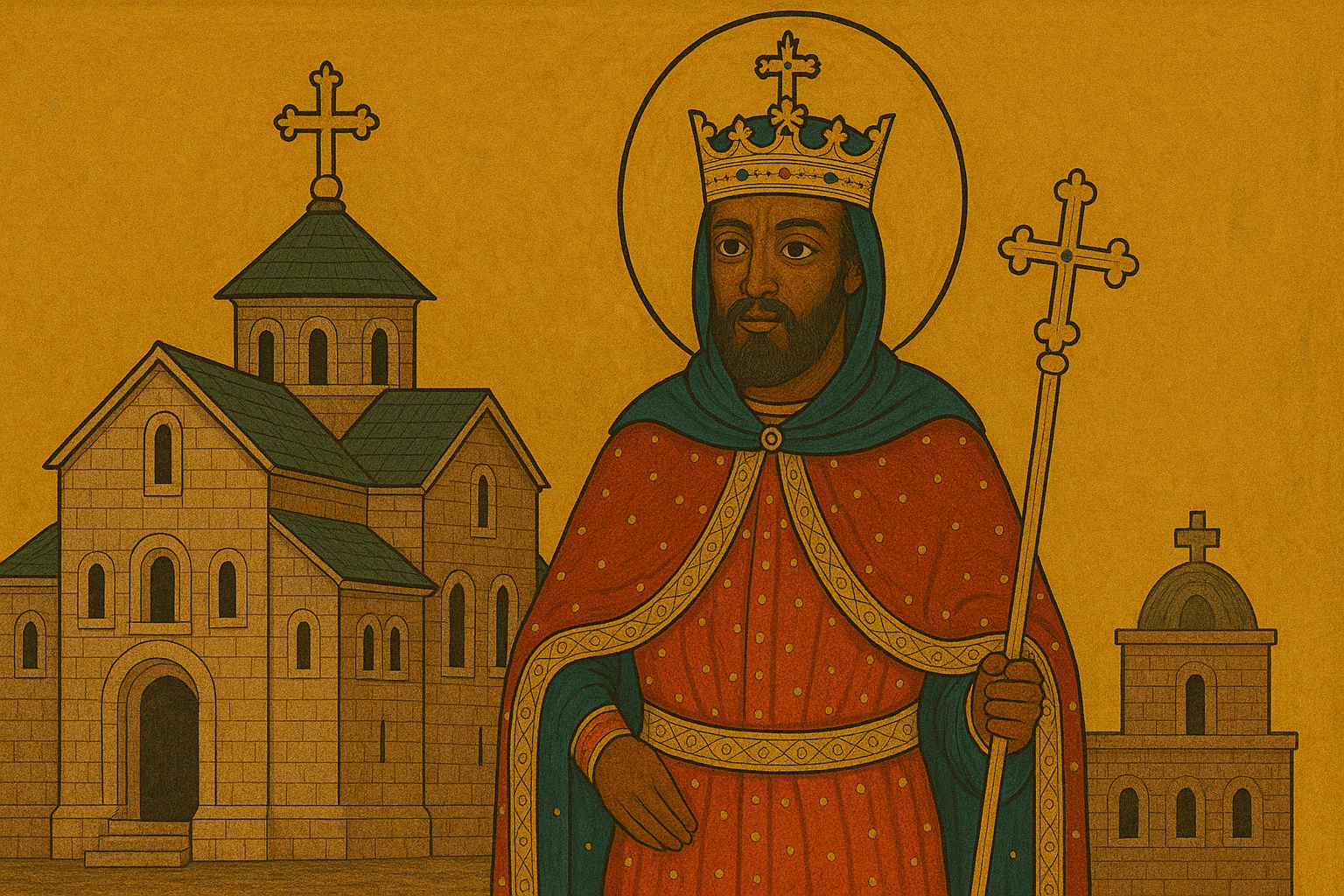
Debre Birhan, often translated as “Mountain of Light,” took its name from a story about a light in the sky. The royal chronicle presents the light as a sign. It describes the emperor establishing a seat there, ordering the construction of a palace enclosure and a church. It even names the wild olive timber used in the work. That detail gives the founding story a practical dimension: carpenters, laborers, and supplies were needed to turn the chosen spot into a place where the court could stay.
The light is sometimes identified with Halley’s Comet, which was visible in 1456. That is a possible explanation, and it has helped popularize 1456 as the founding date. The chronicle is evidence that the court attached religious meaning to a light in the sky. It does not identify a comet by modern astronomical criteria, and the identification alone cannot establish exactly when work on the town began. The Nordic Africa Institute’s historical entry for Debre Birhan gathers the founding accounts, including the comet interpretation.
By the later part of his reign, Debre Birhan served as a settled royal seat. That gave the emperor space for a palace and church and officials a place to bring business to court. Here, too, it helps to keep the geography straight: Aksum was the site of the coronation, Debre Mitmaq was the church where the Sabbath council met, and Debre Birhan was where Zara Yaqob established his court. He died there in 1468. His son Baeda Maryam I succeeded him.
Jerusalem, Florence, Rome and Naples
Ethiopian monks living in Jerusalem brought Ethiopian church concerns into contact with other Christian communities. In 1441, monks from Jerusalem attended the Council of Florence. Samantha Kelly argues that the delegation had ties to the Ewostatean movement. This helps explain why the Sabbath debate can be traced through Jerusalem as well as Ethiopia. The monks’ presence at Florence does not establish that Zara Yaqob personally commissioned their journey.
An embassy in 1450 has clearer ties to the imperial court. Pietro Rombulo, a Sicilian who had spent years in Ethiopia, traveled as an envoy with companions. The mission dealt with Pope Nicholas V in Rome and Alfonso V in Naples. Surviving Aragonese correspondence discusses sending craftspeople to Ethiopia. It is a specific example of what the court wanted from such a journey, and it helps explain why diplomats crossed so much ground even when their patrons did not share all the same aims.
Host courts often understood visitors through their own religious and political priorities. For that reason, what a European writer expected from Ethiopia does not necessarily tell us what the emperor was looking for. Verena Krebs’s archival study of the embassies compares the missions and reconstructs their aims from surviving records. Read together with the emperor’s 1442 letter to Jerusalem, it shows how the court used more than one route to reach people abroad.
Two people named Zara Yaqob
Emperor Zara Yaqob ruled in the fifteenth century. A different Zera Yacob is associated with the seventeenth-century philosophical work known as the Hatata, or Inquiry. Readers looking for the thinker who examines reason, faith, and how to judge a religious claim want the philosophical text. Readers looking for the ruler who convened the Sabbath council and founded Debre Birhan want the royal chronicle and the Book of Light. A modern edition and translation of the two Ethiopian Inquiries is a starting point for the philosophical tradition and the debate about its authorship.
For the emperor, an accessible place to continue is the Bibliothèque nationale de France record of Jules Perruchon’s 1893 Geʽez and French edition of the chronicles of Zara Yaqob and Baeda Maryam. The royal chronicle gives us the court’s account. The manuscripts preserve rulings and sermons that can sometimes be compared with it; letters and accounts by other communities can give a different perspective on the same reign. For the events before and after this period, see our guide to Ethiopian history.