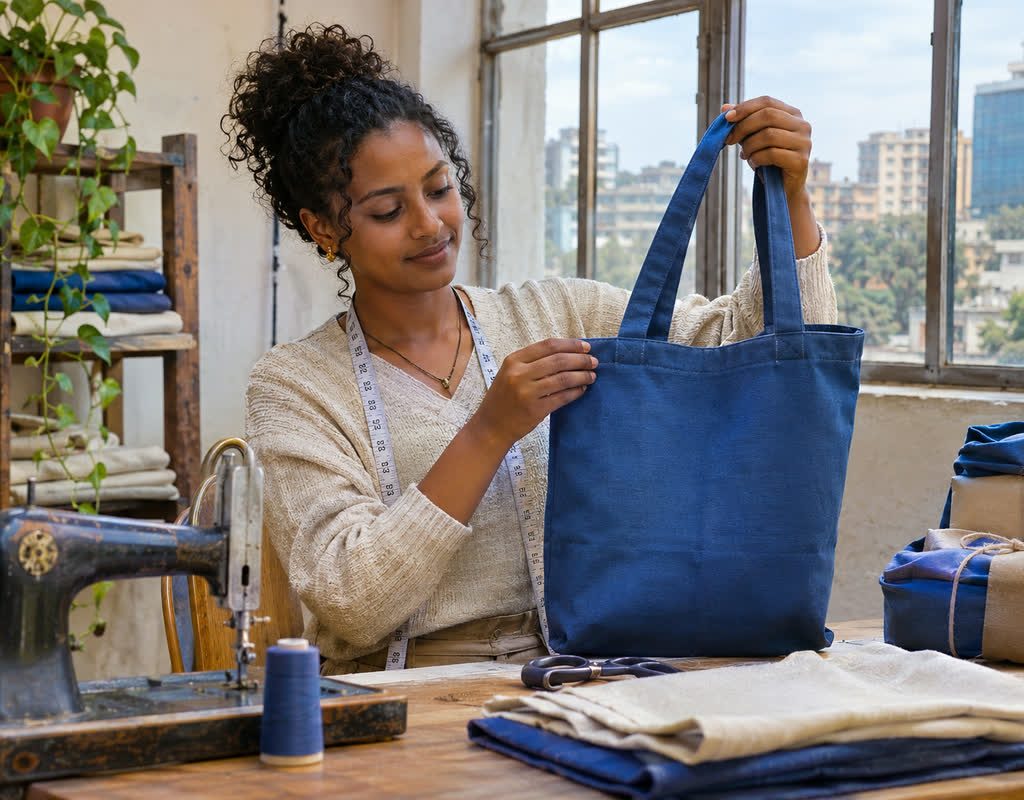
A useful startup budget tells you how much money you need before you open and whether you can keep trading while customers take time to pay. Start with quantities, written quotes and payment dates. This example follows a small Addis Ababa workshop selling canvas bags. The amounts are illustrative and can be replaced with quotes from your own neighborhood and line of work.
1. Get a quote for everything you pay before opening
Separate costs you pay once from bills you will have every month. List equipment, a premises deposit if required, repairs and signs, setup costs for payment services, and confirmed registration or licensing charges. Put the seller, quote date and how long the quote lasts next to each expense. Include transport and installation where relevant. Ask whether a deposit is refundable and when you would get it back. A refundable deposit can still use cash you will need to open.
The workshop sets aside 18,000 birr for equipment and basic setup. It has yet to price a premises deposit and licensing, so it records those as open items and gets quotes before committing. If you are checking the order in which approvals and spending fit together, use the small business launch checklist and the Ethiopian Business Portal.
2. Cost one item and the smallest batch you can sell
Ask suppliers what a realistic first batch costs, including transport, packaging and the work needed to make it. Divide batch costs by the number of items you can actually sell. If your supplier requires a larger order, put the full amount due into the cash plan. That is the money you need upfront even if some supplies will be used later.
At 250 birr to make and fulfil one bag, 20 bags need 5,000 birr. That includes the money needed later to complete the orders. At a price of 350 birr, a sale leaves 100 birr toward rent and other fixed bills. The first batch can contribute 2,000 birr if all 20 sell at that price. Worked pricing and break-even example.
3. Add the monthly bills you owe even in a slow month
Write down rent, a phone or data plan, wages you expect to pay, and other costs that come due regardless of sales. Reserve your personal living money separately so you know how long you can go without drawing from the business. If you pay rent several months in advance, record the full cash payment in the week it is due and keep a separate monthly figure for judging how the business performs.
In the example, fixed business bills are 6,000 birr a month. With 100 birr left per bag, the workshop needs 60 sales to cover those bills. Someone with enough time or customers to sell only 40 bags should run new numbers before accepting a lease or promising wages.
4. Put payment dates on the budget and test a slow month
A 7,000-birr order from a shop may sound like enough for restocking, but if the shop pays next month, the money cannot pay a supplier next week. Draw four rows for the next four weeks. Record starting cash, expected collections, bills due, and closing cash for each. Then try one slow scenario, such as selling half the planned batch or receiving the largest payment a week late.
The workshop sets aside a 4,000-birr opening reserve. Equipment and setup of 18,000, first-batch commitments of 5,000, first-month bills of 6,000, and that 4,000 reserve bring the base budget to 33,000 birr. Add the actual premises, licence, or other costs still missing. Keep the reserve separate in the weekly forecast so it does not get spent twice. Four-week cash forecast.
5. Set a spending limit and a date to review
Choose how much you are willing to commit before you have actual orders. List what you can delay, such as larger equipment, extra designs, or a second stock order. Each week, compare your receipts with the estimate and update the next four weeks. If the plan relies on a loan, put the lender’s quoted fees and actual instalment dates into both the normal and slow forecasts. Ethiopian Loan Calculator.