Yohannes IV became emperor in 1872 and ruled until he was fatally wounded at Metemma in 1889. Much of his reign was spent responding to pressure from Egypt, Italy and Mahdist Sudan. Inside Ethiopia, he relied on powerful regional rulers whose loyalty had to be negotiated.
Why Gundet and Gura matter in the chronology · How the northern frontier changed after 1884
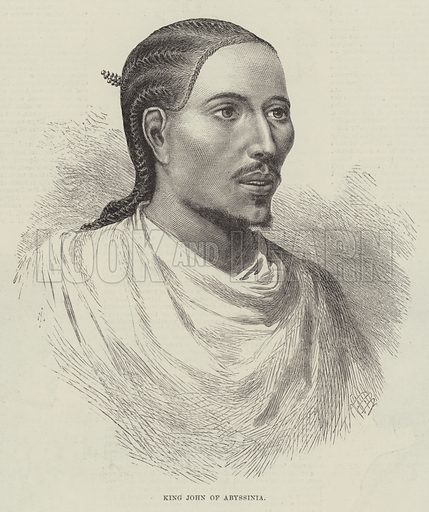
From Kassa Mercha to emperor at Aksum
Born Kassa Mercha, Yohannes built his power in Tigray in the years after the Era of the Princes. After Tewodros II’s death in 1868, Kassa competed for the throne. He defeated Emperor Tekle Giyorgis II and was crowned at Aksum in 1872. The Library of Congress country study follows the succession and his settlement with other rulers.

In 1878, Menelik of Shewa acknowledged Yohannes as emperor. Yohannes recognized Menelik as king of Shewa, and Menelik retained substantial freedom in the south. This arrangement shows how imperial authority could depend on agreements with rulers who had their own armies and territory.
The northern frontier
Ethiopian armies defeated Egyptian forces at Gundet in 1875 and Gura in 1876. Relations with Egypt and Britain shifted later, culminating in the 1884 Hewett Treaty. Italy’s presence on the Red Sea coast then brought fresh pressure. Ras Alula, one of Yohannes’s commanders, defeated an Italian force at Dogali in 1887.

Why Gundet and Gura matter in the chronology
Gundet in 1875 and Gura in 1876 were two battles against forces sent by Egypt. They belong to Yohannes’s reign and the struggle over Ethiopia’s northern approaches. Adwa, twenty years later, was fought against Italy under Menelik II. Keeping the two campaigns separate helps explain why Ethiopia’s northern frontier was already contested before the Treaty of Wuchale. The later campaign that led to Adwa. Cambridge History of Africa’s discussion of the conflict with Egypt.
How the northern frontier changed after 1884
The Hewett Treaty of 1884 brought the conflict with Egypt to an end and involved Ethiopian help with the evacuation of Egyptian garrisons. Relations with forces in neighboring Sudan took on new urgency. Yohannes was mortally wounded fighting Mahdist forces at Metemma in 1889. The palace at Mekele helps place this frontier history in the setting of his court.
Religious policy and the last campaign
Yohannes promoted religious uniformity as part of his effort to consolidate authority. His 1878 policy put pressure on Muslims to convert, with different consequences across the empire. Research on Islam in Africa places that policy alongside the threats from Egypt and Mahdist Sudan.

Yohannes was fatally wounded fighting Mahdist forces at Metemma in March 1889. He named Ras Mengesha as his successor, but Menelik secured the throne that year. The country study’s account of Metemma describes the succession crisis that followed.