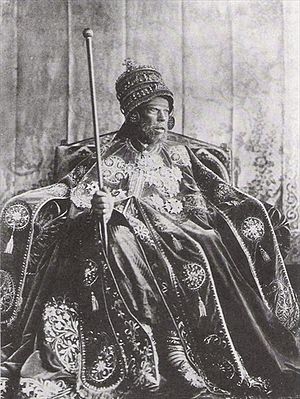
Menelik II became emperor in 1889 after more than two decades as king of Shewa. His reign is remembered for Ethiopia’s victory over Italy at Adwa and the rise of Addis Ababa as the capital. It was also a period of conquest that brought many communities under imperial rule. Those two histories, independence abroad and expansion at home, both shaped the Ethiopia he left behind.
The story begins in Shewa, then turns to the treaty dispute with Italy, the campaigns that extended imperial rule and the institutions that took shape in Addis Ababa. The Ethiopian history timeline shows where his reign fits between the era of regional lords and the twentieth century.

From Tewodros’s court to the throne of Shewa
Born in 1844, Menelik was the son of Haile Melekot, ruler of Shewa. As a boy he was taken to Emperor Tewodros II’s court after Tewodros extended his control into Shewa. He escaped in 1865, returned home and took the throne of Shewa. During Yohannes IV’s reign, Menelik recognized Yohannes as emperor and remained king in Shewa. The balance changed when Yohannes died after the Battle of Metemma in 1889. Menelik secured the imperial throne that year.

How Menelik built power in Shewa
Menelik’s return in 1865 gave him a base from which to govern, but it did not settle how Shewa would relate to the rest of the empire. He built ties with local commanders, merchants and neighboring rulers. One of his most consequential allies was Gobana Dacche, an Oromo commander whose service helps explain why Menelik’s campaigns cannot be described simply as one ethnic group acting against another. Alliance, negotiation and military force all shaped the expansion. Brian Yates’s study of Menelik and Gobana in Shewa.
Menelik accepted Yohannes IV’s senior authority while building his own position. That relationship makes more sense against the earlier division of power between emperors and regional lords. When Yohannes died in 1889, the outcome depended on who could assemble regional support and claim the imperial title.
What Article 17 of the Treaty of Wuchale said
Article 17 of the treaty signed in 1889 concerned Ethiopia’s dealings with other governments. The Amharic wording allowed Menelik to use Italy’s diplomatic services. Italy read its text as requiring foreign relations to pass through it and asserted a protectorate. The distinction was consequential: an option leaves decisions in Ethiopian hands, while an obligation changes who can speak for Ethiopia abroad. Treaty of Wuchale text.
Menelik rejected the Italian claim. The dispute helped lead to the war settled at Adwa. Compare the account of Taytu’s involvement and the campaign with the article on Ethiopian sovereignty and the later Italian occupation.
Taytu Betul and the war with Italy
Menelik married Taytu Betul in 1883. Her role in government became especially visible in the conflict over the 1889 Treaty of Wuchale. Italy claimed the treaty gave it control of Ethiopian foreign relations. Menelik rejected that reading, and Taytu pressed against the Italian claim in negotiations. She later brought her own contingent to the campaign. The Library of Congress profile of Taytu describes the political and military responsibilities she took on.
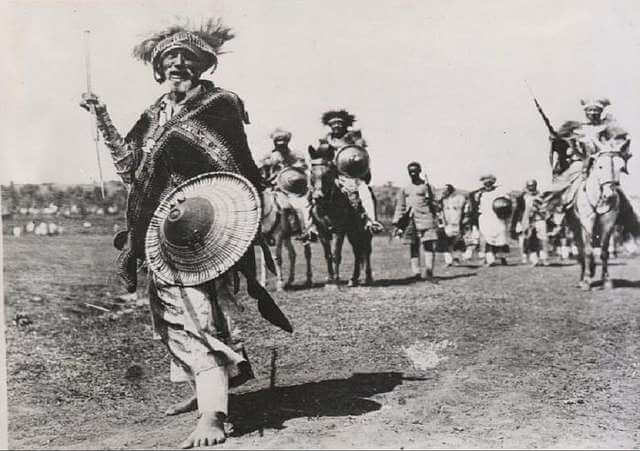
At the Battle of Adwa in March 1896, troops mobilized by Menelik, Taytu and regional commanders defeated an Italian army. The October peace treaty annulled Wuchale and recognized Ethiopian independence. Italy retained Eritrea. Menelik continued to deal with competing powers after Adwa. In 1903, Ethiopia and the United States signed a treaty of commerce in Addis Ababa.
Territorial expansion and its costs
Even before he became emperor, Menelik was extending Shewa’s authority south and east. His forces took Harar in 1887, and campaigns brought large parts of present-day Ethiopia under imperial authority. Some rulers reached agreements with Menelik. Other communities were incorporated by force, with lasting consequences for landholding and political power. The Library of Congress country study covers the expansion alongside the diplomacy that led foreign governments to recognize much of the empire’s territory.

Harar, the southern campaigns and local resistance
Harar was already a center of Islamic learning and commerce. After Menelik’s forces took the city in 1887, the new imperial administration inherited an existing urban and trading economy. Menelik appointed Ras Makonnen to govern it. The profile of Ras Makonnen follows his role as governor and diplomat, while the Harari culture guide explains the history of the city and its quarters.
The effects of expansion varied by place. The Arsi Oromo resisted repeated attempts at conquest, while other communities and leaders negotiated different terms. Losing political autonomy could also change who controlled land, labor and taxes. This history sits alongside Menelik’s resistance to Italy. Both matter to understanding how the state expanded and how communities remember his reign. Abbas Haji Gnamo’s study of conquest and resistance in Arsi.
Addis Ababa and the institutions of his reign
The imperial court settled in what became Addis Ababa, which grew from a royal encampment into the permanent capital in the 1890s. Under Menelik, Ethiopia expanded telegraph and telephone links and began building the railway from Djibouti inland. Work on the line continued after his death. Menelik also established a Council of Ministers in 1907 as his health declined. The Library of Congress account of his later reign describes the railway negotiations and the creation of the council.
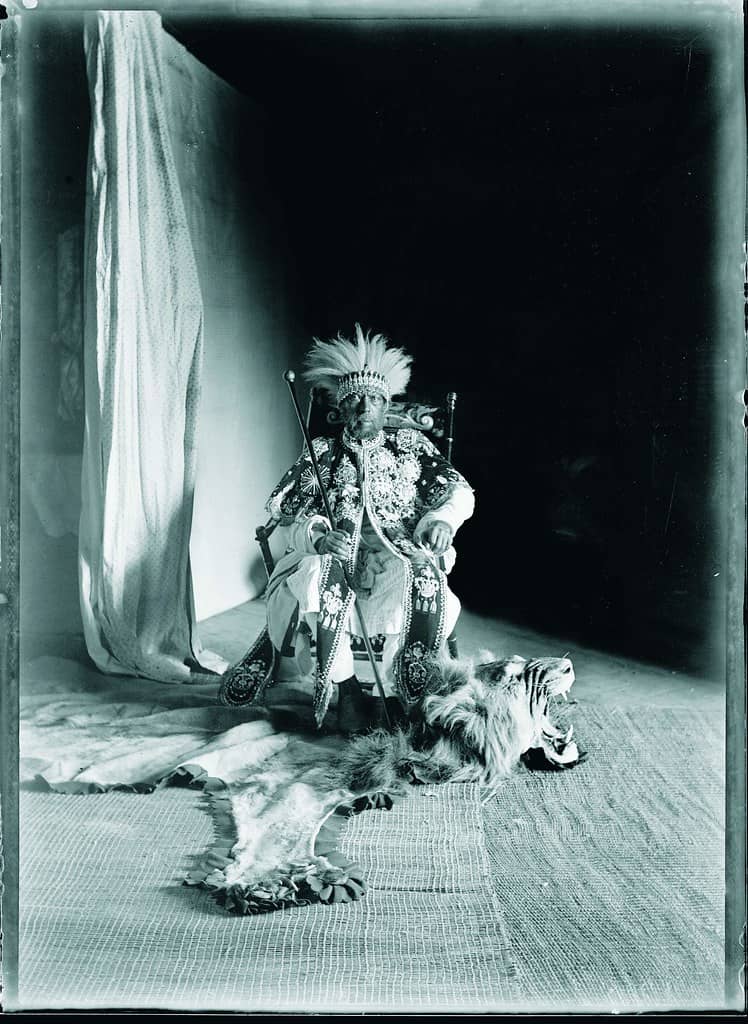
Menelik died in 1913. His grandson Lij Iyasu succeeded him as the designated heir, and Menelik’s daughter Zewditu became empress after Iyasu was deposed in 1916. In Addis Ababa, the Adwa Victory Memorial offers a place to explore the battle and its wider legacy.

The railway and the succession after Menelik
The rail line from Djibouti reached Dire Dawa while Menelik was alive. The extension to Addis Ababa was completed later. That timeline matters when describing his contribution: the negotiations and start of construction belong to his reign, while the completed connection belongs to the period after it. The Dire Dawa guide describes the city that grew around the rail corridor.
As Menelik’s health deteriorated, the court faced a practical question about who would govern and a separate question about who would inherit the throne. The creation of the Council of Ministers in 1907 and the designation of Lij Iyasu addressed different parts of that problem. Iyasu did not receive a formal coronation as emperor. His removal in 1916 and Zewditu’s accession opened another phase of imperial politics. Harold Marcus’s study of the end of Menelik’s reign.