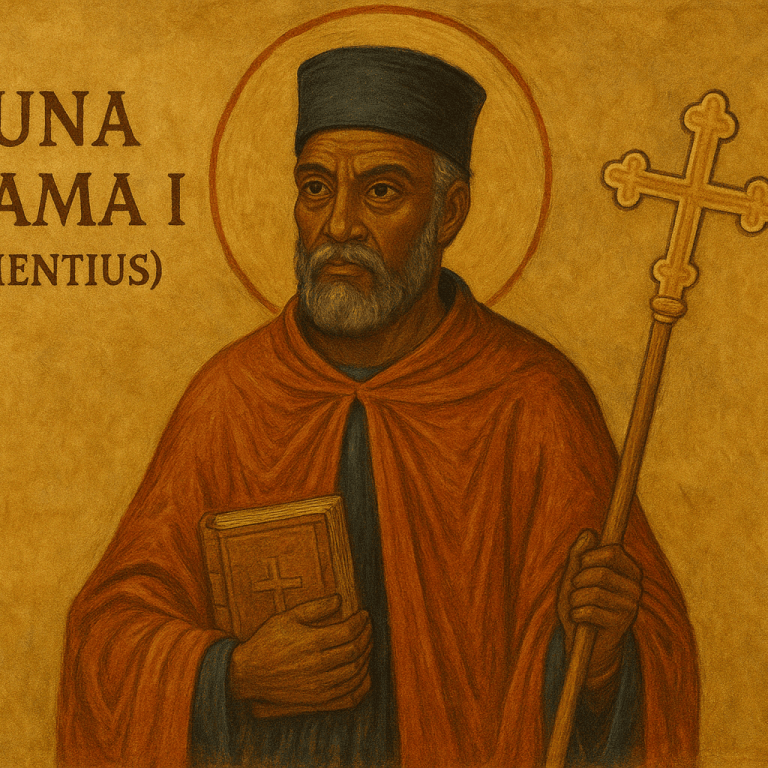
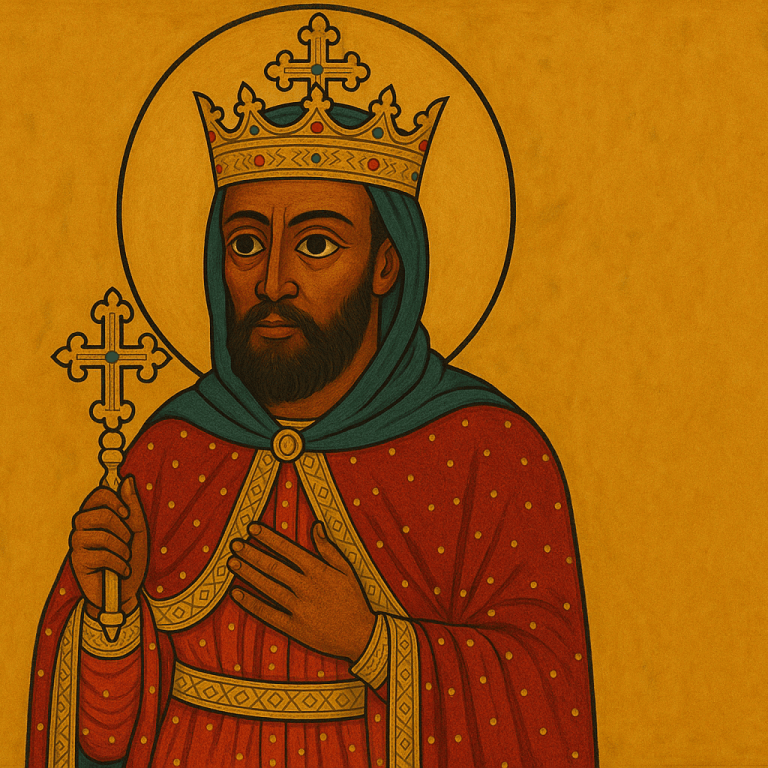
Ethiopia’s Solomonic dynasty is usually dated from the accession of Yekuno Amlak around 1270. Its rulers claimed descent from the biblical King Solomon and Makeda, the Queen of Sheba. The claim mattered because it gave later emperors a story about why their family had the right to rule.
On this page: Menelik I and Menelik II · What 1270 dates · How power changed · What the 1955 constitution said · The end of imperial rule
The story in the Kebra Nagast
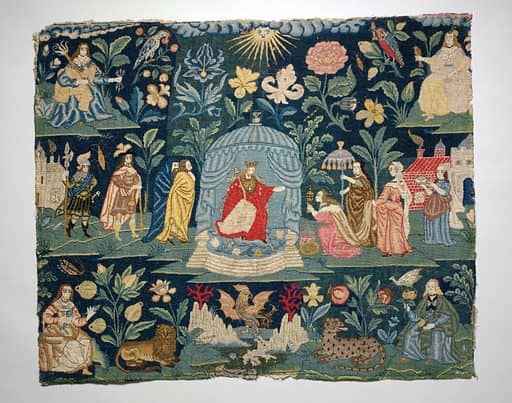
The Kebra Nagast, or Glory of Kings, recounts Makeda’s visit to Solomon and the birth of their son Menelik. The story connects royal descent with the Ark of the Covenant and Ethiopia’s place in sacred history. A Library of Congress exhibition shows how this story was also told in Ethiopian painting. It is a source for understanding the dynasty’s claims and religious identity.
Menelik I and Menelik II are different figures
Menelik I belongs to the story told in the Kebra Nagast. In that account, he is Makeda and Solomon’s son, and the Ark comes to Ethiopia when he returns from Jerusalem. Menelik II was a documented nineteenth-century ruler who became emperor in 1889. The later ruler’s name invoked the older royal tradition; it does not put the two figures in the same historical record. Compare the English translation of the Kebra Nagast with our account of Menelik II’s reign.
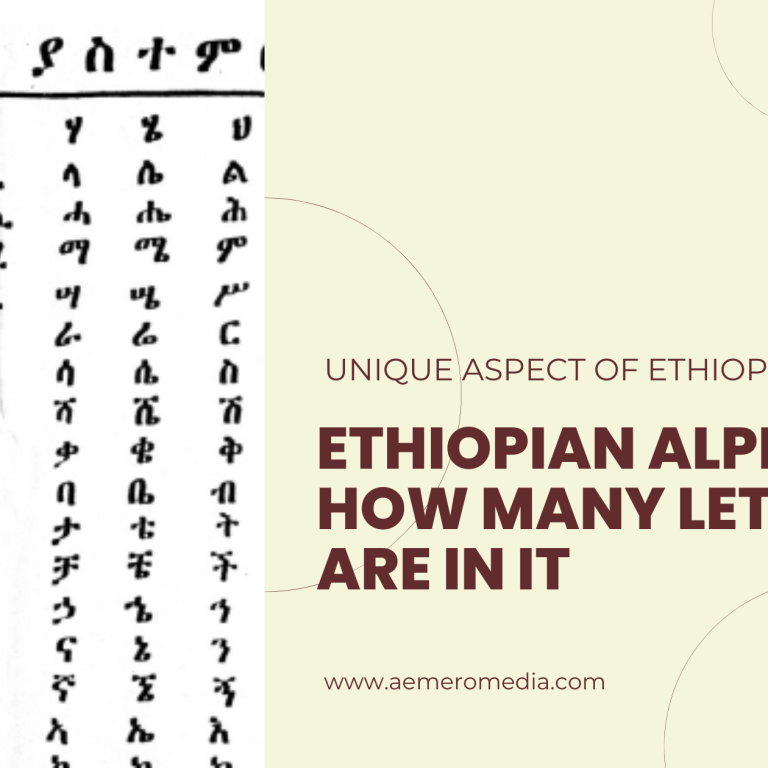
The Kebra Nagast is written in Geʽez. The complete Ethiopic version is generally associated with the fourteenth century, though the history of the material that went into it is debated. Columbia University’s guide to the epic explains the dating and the role of the story. For the writing system behind the text, see our guide to the Ethiopic script.
What happened around 1270
Yekuno Amlak displaced the last Zagwe ruler and founded a new royal line. His supporters presented the accession as a restoration of the older line. The Library of Congress country study sets the succession within the southward shift of the medieval Christian kingdom. The Lalibela churches are among the best-known remains associated with Zagwe rule.

What 1270 dates
Around 1270 marks a change in the medieval monarchy: Yekuno Amlak took power from the Zagwe. It is the conventional start of the dynasty in a political timeline. The claim that the line went back to Solomon served a different purpose. Calling the accession a restoration presented a change of rulers as the return of an older, legitimate order. The Zagwe to Solomonic timeline and Lalibela’s surviving rock churches put the change of dynasty in context.
How the monarchy changed
Over the following centuries, the balance of power between emperors and regional rulers changed repeatedly. During the Era of the Princes, regional nobles held much of the effective power. Under Menelik II, the empire expanded across much of present-day Ethiopia and defeated Italy at Adwa.
How the same royal claim outlasted changes in power
In the fifteenth century, Emperor Zara Yaqob drew on the authority of the monarchy to shape church practice. In the seventeenth century, Fasilides established a permanent capital at Gondar; the Royal Enclosure shows what successive rulers built there. Later, in the Era of the Princes, emperors retained the title while regional lords exercised much of the practical power. A single dynastic label covers all three arrangements.
The twentieth century brought a further interruption. Italy occupied the capital in 1936, and Haile Selassie governed in exile before returning in 1941. See the history of the occupation and restoration for the role of the Ethiopian resistance.
How the 1955 constitution turned descent into a rule of succession
Article 2 of the 1955 Revised Constitution explicitly attached the imperial dignity to Haile Selassie I’s line and traced it through Menelik I to the Queen of Sheba and Solomon. By then the genealogy was doing work in a modern legal document, centuries after its best-known literary telling. Read the article alongside the account of the Kebra Nagast to see how a royal tradition was used to define succession.
The end of imperial rule
Haile Selassie I was the last reigning emperor. The Derg deposed him in September 1974 and abolished the monarchy in 1975. A diplomatic record from 1974 describes the military committee’s takeover.

September 1974 marks the deposition of the last emperor. March 1975 marks the Derg’s abandonment of the proposed constitutional monarchy and revocation of royal titles, as described in the Library of Congress country study. The two dates answer different questions: when the emperor lost power and when the monarchy itself was abolished. Our overview of the Derg era follows what changed after that.