On March 1, 1896, Ethiopian forces defeated an Italian army in the hills around Adwa, in what is now Tigray. Emperor Menelik II and Empress Taytu Betul helped assemble the force that stopped Italy’s bid to turn Ethiopia into a protectorate. The peace that followed made the outcome explicit. Italy had to recognize Ethiopia as a sovereign state.
On this page: Amba Alage and Mekelle · How to read the battlefield · The peace agreement · Adwa in art
Why Ethiopia and Italy went to war
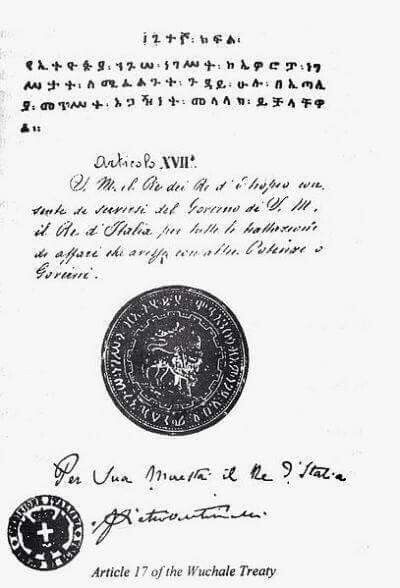
The dispute began with Article 17 of the Treaty of Wuchale, signed in 1889. In the Amharic text, Ethiopia could use Italy’s help in dealings with other powers. The Italian text made that channel obligatory. Italy used its version to claim a protectorate, and Menelik rejected the claim. By 1895, troops advancing from Italian-held Eritrea had entered Tigray. The Library of Congress country study traces how the dispute turned into war.
Before Adwa: Amba Alage and Mekelle
Adwa was the third major encounter of a campaign that had already shifted in Ethiopia’s favor. In December 1895, an Ethiopian force overwhelmed an isolated Italian position at Amba Alage (also written Amba Alagi). The defeat showed how vulnerable the Italian advance into Tigray could be when its outposts were cut off from one another.
In January 1896, the Ethiopians besieged the Italian garrison at Mekelle. They cut access to its water supply, a move associated with Empress Taytu, and the garrison eventually withdrew under negotiated terms. That outcome put an Italian fort back in Ethiopian hands and let Menelik concentrate his forces farther north. The Library of Congress profile of Taytu and the collected studies in The Battle of Adwa: Reflections on Ethiopia’s Historic Victory give more detail on the siege and the wider campaign.
Who fought at Adwa?
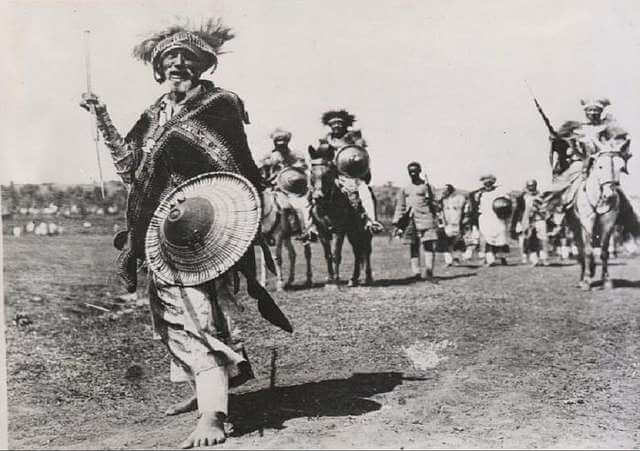
Menelik mobilized forces from across his empire. Regional commanders brought their own troops, including Ras Makonnen and Ras Mengesha Yohannes of Tigray. Taytu had challenged Italy’s reading of the treaty and came to the campaign with her own contingent. The Library of Congress account of Taytu describes her role in supply and medical operations alongside her work as a political adviser.
General Oreste Baratieri commanded Italy’s army, which included Italian soldiers and colonial troops recruited in Eritrea. B. Melli’s 1899 history of the Eritrean colony gives a contemporary Italian account of the campaign. Its perspective is that of the colonial power, which makes it a useful companion to the Ethiopian painting in the Smithsonian’s collection.
What happened on the battlefield?
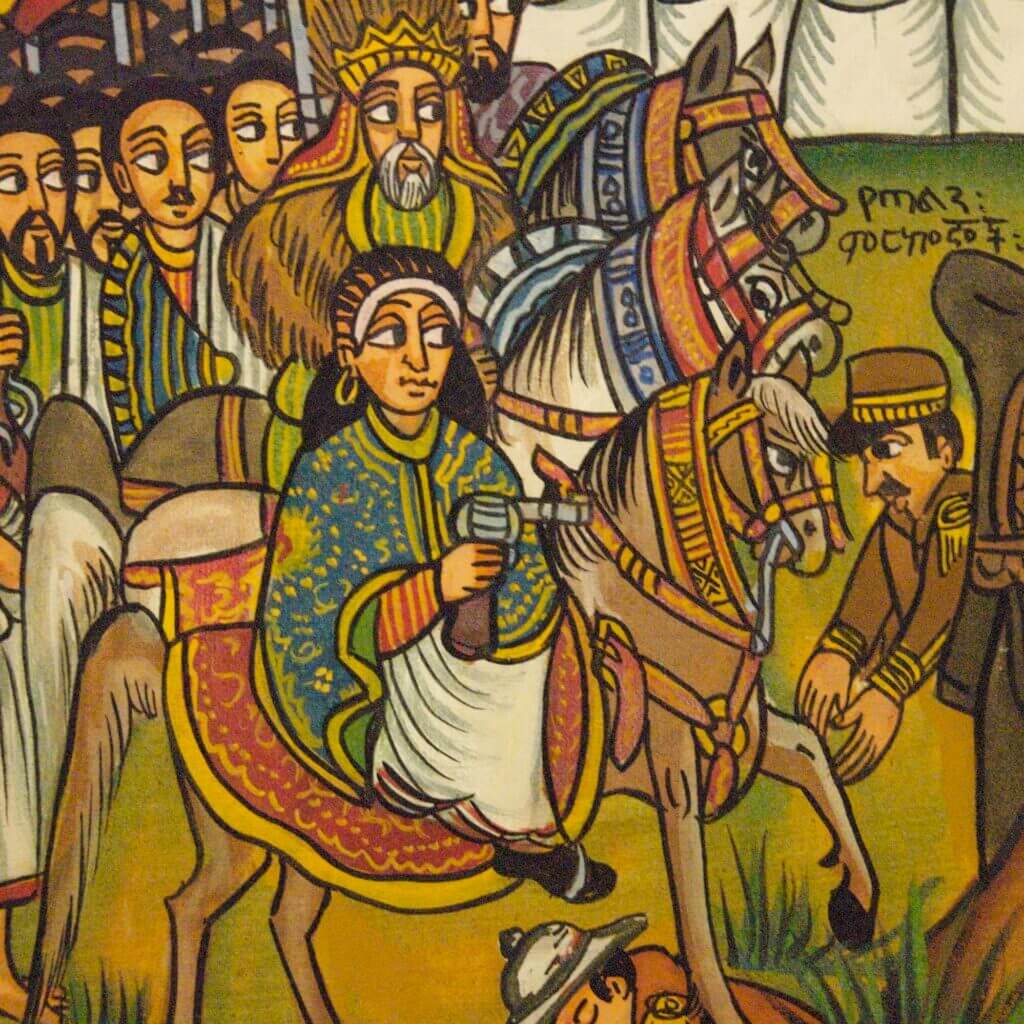
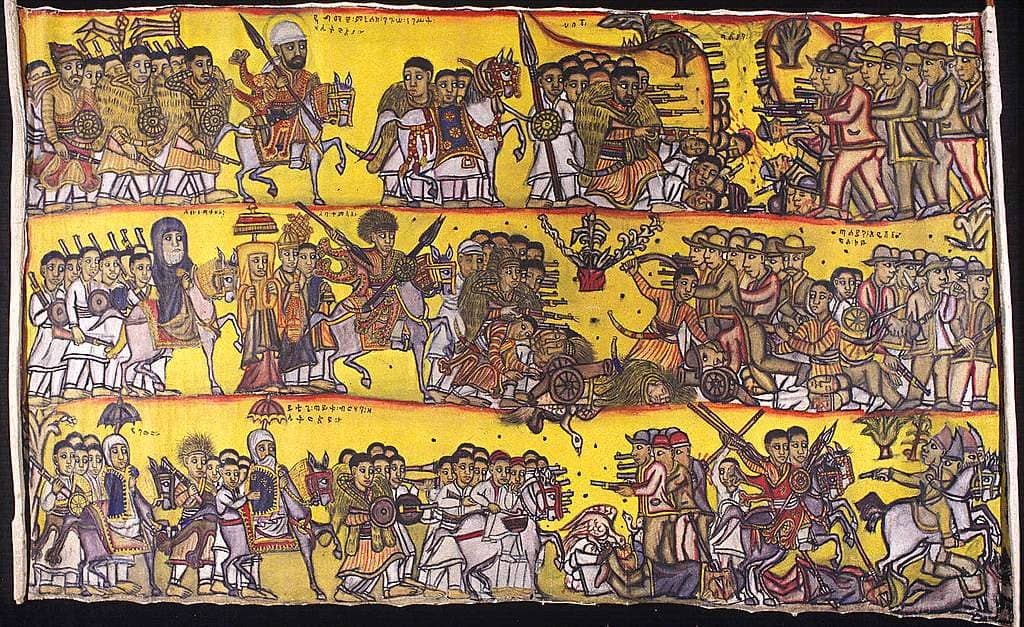
Baratieri’s columns moved toward Ethiopian positions overnight. In the broken terrain around Adwa, parts of his force lost contact with one another. Ethiopia had fielded the larger army, including troops armed with modern rifles. The Italian force suffered heavy losses and its survivors retreated. The Smithsonian’s Battle of Adwa painting is one way to see how Ethiopian artists recorded the victory and its leaders.
How the night march shaped the battle
The Italian plan depended on separate brigades reaching positions near one another before daylight. Brigades had to identify routes and hills in darkness, using maps that did not reliably match the ground. The brigade under General Matteo Albertone went farther forward than intended and became separated. Ethiopian forces attacked it early; the other brigades could not restore a continuous line as fighting spread.
Read a battle map from the positions of the brigades rather than as one Italian advance. It explains why Ethiopia could bring pressure to bear on formations that could not easily support one another. It also shows why the battle cannot be explained by one bad map: Ethiopian commanders brought together large armies from different regions and acted on the openings the march created. Raymond Jonas’s study of Adwa reconstructs the campaign from Ethiopian and Italian records. For the commanders on Ethiopia’s side, see Ras Makonnen’s part in the campaign.
What the Treaty of Addis Ababa changed
The October 1896 peace agreement annulled the Treaty of Wuchale and formally recognized Ethiopian independence. Italy retained Eritrea. Adwa therefore ended Italy’s first bid to make Ethiopia a protectorate while leaving an Italian colony on Ethiopia’s northern border. Four decades later, Mussolini launched a new invasion that led to the Italian occupation of 1936–1941.
What the peace agreement settled
The October 1896 peace agreement cancelled the 1889 Treaty of Wuchale and ended the war. Recognition of Ethiopia’s independence removed the diplomatic claim Italy had built around Article XVII. Compare the two issues: the 1889 treaty text is the document the two governments disputed, while the 1896 peace set it aside.
Eritrea remained an Italian colony after the war. The result secured Ethiopia’s sovereignty without dismantling the Italian colonial presence on its northern border. A generation later, a different Italian government invaded again; the timeline of the 1935 invasion and occupation explains where the two wars fit.
How Ethiopia remembers Adwa
Adwa became a reference point for anti-colonial and Pan-African movements. In Ethiopia, the victory is commemorated on March 2, as set out in the 2024 federal public holidays proclamation. That is the date of the commemoration. March 1, 1896, is the date conventionally given for the battle.
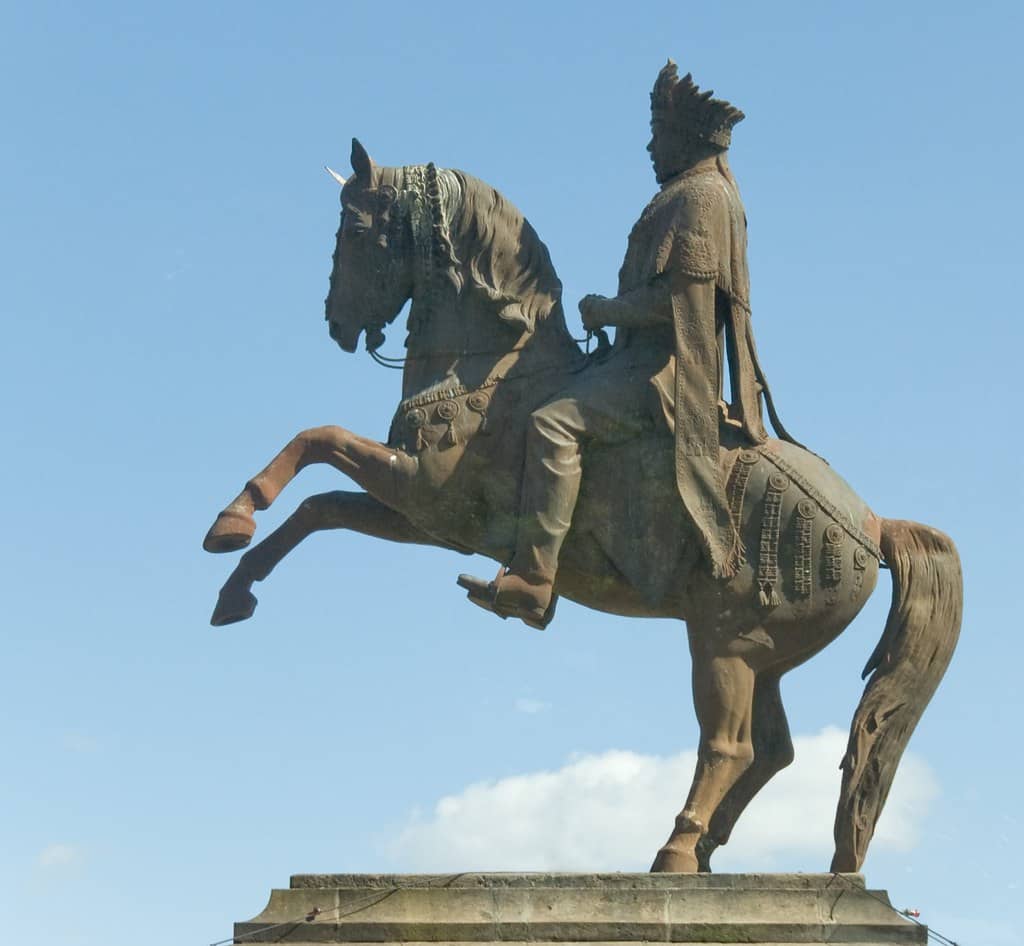
In Addis Ababa, the Adwa Victory Memorial in Piassa tells the story through its museum and collections. The battlefield itself is in Tigray. For the wider history behind the familiar phrase “never colonized,” read how Ethiopia defended its independence and what happened during the later occupation.
How to read an Adwa painting
Ethiopian paintings of Adwa commonly place many episodes on one surface. Look first for where the painter places the leaders, the direction the opposing formations face, and what occupies the center. In one Battle of Adwa painting catalogued by the Smithsonian, those choices help tell a story about victory and leadership. Compare the painting with the account of the night march: the painting shows how the victory was remembered, while the battlefield account helps establish where and when events took place.